
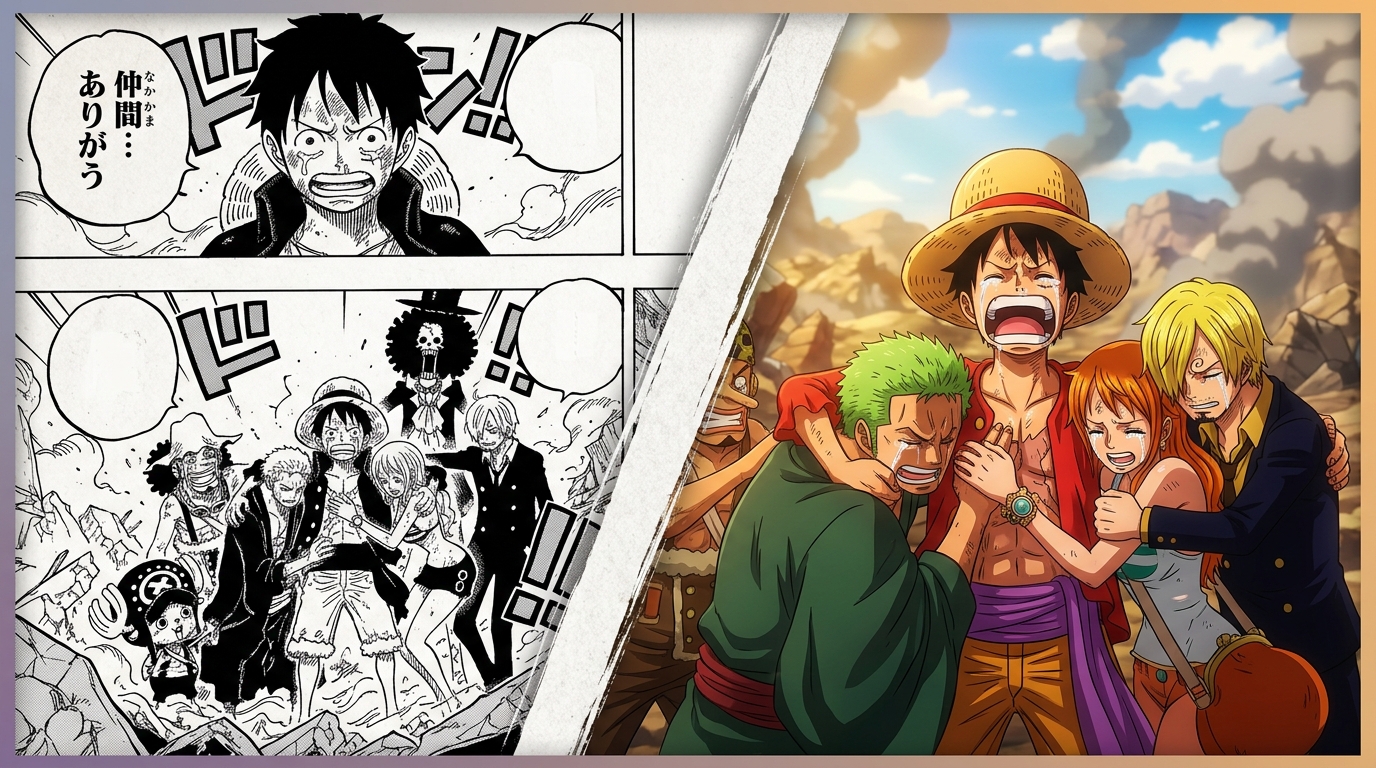
Episode 1100 of One Piece stands as a masterclass in emotional storytelling. The anime adaptation took one of the manga’s most devastating moments and amplified it through careful direction, breathtaking animation, and voice performances that left fans sobbing. Kuma’s sacrifice and Bonney’s childhood hit differently when you hear the music swell and see the tears stream down their faces.
Episode 1100 perfectly adapted Kuma’s backstory through extended animation sequences, emotional voice acting, and a slower pacing that gave each panel room to breathe. The anime added visual details and musical cues that transformed the manga’s already powerful story into an unforgettable viewing experience that resonated deeply with long-time fans and newcomers alike.
What Made This Adaptation Stand Out
The production team understood something crucial about this arc. They knew fans had waited years to see Kuma’s full story animated. They treated it with the reverence it deserved.
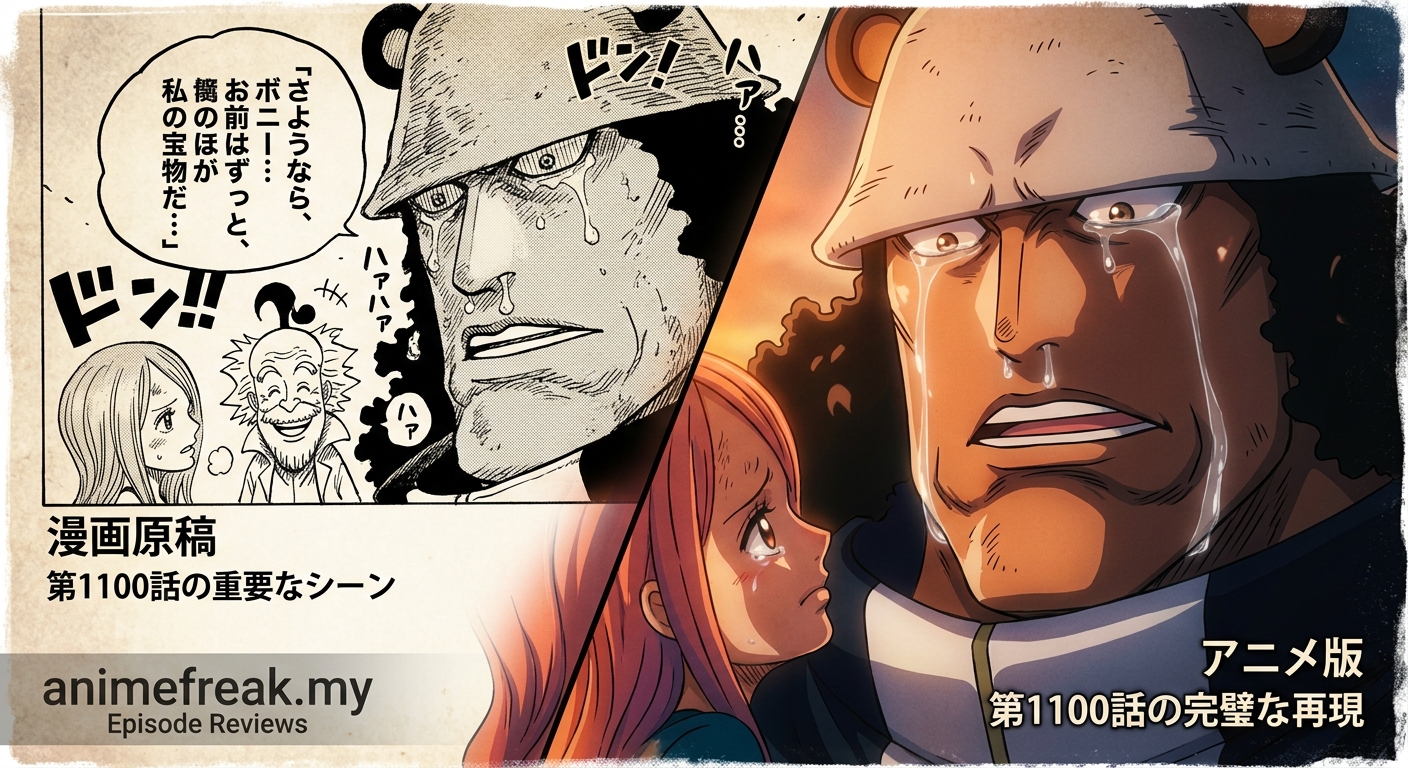
Toei Animation extended scenes that were single panels in the manga. When young Bonney reaches for her father, the anime holds on that moment. The manga showed it in one image. The anime lets you feel the weight of that separation.
The colour palette shifted throughout the episode. Flashback scenes used warmer tones during happy memories. The colour drained as Kuma’s suffering intensified. This visual storytelling added layers the black and white manga couldn’t provide.
Voice actor Hideyuki Hori delivered a career-defining performance as Kuma. His gentle whispers to Bonney contrasted sharply with his anguished cries during his transformation. The manga conveyed emotion through Eiichiro Oda’s art. The anime added an entirely new dimension through sound.
Breaking Down the Key Emotional Beats
The episode structured Kuma’s story in three distinct emotional movements. Each built upon the last until the final revelation hit with maximum impact.
The Father-Daughter Bond
Early scenes established Kuma as a devoted father. The anime added small moments of interaction. Kuma braiding Bonney’s hair. Bonney laughing at his stories. These weren’t in the manga, but they made the later tragedy cut deeper.
The animation team paid attention to body language. Kuma’s gentle hand on Bonney’s head. The way he kneeled to her eye level. These physical details communicated his love without dialogue.
The Descent Into Suffering
Kuma’s transformation from loving father to mindless weapon formed the episode’s emotional core. The manga showed this progression across multiple chapters. The anime condensed it into a single devastating sequence.
Watch how the animation handles his eyes. They start full of warmth and determination. Slowly, that light fades. By the end, they’re empty. The anime team animated this change gradually, making it more horrifying than any sudden shift.
The soundtrack deserves special mention. Composer Kohei Tanaka created a theme that starts hopeful and deteriorates into something mechanical and cold. It mirrors Kuma’s physical transformation perfectly.
The Ultimate Sacrifice
The final act revealed why Kuma endured everything. His love for Bonney drove every decision. The anime extended this revelation, giving viewers time to process the full scope of his sacrifice.
Silent moments carried enormous weight. After Kuma’s final request, the episode held on Bonney’s face for several seconds. No dialogue. No music. Just her processing what her father had done for her.
Technical Choices That Elevated the Source Material
The anime made specific technical decisions that transformed good manga panels into exceptional television.
| Technique | Manga Approach | Anime Enhancement |
|---|---|---|
| Pacing | Standard panel flow | Extended emotional beats |
| Colour | Black and white | Symbolic colour shifts |
| Sound | Reader imagination | Orchestral score and voice acting |
| Camera Work | Fixed panel angles | Dynamic camera movements |
| Timing | Reader controlled | Director controlled for maximum impact |
The camera work deserves deeper analysis. During Kuma’s most painful moments, the camera slowly pushed in on his face. This created an uncomfortable intimacy. You couldn’t look away from his suffering.
Conversely, wide shots emphasized his isolation. When the World Government took everything from him, the frame pulled back. He became small and alone in the composition.
How the Anime Handled Manga Limitations
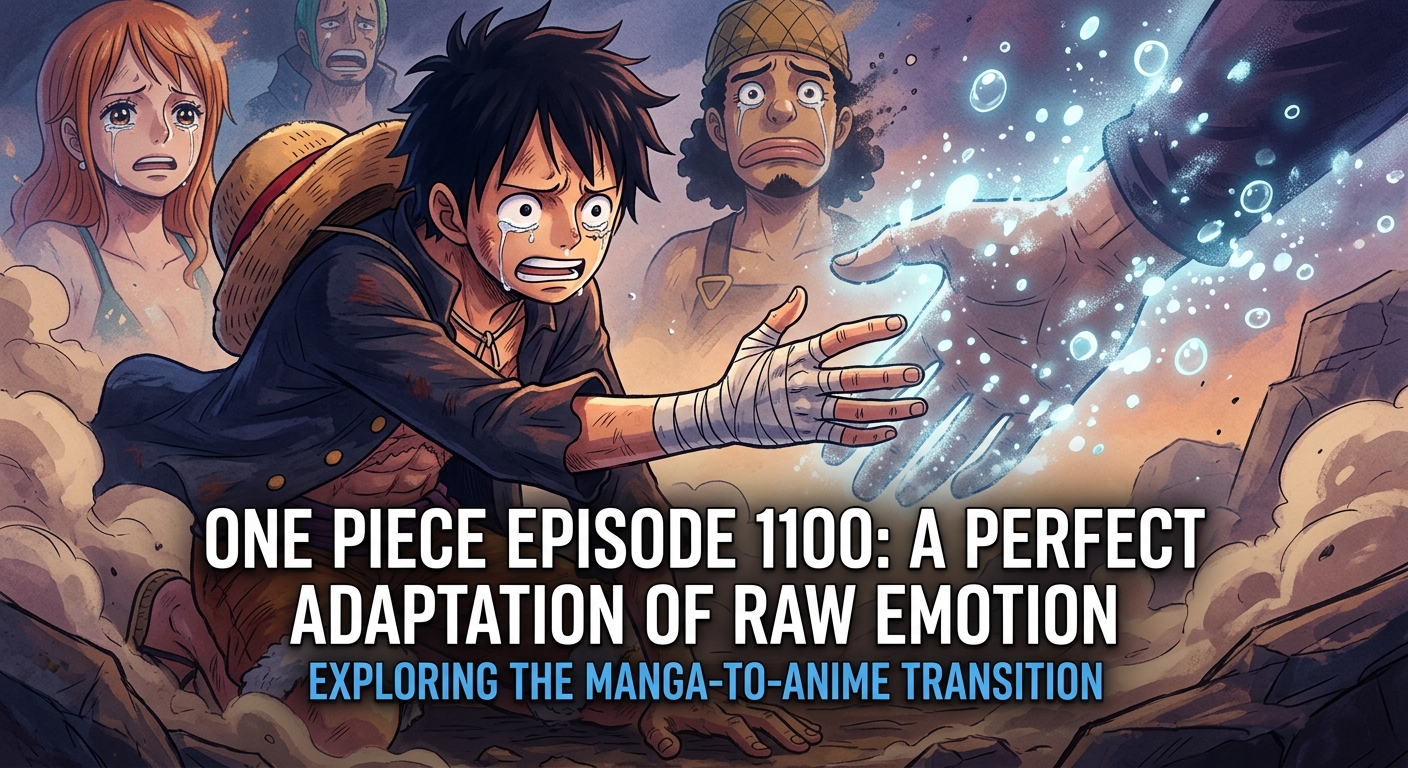
Manga excels at many things, but motion and sound aren’t among them. Episode 1100 used these tools brilliantly.
- The anime showed Kuma’s memories flooding back in real-time, using quick cuts and overlapping imagery that manga panels couldn’t replicate.
- Voice acting conveyed subtext that manga readers had to infer from facial expressions alone.
- The musical score provided emotional context that guided viewer reactions without being manipulative.
The episode also corrected some manga pacing issues. The original chapters jumped between timelines frequently. The anime streamlined this, making the narrative easier to follow while maintaining emotional impact.
“The best adaptations don’t just copy the source material. They understand what made it work and find new ways to express those same ideas in a different medium.” This principle guided every choice in episode 1100.
Fan Reactions Across Social Media
The episode sparked massive discussion online. Fans who had read the manga chapters years ago found themselves crying again. New viewers who only watched the anime were devastated.
Common themes emerged in fan responses:
- Many viewers needed to pause the episode multiple times to compose themselves
- The extended animation sequences made Kuma’s sacrifice feel more real and immediate
- Voice acting elevated scenes that were already powerful in manga form
- The episode worked as a standalone story even for casual viewers
- Long-time fans appreciated how the adaptation respected Oda’s original vision
Several anime-only viewers reported going back to read the manga chapters after watching. They wanted to see how the original presented these moments. Most agreed the anime enhanced rather than replaced the manga experience.
Comparing Manga Panels to Anime Frames
Specific moments demonstrate how thoughtful adaptation works. Take the panel where Kuma first sees Bonney after his partial transformation. In the manga, it’s a single powerful image. Bonney reaches toward him. His face shows recognition fighting against his programming.
The anime stretched this moment across nearly thirty seconds. First, Kuma’s empty eyes. Then, a flicker of recognition. His hand twitches. The music swells. Bonney’s voice calling to him. His face contorts as he fights to remember. Finally, that spark of humanity returns.
Both versions work beautifully. But they work differently. The manga lets you linger as long as you need. The anime controls the timing to build maximum emotional impact.
Another example: Kuma’s final conversation with Dragon. The manga presented this as a straightforward dialogue scene. The anime added rain. Kuma stood in the downpour, already looking defeated. The rain visually represented his tears, since he could no longer cry.
These additions didn’t contradict the manga. They enhanced it by using tools unique to animation.
Why This Episode Matters for the Series
Episode 1100 represents a turning point in how Toei approaches One Piece adaptation. For years, fans criticized the anime’s pacing and stretched content. This episode showed what the team could accomplish when given proper time and resources.
The episode adapted roughly two manga chapters. That’s a much slower pace than typical One Piece episodes. But the slower pace served the story. Every moment had room to breathe.
This approach might influence future episodes. If Toei sees strong viewer response to this pacing, they might apply similar techniques to other emotional arcs. The Egghead Island arc contains several moments that would benefit from this treatment.
Technical Animation Highlights
Animation quality varied throughout One Piece’s thousand-plus episodes. Episode 1100 maintained consistently high quality from start to finish.
Key animation sequences showed exceptional attention to detail. Watch Kuma’s hands during emotional moments. The animators drew every finger movement, every small gesture. These details made him feel human even as he became less so.
Facial animation reached new heights for the series. Subtle expressions conveyed complex emotions. A slight eyebrow raise. A barely visible lip quiver. These small touches added up to performances as nuanced as live-action acting.
The episode also used lighting masterfully. Harsh shadows during painful moments. Soft, warm light during happy memories. Stark, clinical lighting during Kuma’s transformation. Each lighting choice supported the emotional tone.
What This Means for Future Adaptations
Episode 1100 set a new standard. Fans now know what One Piece animation can achieve when the production team has adequate time and resources.
Future emotional arcs will be compared to this episode. That creates both pressure and opportunity. The team proved they can handle delicate, character-focused storytelling. Viewers will expect similar quality for comparable moments.
The episode also demonstrated that slower pacing works when justified by the content. Not every episode needs breakneck speed. Sometimes, the most powerful choice is to slow down and let emotions resonate.
The Music That Made Us Cry
Kohei Tanaka’s score deserves its own discussion. The composer has worked on One Piece for decades. He understands these characters as well as anyone.
The main theme for Kuma’s backstory started with simple piano notes. As the story progressed, strings joined in. By the climax, the full orchestra played. This gradual build mirrored the emotional escalation perfectly.
Tanaka also knew when to use silence. During Kuma’s most devastating moments, the music stopped completely. These silent beats hit harder than any dramatic score could.
The ending theme placement was perfect. Instead of cutting to the credits immediately, the episode let the final scene breathe. The ending theme started quietly, almost hesitantly. It acknowledged that viewers needed time to process what they’d just witnessed.
How Voice Acting Transformed the Experience
Hideyuki Hori’s performance as Kuma will be remembered as one of the anime’s finest. He conveyed warmth, strength, desperation, and resignation, often within the same scene.
Listen to how his voice changes throughout the episode. Early scenes feature a warm, gentle tone. As Kuma suffers, his voice becomes strained and desperate. By the end, when he’s mostly transformed, only hints of emotion remain.
The voice acting for young Bonney also deserves recognition. Child characters in anime can sound artificial. Bonney felt like a real child. Her confusion and pain came through authentically.
Even supporting characters received strong voice direction. Every performance served the emotional story.
Bringing Kuma’s Story Full Circle
Episode 1100 didn’t just adapt manga panels. It created a complete emotional journey that honoured the source material while using animation’s unique strengths.
The episode proved that thoughtful adaptation requires understanding what makes a story work. Kuma’s tale succeeds because of its emotional core. The anime team recognized this and made choices that amplified those emotions.
Whether you’ve followed One Piece for decades or just started watching, this episode demonstrates why the series has endured. It’s not just about pirates and adventure. It’s about sacrifice, love, and the lengths we go to protect those we care about. The anime brought those themes to life in ways that will stick with viewers long after the credits roll.