
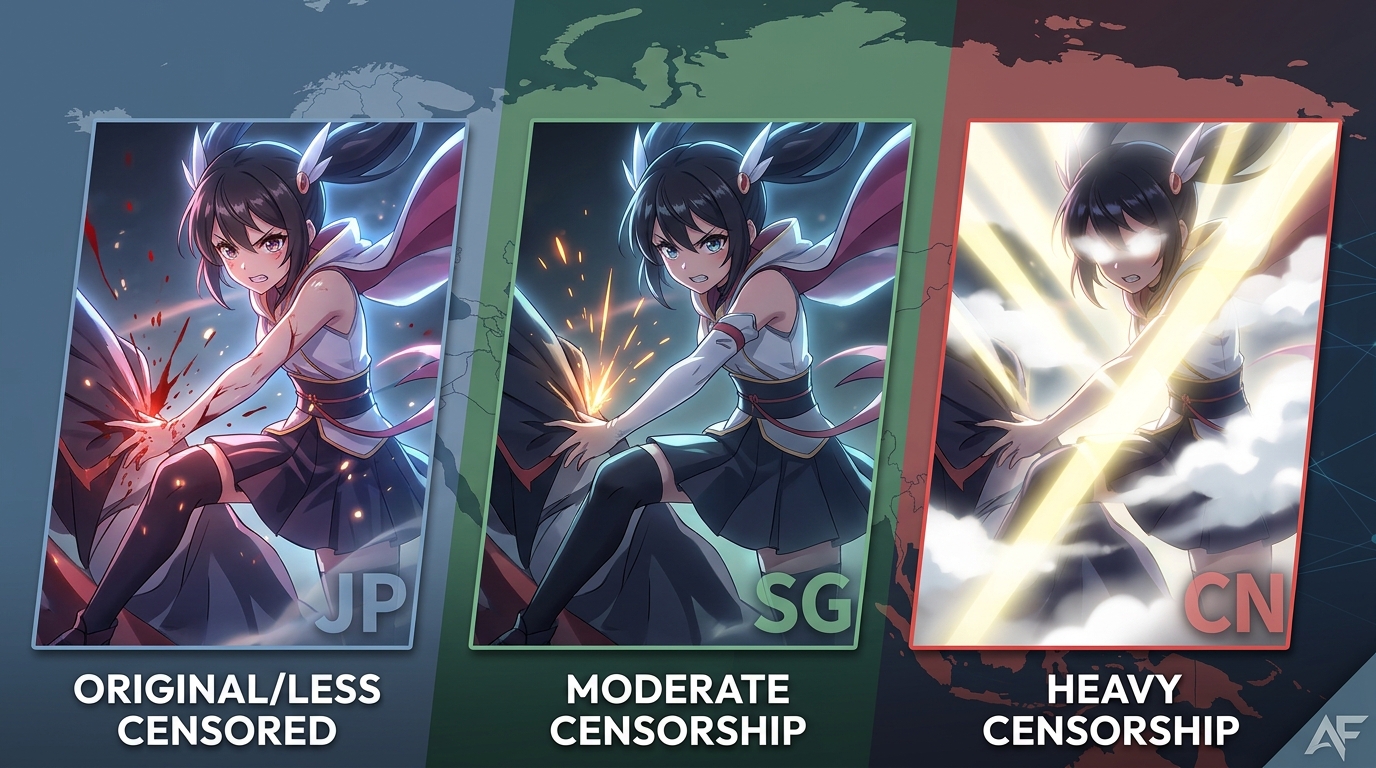
Anime fans across Asia watch the same shows, but they’re not always seeing the same content. A violent scene might be heavily edited in one country while remaining untouched in another. Blood gets recoloured, dialogue gets rewritten, and sometimes entire episodes vanish from streaming platforms. The reasons behind these changes reveal fascinating differences in cultural values, government policies, and broadcasting standards across the region.
Anime censorship in Asia differs dramatically between countries due to varying cultural norms, government regulations, and broadcasting standards. Japan’s original content often faces modifications for blood, violence, sexual content, and political themes when distributed to China, Malaysia, Singapore, Thailand, and other Asian markets. Understanding these regional differences helps fans locate uncut versions and explains why streaming platforms show different edits across territories.
Why the Same Anime Looks Different Across Asian Countries
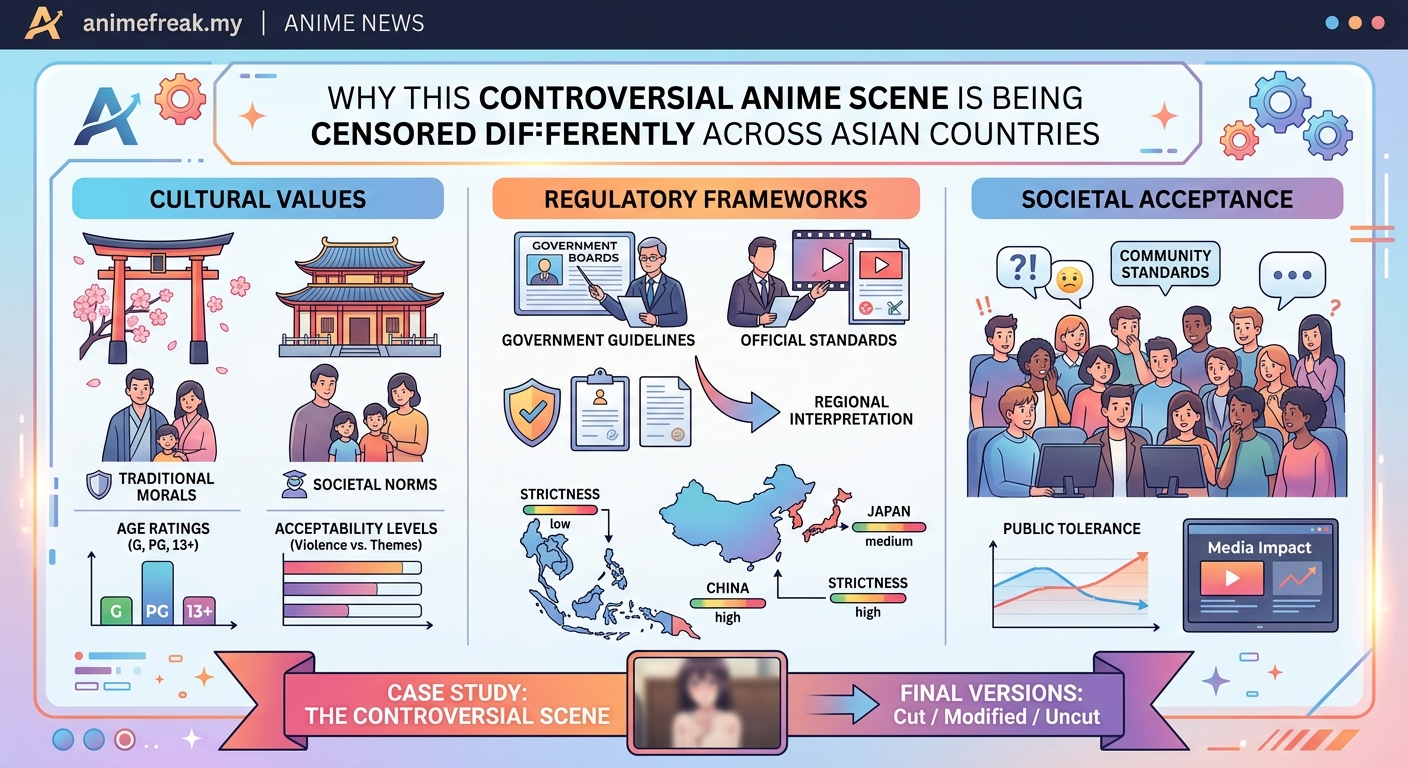
Broadcasting standards create the first layer of censorship. Each country maintains its own classification system for media content. What passes for a PG13 rating in one nation might require an R18 classification elsewhere.
Japan produces anime primarily for its domestic market. Studios create content based on Japanese broadcast standards and cultural expectations. When distributors license these shows for other Asian markets, they must adapt content to meet local requirements.
China implements the strictest controls. The State Administration of Press and Publication reviews all foreign media before release. Shows must align with socialist values and cannot depict supernatural elements, time travel, or content that “disturbs social order.”
Malaysia operates under guidelines from the Film Censorship Board and the Malaysian Communications and Multimedia Commission. Religious and cultural sensitivities shape what content gets approved. Scenes showing excessive skin, religious imagery, or LGBTQ+ themes typically face cuts.
Singapore’s Infocomm Media Development Authority uses a rating system similar to Western countries but applies stricter standards for content accessible to minors. Violence and sexual content receive careful scrutiny.
Thailand’s Ministry of Culture reviews imported media. Buddhist values influence censorship decisions, particularly regarding depictions of religion and monarchy.
Common Types of Content That Get Censored
Violence takes different forms across anime genres. Blood colour changes represent the most visible edit. Red blood becomes black, white, or green in many markets. Some distributors simply reduce blood volume or remove splatter effects entirely.
Gore scenes face heavier modifications. Dismemberment gets obscured with strategic camera angles or darkened screens. Close-ups of injuries get replaced with reaction shots. Fight sequences might lose frames to reduce impact.
Sexual content triggers immediate attention from censors. Fanservice scenes with revealing clothing get cropped or dimmed. Bath scenes receive fog overlays or brightness adjustments. Suggestive dialogue gets rewritten to sound more innocent.
Nudity, even artistic or non-sexual, rarely survives intact. Character designs might be altered to add more clothing. Beach episodes and hot spring scenes become editing nightmares for distributors trying to maintain narrative flow while meeting standards.
Religious imagery creates problems in multiple markets. Crosses, churches, and Christian symbolism get removed or redesigned in some countries. Buddhist imagery faces scrutiny in Thailand. Islamic references require careful handling in Malaysia and Indonesia.
Political themes vary by sensitivity. Chinese censors remove content criticising government systems or promoting democracy. Historical references that contradict official narratives get cut. Shows depicting Taiwan or Tibet as independent nations face bans.
Substance use depictions change based on local laws. Smoking scenes might get darkened or removed entirely. Alcohol consumption by minors gets edited out. Drug references, even fictional ones, face removal.
How Different Countries Handle Popular Anime
Attack on Titan demonstrates regional censorship clearly. The show’s graphic violence means heavy edits across most Asian markets outside Japan. Chinese streaming platforms removed entire episodes due to gore levels. Malaysian broadcasts darkened violent scenes and reduced blood effects. Singapore allowed the content with appropriate age ratings but required warnings before episodes.
Tokyo Ghoul faced similar treatment. The series’ cannibalism themes and intense violence led to significant cuts. Chinese platforms initially hosted edited versions before removing the show entirely. Thai broadcasts modified torture scenes and reduced blood throughout.
Death Note encountered different problems. The supernatural elements and moral ambiguity troubled Chinese censors. The show received limited release with dialogue changes emphasising that the protagonist’s actions were wrong. Malaysian versions kept most content but edited scenes showing religious imagery.
One Piece provides an interesting case study. The long-running series has been edited differently across its 20+ year run. Early episodes faced heavy censorship in multiple markets. Smoking scenes got removed or altered. Violence got toned down. As anime became more mainstream, some markets relaxed restrictions on later episodes.
My Hero Academia deals with ongoing censorship. Character names with historical or cultural significance get changed. References to World War II or Japanese imperialism face modification for Chinese and Korean markets. The show’s popularity means distributors work harder to find acceptable edits rather than pulling content entirely.
The Business Side of Censorship Decisions
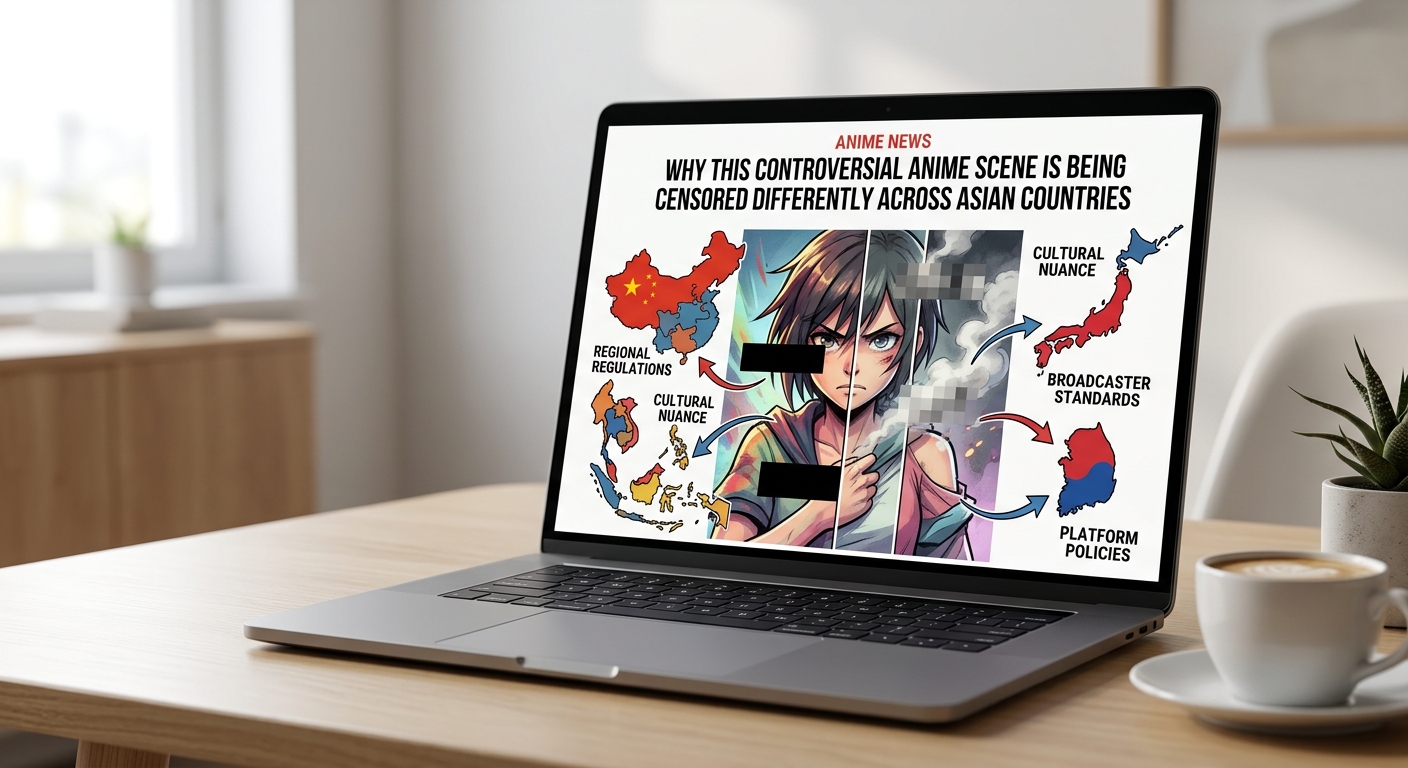
Streaming platforms make calculated choices. They want the largest possible audience while maintaining government approval. This creates a balancing act between content integrity and market access.
Regional licensing agreements specify censorship requirements. Distributors know before purchasing rights what changes they’ll need to make. Some studios now create “international versions” with pre-edited content for easier distribution.
Revenue potential influences how much effort goes into editing. Popular shows receive frame-by-frame attention to preserve as much content as possible. Lesser-known titles might get crude edits or simply not get licensed at all.
Fan backlash affects business decisions. When censorship becomes too obvious or damages storytelling, viewers complain. Platforms sometimes release statements explaining regulatory requirements. Some offer “premium” tiers with less censored content where legally possible.
Understanding censorship patterns helps you find the version closest to the original. Check which country a streaming platform operates from. Japanese platforms hosting content for international viewers typically show the least edited versions. Hong Kong and Taiwan often have lighter censorship than mainland China. Singapore and Malaysia fall somewhere in the middle for most content.
Technical Methods Used for Censorship
| Censorship Technique | Common Usage | Viewer Impact |
|---|---|---|
| Colour replacement | Blood scenes, injury details | Noticeable but maintains flow |
| Screen darkening | Gore, nudity, violence | Disrupts visibility |
| Frame removal | Extreme violence, sexual content | Creates choppy animation |
| Digital fog/blur | Nudity, revealing clothing | Obvious and distracting |
| Dialogue rewriting | Political content, profanity | Changes character personality |
| Scene removal | Unacceptable themes | Damages plot continuity |
| Camera angle changes | Fanservice, violence | Least noticeable method |
Colour grading represents the simplest edit. Editors adjust hue and saturation to change blood colour or tone down violent scenes. This method preserves animation quality while meeting censorship requirements.
Digital overlays add fog, steam, light rays, or darkness to obscure content. These edits are quick to implement but often look artificial. Viewers immediately notice when a bright scene suddenly gets dark for no narrative reason.
Frame cutting removes problematic content entirely. Editors delete frames showing unacceptable material. This creates timing issues where character movements look jerky or dialogue doesn’t sync properly with mouth movements.
Redrawing offers the highest quality but costs more. Artists create new frames to replace censored content. Character clothing gets extended, wounds get reduced, or entire backgrounds get redesigned. Major releases sometimes receive this treatment.
Audio editing accompanies visual changes. Profanity gets replaced with milder terms. Dialogue referencing censored visual elements gets rewritten. Sound effects for violence might get reduced or removed.
Finding Uncensored Versions as an Asian Viewer
Physical media offers one solution. Japanese Blu-rays and DVDs contain original, uncut content. Import shops in major Asian cities stock these releases. Online retailers ship internationally, though customs regulations vary by country.
VPN services let viewers access streaming platforms from other regions. Japanese Netflix contains different content than Malaysian Netflix. Hong Kong streaming services often have lighter censorship than mainland Chinese platforms. This method exists in a legal grey area depending on your location.
Fan communities share information about which platforms host the least censored versions. Forums and social media groups track regional differences. They note when platforms update content with new edits or restore previously cut scenes.
Legal streaming platforms sometimes offer multiple versions. Premium subscriptions might include uncut content with appropriate age verification. Some platforms label versions as “international,” “broadcast,” or “uncut” to help viewers choose.
- Check the platform’s country of operation before subscribing
- Read user reviews mentioning censorship for specific shows
- Compare episode lengths between platforms as a censorship indicator
- Look for age rating information that suggests less editing
- Join fan communities discussing regional availability
Cultural Context Behind Censorship Choices
Understanding why content gets censored helps predict what to expect. Chinese censorship stems from government control over media narratives. The goal is maintaining social stability and promoting official values. Content that questions authority or depicts alternative social systems faces removal.
Malaysian censorship reflects Islamic values and multicultural sensitivities. The country’s diverse population means content must avoid offending religious groups. Modesty standards affect how much skin can be shown. LGBTQ+ content faces strict limits due to religious and legal restrictions.
Singapore balances Western media influence with Asian values. The government wants citizens exposed to global culture while protecting youth from harmful content. This creates a tiered system where adults access more content than minors.
Thai censorship protects the monarchy and Buddhist religion above all else. Lèse-majesté laws make it illegal to criticise royal family members. Religious imagery requires respectful treatment. Violence and sexual content face standards similar to other Southeast Asian nations.
South Korea censors based on historical tensions with Japan. References to Japanese imperialism get modified or removed. The country’s own media standards affect how Japanese content gets adapted. Recent years have seen some relaxation as anime gains mainstream acceptance.
How Censorship Affects Storytelling and Character Development
Plot holes emerge when scenes get removed. Character motivations become unclear when key moments vanish. Relationships develop suddenly because the building tension got edited out. Viewers watching censored versions sometimes find stories confusing or poorly paced.
Character personalities change through dialogue editing. A morally grey protagonist might become more heroic through rewritten lines. Dark themes get lightened, changing the show’s entire tone. Villains lose nuance when their backstories get cut for containing sensitive content.
Emotional impact suffers from violence censorship. A character’s death should feel significant, but heavy editing reduces the weight. Action sequences lose intensity when blood disappears and impacts get softened. The stakes feel lower when consequences aren’t shown.
Thematic depth gets stripped away. Shows exploring complex moral questions might have those elements removed for being too controversial. Social commentary gets edited out. What remains is a simpler, less challenging version of the story.
The Future of Anime Distribution in Asia
Streaming platforms are negotiating for more control over age-gated content. They want to offer uncut versions to verified adult subscribers while maintaining edited versions for general audiences. Regulatory approval for this approach varies by country.
Studios are becoming more aware of international markets during production. Some create content with global distribution in mind, avoiding elements that will definitely face censorship. Others double down on creative freedom, accepting that some markets won’t receive their work.
Fan pressure influences industry decisions. When censorship becomes too restrictive, viewers seek alternative sources. This pushes platforms to negotiate for less edited content or risk losing subscribers to grey market options.
Technology enables more precise censorship. AI tools can automatically detect and modify problematic content. This might lead to faster, cheaper editing but could also enable more aggressive censorship if governments adopt these tools.
Regional differences will likely persist. Each country’s cultural values and political systems create unique censorship landscapes. What changes is how distributors navigate these requirements and how viewers access content.
Making Sense of What You’re Watching
Recognising censorship helps you understand what you’re missing. Sudden scene transitions, colour inconsistencies, or awkward dialogue often indicate edits. Comparing episode lengths between regions reveals how much content got removed.
Community resources help fill gaps. Episode summaries describe cut content. Fan translations explain dialogue changes. These tools let you piece together the original story even when watching a censored version.
Choosing your platform matters. Research which streaming services in your region have the best reputation for minimal censorship. Sometimes paying more for a premium service gets you closer to the original content.
Your viewing experience improves when you know what to expect. Understanding anime censorship in Asia means you won’t be confused by sudden plot jumps or tonal shifts. You can seek out better versions or accept the edited content with full awareness of what changed.
Getting the Full Picture
Anime censorship in Asia reflects each country’s unique cultural landscape and regulatory environment. These differences won’t disappear, but knowing they exist empowers you as a viewer. You can make informed choices about where and how to watch your favourite shows. Whether you seek out uncut versions or accept local edits, understanding the why behind censorship changes how you experience anime across Asian markets.