
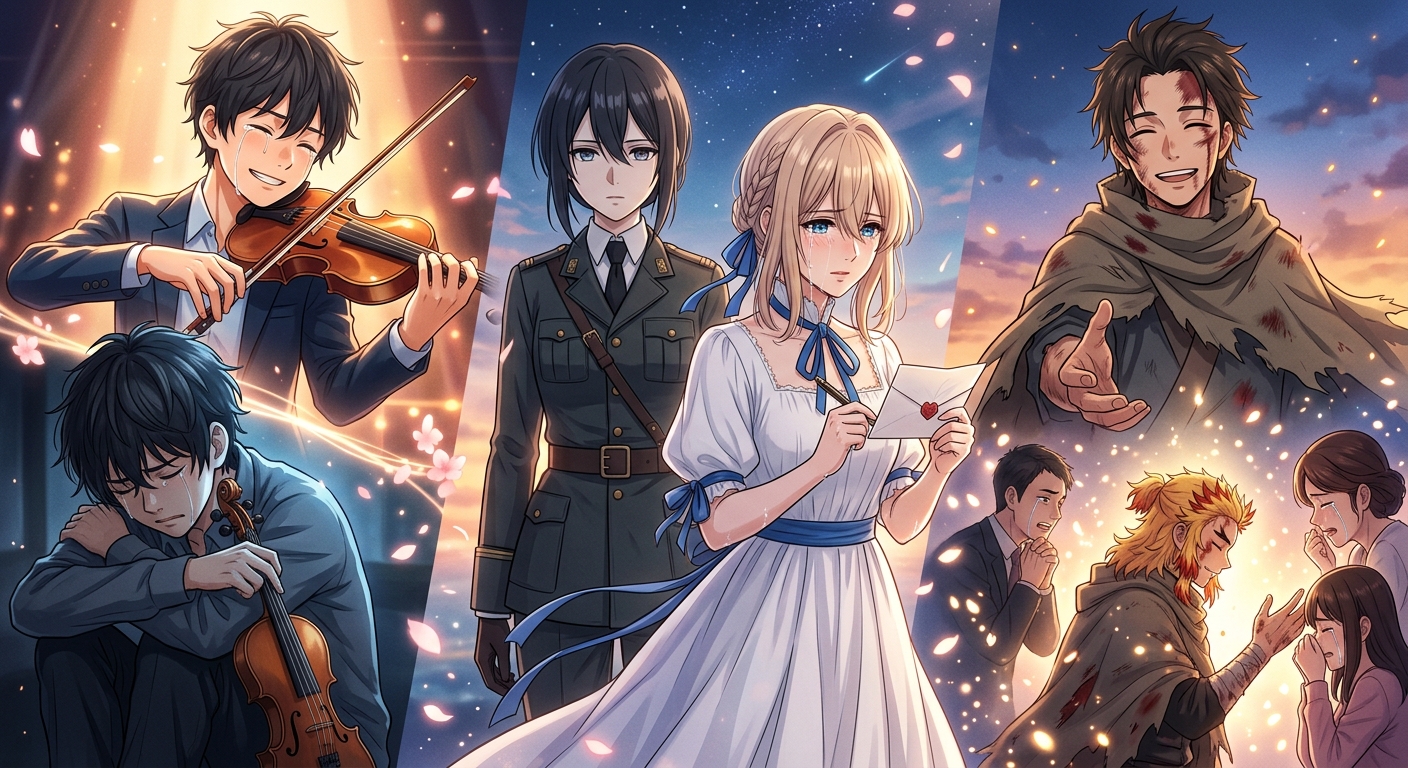
Nothing hits quite like watching a character transform before your eyes. One moment they’re insufferable, the next you’re sobbing into your pillow at 2 AM because their journey just broke you completely.
Character development separates forgettable entertainment from stories that stick with us for years. The best arcs don’t just change a character’s circumstances. They fundamentally reshape who they are, forcing them to confront their flaws, trauma, and beliefs until something new emerges.
The most memorable character arcs combine relatable struggles with meaningful consequences. Whether through redemption, tragedy, or growth, these transformations resonate because they mirror real emotional journeys. Great character development requires time, consistent writing, and stakes that genuinely matter. The best examples span anime, Western TV, and film, proving that powerful storytelling transcends medium when executed with authenticity and emotional honesty.
What Makes Character Development Truly Exceptional
Great character arcs share specific qualities that separate them from surface-level changes.
Consistency matters more than anything. Characters can’t suddenly become different people without clear motivation. Every decision should trace back to established personality traits, even when those traits evolve. The transformation needs to feel earned, not convenient for the plot.
Time plays a crucial role. Rushed development feels hollow. The best arcs unfold gradually, letting viewers witness each small shift in perspective. A character who changes overnight lacks the weight of someone who struggles across seasons or films.
Stakes must be real. Development without consequences is just window dressing. Characters need to lose something, gain something, or fundamentally alter their relationships. The change should ripple outward, affecting everyone around them.
“Character development is the soul of storytelling. When a character transforms authentically, viewers don’t just watch. They feel every painful step, every moment of doubt, every hard-won victory. That’s when entertainment becomes unforgettable.”
Redemption Arcs That Destroyed Us Emotionally
Redemption stories hit differently because they tap into our hope for second chances.
Zuko from Avatar: The Last Airbender remains the gold standard. His journey from angry antagonist to trusted ally spans the entire series. Each step forward comes with setbacks. His betrayal in Ba Sing Se hurts because we’d started believing in him. When he finally joins Team Avatar, it feels monumental because we’ve watched him fight himself for so long.
What makes Zuko’s arc work is the consistency. His honour obsession never disappears. It just redirects toward healthier goals. His relationship with Iroh provides the emotional anchor, making every reconciliation scene absolutely devastating.
Steve Harrington from Stranger Things offers a more compressed version. Season one paints him as the typical jock boyfriend. By season two, he’s babysitting kids and wielding a nail bat against interdimensional monsters. The transformation works because the writers never pretend his earlier behaviour didn’t happen. He grows past it through action, not apology.
Thorfinn from Vinland Saga takes redemption to brutal extremes. After spending years consumed by revenge, he breaks completely. The second season forces him to rebuild from nothing, working as a slave and refusing violence. Watching a character who lived for bloodshed learn to value life again creates a profound emotional experience.
Tragic Descents That Left Scars
Sometimes the most powerful development moves in the opposite direction.
Walter White’s transformation from timid teacher to ruthless drug lord unfolds with terrifying logic. Breaking Bad never lets viewers forget who Walt was. Each moral compromise builds on the last. By the end, we can trace every step that led from “I’m doing this for my family” to becoming the danger himself.
The tragedy works because Walt had opportunities to stop. Pride drives him more than necessity. Watching someone choose darkness despite alternatives hits harder than a character with no options.
Eren Yeager from Attack on Titan follows a similar path. He starts as a passionate kid fighting for freedom. Years of trauma, betrayal, and impossible choices warp that passion into something monstrous. The final season reveals how far he’s fallen, and it’s genuinely horrifying because we understand exactly how he got there.
Anakin Skywalker’s descent in the Star Wars prequels had the right idea but rushed execution. The Clone Wars animated series fixed this by giving him time to showcase both his heroism and his growing darkness. Seeing him slowly lose faith in the Jedi Order makes his eventual turn feel inevitable rather than sudden.
Growth Without Redemption or Tragedy
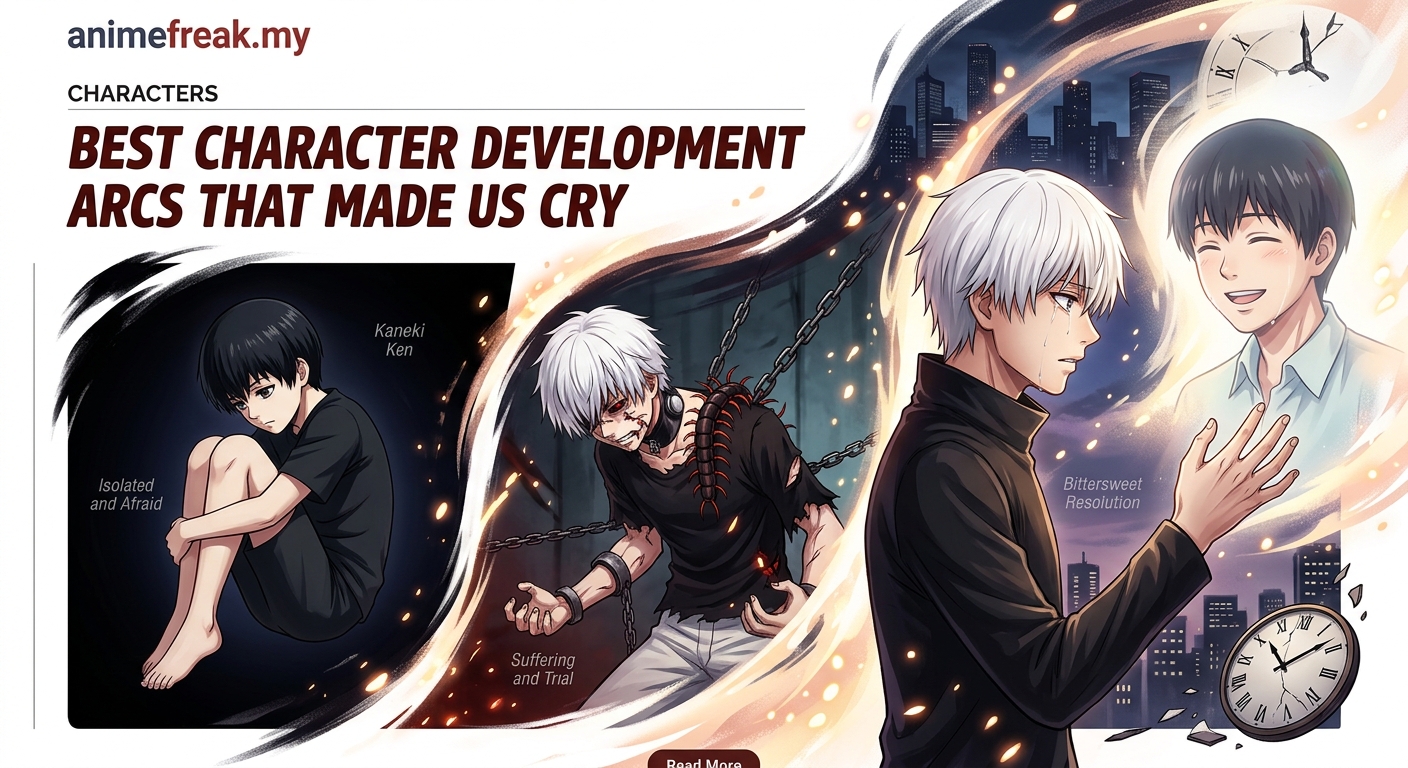
Not every great arc involves moral extremes. Sometimes characters just become better versions of themselves.
Mob from Mob Psycho 100 starts powerful but emotionally stunted. His development focuses on learning to express feelings, make friends, and accept himself. There’s no redemption because he wasn’t bad. There’s no tragic fall because he stays fundamentally kind. He just grows up, and it’s beautiful.
Violet Evergarden begins as a child soldier who doesn’t understand emotions. The series follows her learning what “I love you” means through writing letters for others. Each episode adds another layer to her emotional education. By the end, she’s not a different person. She’s finally a complete one.
Shouya Ishida from A Silent Voice carries guilt for childhood bullying. His arc isn’t about redemption through grand gestures. It’s about learning to forgive himself, make amends where possible, and build genuine connections. The film handles disability, mental health, and growth with remarkable sensitivity.
The Structure Behind Powerful Transformations
Understanding how these arcs work helps identify quality storytelling.
| Element | Purpose | Common Mistakes |
|---|---|---|
| Catalyst | Triggers the need for change | Making it too convenient or random |
| Resistance | Shows why change is difficult | Skipping this entirely |
| Small Wins | Builds momentum | Rushing to the endpoint |
| Major Setback | Tests commitment | Making it feel like reset |
| Integration | New self becomes natural | Reverting to old patterns |
The catalyst can’t feel arbitrary. Something significant must shake the character’s worldview. For Zuko, it’s his father’s rejection. For Walter White, it’s the cancer diagnosis. The event must be big enough to justify the journey ahead.
Resistance demonstrates authenticity. People don’t change easily. Characters shouldn’t either. Zuko’s multiple betrayals of his own growth feel realistic. We’ve all taken steps backward when facing difficult changes.
Small wins keep viewers invested. If a character only suffers until a sudden transformation, the journey feels pointless. Gradual progress with occasional victories makes the eventual payoff satisfying.
Major setbacks separate good arcs from great ones. When Zuko betrays Iroh in Ba Sing Se, it hurts because we thought he’d turned a corner. That pain makes his eventual redemption more meaningful. Without setbacks, development feels too easy.
Integration proves the change stuck. Characters shouldn’t constantly reference their old selves or struggle with already-resolved issues. By the end, the new version should feel natural, not forced.
Why Some Characters Never Click Despite Potential
Not every attempted arc succeeds, even with talented creators.
Pacing problems kill development faster than anything. Daenerys Targaryen’s descent in Game of Thrones final season had the right pieces. The execution compressed years of potential development into episodes. Viewers couldn’t process the shift because they didn’t see enough steps between heroic liberator and mass murderer.
Inconsistent writing undermines character logic. When writers sacrifice established personality for plot convenience, viewers notice. Characters making decisions that contradict their core traits just to move the story forward breaks immersion completely.
Lack of consequences removes stakes. If a character can revert to old patterns without repercussions, why should viewers care about their growth? Development needs teeth. Relationships should change. Opportunities should open or close. Something must be different.
Building Your Own Character Development Radar
Learning to identify quality arcs enhances viewing experiences.
Start by asking what the character wants versus what they need. The gap between these reveals the arc’s potential. Zuko wants his father’s approval. He needs to accept himself. That tension drives his entire journey.
Track small changes in behaviour. Does the character react differently to similar situations as the story progresses? Subtle shifts often signal meaningful development before major turning points arrive.
Notice relationship evolution. How characters interact with others reveals internal changes. Steve Harrington’s arc shows through his shifting dynamics with Nancy, Jonathan, and eventually Dustin. His growth manifests in how he treats people.
Watch for earned moments. When something emotional happens, ask if the story put in the work. Did we see enough development to justify this reaction? Rushed emotional beats feel hollow. Earned ones devastate.
The Role of Supporting Characters in Development
No character transforms in isolation.
Iroh serves as Zuko’s moral compass. His unwavering love provides safety for Zuko to question everything he’s been taught. Without Iroh, Zuko’s redemption loses its emotional foundation.
Jesse Pinkman acts as Walter White’s conscience. Watching Walt manipulate and destroy Jesse highlights his descent. Jesse’s presence makes Walt’s transformation visible through contrast.
Supporting characters often represent different paths. They show what the protagonist could become, for better or worse. These mirrors help viewers understand the stakes of each choice.
Cross-Cultural Approaches to Character Growth
Different storytelling traditions handle development uniquely.
Anime often embraces longer timeframes. Series can spend entire seasons on internal struggles. This patience allows for nuanced exploration of trauma, identity, and change. Shows like March Comes in Like a Lion dedicate episodes to small emotional shifts that Western media might compress into scenes.
Western television increasingly adopts serialized storytelling, allowing for deeper development. The shift from episodic to season-long arcs created space for characters to grow beyond their initial archetypes.
Film faces unique constraints. Two hours limits development scope. The best film arcs focus tightly on specific transformations rather than attempting comprehensive character overhauls. A Silent Voice succeeds by narrowing its focus to Shouya’s specific journey of atonement and self-acceptance.
Recognizing When Development Serves the Story
Character arcs should enhance themes, not distract from them.
Attack on Titan uses Eren’s transformation to examine freedom, revenge, and the cycle of hatred. His development isn’t just personal drama. It embodies the story’s central questions about breaking cycles of violence.
Breaking Bad explores pride, masculinity, and the American Dream through Walter White’s descent. His arc doesn’t exist separately from these themes. It is the vehicle for examining them.
The best character development feels inseparable from the story itself. Remove the arc and the entire narrative collapses. That integration signals thoughtful construction rather than character development added as an afterthought.
Common Patterns Across Memorable Arcs
Certain elements appear repeatedly in beloved character journeys.
Loss often triggers transformation. Characters lose people, ideals, or their sense of self. This destruction creates space for something new. Thorfinn loses his purpose. Violet loses her commander. Zuko loses his place in the Fire Nation. Each loss becomes the foundation for rebuilding.
Mentors provide guidance but can’t force change. Iroh, Reigen, and countless others offer wisdom. The protagonist must choose to listen. This preserves agency while acknowledging that growth rarely happens alone.
Identity crises mark turning points. Characters question who they are and what they believe. These moments of doubt feel uncomfortable but necessary. Comfortable characters don’t change.
The Emotional Investment Factor
Why do certain arcs make us cry while others leave us cold?
Vulnerability creates connection. When characters admit fear, doubt, or pain, viewers recognize their own struggles. Zuko’s “I’m angry at myself!” outburst resonates because we’ve all felt that self-directed frustration.
Time builds attachment. The longer we spend with a character, the more their journey matters. This explains why TV series often create stronger emotional responses than films. We’ve invested hours into these people.
Authenticity trumps spectacle. A character crying alone in a quiet moment often hits harder than dramatic confrontations. Real emotions don’t always come with epic music and perfect lighting.
How to Discuss Character Development Thoughtfully
Analysing arcs enhances appreciation without diminishing enjoyment.
Focus on specific moments rather than vague impressions. “Zuko’s character development was good” says less than “Zuko’s decision to free Appa showed his changing priorities before he consciously recognized them.”
Consider context. What was happening in the character’s life? What options did they have? Understanding circumstances prevents oversimplified judgments.
Compare intentions to outcomes. Characters often mean well but cause harm, or vice versa. This complexity makes development interesting.
Acknowledge personal bias. Some arcs resonate based on individual experiences. What devastates one viewer might not affect another. That’s fine. Emotional responses are subjective.
Finding More Stories That Hit This Hard
Once you’ve experienced powerful character development, you’ll crave more.
Look for creator patterns. Writers who craft one exceptional arc often repeat that skill. Isayama’s work on Attack on Titan, Matsumoto’s character work in Mob Psycho 100, and Gilligan’s Breaking Bad all showcase consistent quality.
Check recommendations from people who loved the same arcs you did. Shared taste in character development often indicates alignment in other storytelling preferences.
Give shows time. Many best character development arcs need multiple episodes or even seasons to establish themselves. Early impressions don’t always predict eventual payoff.
Pay attention to themes that resonate with you. If redemption stories hit hard, seek those out. If you prefer growth without moral extremes, plenty of slice-of-life anime deliver exactly that.
Stories That Stay With Us Forever
The best character development arcs don’t just entertain. They change how we see storytelling and sometimes ourselves.
These transformations remind us that people can change. Not easily, not without pain, but genuinely. In a world that often feels fixed and unchangeable, watching characters overcome their worst traits or survive their darkest moments offers something precious.
Years after finishing these stories, specific scenes still surface in memory. Zuko and Iroh’s reunion. Walter White’s final admission. Violet finally understanding love. These moments persist because they captured something true about growth, loss, and what it means to become someone new.
The tears these arcs produce aren’t weakness. They’re recognition. We cry because we see ourselves in these struggles, these failures, these hard-won victories. That connection between fiction and feeling is why we keep searching for the next story that will wreck us completely.
Keep watching. Keep feeling. The next character arc that destroys you emotionally is out there waiting.