
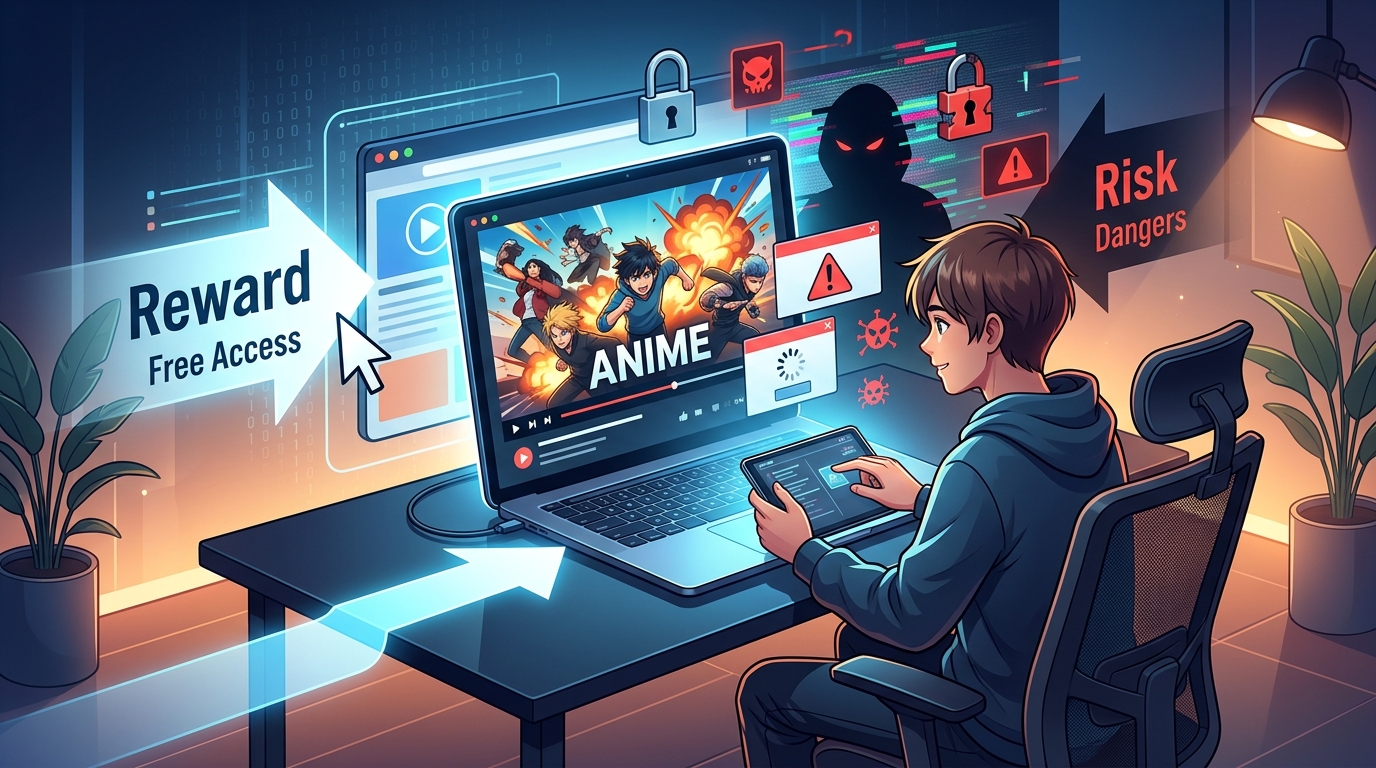
You’ve probably heard about friends who stream the latest anime episodes on free sites. No subscription fees, no credit card needed, and every show you want in one place. Sounds perfect, right? But behind those streaming windows, there are hidden dangers that could cost you way more than a monthly subscription ever would.
Free anime streaming sites carry serious risks including malware infections, data theft, legal consequences, and identity fraud. Most operate illegally and fund themselves through dangerous ads and crypto mining scripts. Legal alternatives like Crunchyroll, Netflix, and Bilibili offer safer viewing experiences with better quality, though they require subscriptions. Malaysian viewers face potential fines under copyright laws when using piracy sites.
The real dangers lurking on free anime sites
Free streaming platforms need to make money somehow. Without subscription revenue, they turn to aggressive advertising networks that don’t screen their content properly.
These ads often contain malicious code. One wrong click can install spyware on your device without you even knowing. Your personal information, passwords, and browsing history become vulnerable.
Many free sites also run cryptocurrency mining scripts in the background. Your device slows down because it’s secretly mining digital currency for someone else. Your electricity bill goes up, your laptop overheats, and your battery drains faster than normal.
Pop-up windows are another nightmare. Some trigger automatic downloads that bypass your browser’s security. You think you’re clicking the play button, but you’re actually downloading a file bundled with viruses.
The people running these sites aren’t concerned about your safety. They’re chasing profit through any means necessary.
Legal risks Malaysian viewers should know about
Copyright infringement isn’t just an abstract concept. Malaysia’s Copyright Act 1987 protects anime content, and streaming from unauthorized sources violates these protections.
While enforcement has been inconsistent, authorities have started taking action. Internet service providers can track your streaming activity. Some have sent warning letters to users accessing piracy sites.
Fines can reach up to RM20,000 for copyright violations. That’s enough to buy legal subscriptions for years. Criminal charges are also possible in severe cases, though rare for individual viewers.
Your university or workplace network might monitor internet usage too. Getting caught accessing piracy sites on school WiFi could lead to disciplinary action or loss of network privileges.
International copyright holders are also getting aggressive. They’ve successfully shut down major anime piracy platforms and are pursuing legal action across multiple countries.
How these sites actually make money
Understanding the business model helps explain why these platforms are so dangerous.
The primary revenue source is advertising. But legitimate ad networks won’t work with piracy sites. This forces them to partner with shady advertising companies that don’t verify their content.
These low-quality ad networks pay more per click because they’re selling dangerous products or running scams. Fake antivirus software, fraudulent tech support, and phishing schemes are common.
Some sites sell your data to third parties. Your email address, viewing habits, and device information get packaged and sold to data brokers. You’ll suddenly receive spam emails and targeted scams.
Premium account scams are another tactic. Sites offer “ad-free” viewing for a small fee, but they’re just collecting your payment information. Your credit card details end up on the dark web.
Cryptocurrency mining has become popular too. Sites embed scripts that use your device’s processing power to mine Bitcoin or other currencies. You pay through increased electricity costs and hardware wear.
Comparing risks versus legal alternatives
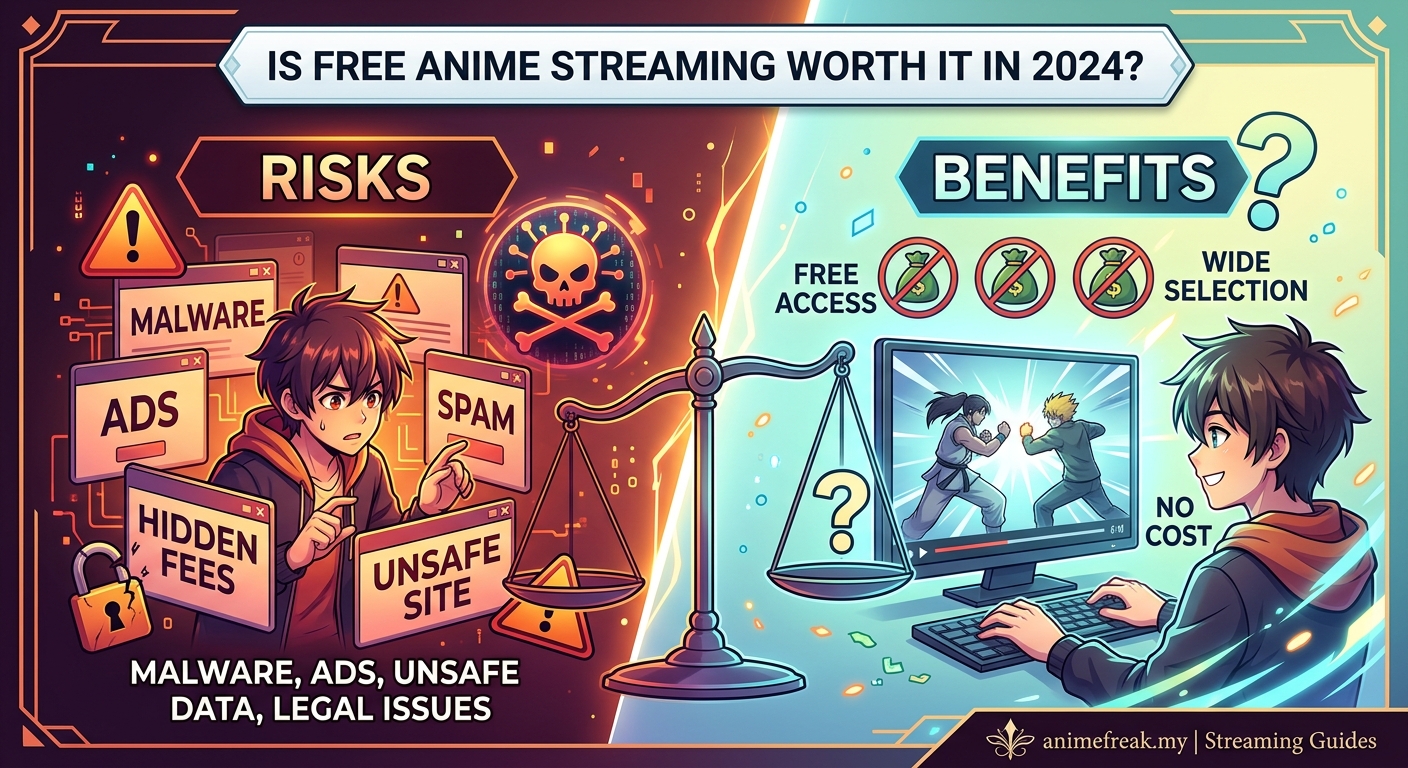
Let’s break down what you’re actually getting with free sites versus paid services.
| Factor | Free Sites | Legal Services |
|---|---|---|
| Video quality | 480p to 720p, often compressed | 1080p to 4K, proper encoding |
| Subtitles | Fan translations, inconsistent timing | Professional translations, multiple languages |
| Security | High malware risk, data theft | Encrypted, secure payment processing |
| Legal status | Copyright infringement | Fully licensed content |
| Availability | Links break constantly, sites shut down | Reliable streaming, offline downloads |
| Device support | Browser only, often buggy | Apps for phones, tablets, smart TVs |
| Cost | Free but risky | RM17 to RM55 monthly |
The price difference seems significant until you factor in potential costs from malware removal, identity theft recovery, or legal fines.
Professional streaming services also support the anime industry. Your subscription fees help fund new productions and ensure creators get paid for their work.
Warning signs of dangerous streaming sites
Not all free sites are equally risky, but certain red flags should make you leave immediately.
Excessive pop-ups are the first warning. If you can’t click anywhere without triggering new windows, the site is definitely running malicious ads.
Download requirements are another red flag. Legitimate streaming sites never require special players or codec downloads. These are almost always malware disguised as necessary software.
Suspicious domain names often indicate piracy sites. Random letter combinations, excessive hyphens, or domains registered in unusual countries suggest the site is trying to avoid detection.
No HTTPS encryption means your connection isn’t secure. Any data you send, including passwords or payment information, travels in plain text that anyone can intercept.
Requests for personal information should alarm you. Streaming sites don’t need your full name, address, or phone number. If they’re asking, they’re planning to sell or misuse that data.
What happens when your device gets infected
Malware from streaming sites can cause serious problems that last long after you close the browser.
Your device might start running slowly because background processes are consuming resources. Cryptocurrency miners and spyware tools constantly use your CPU and memory.
Strange browser behavior is common. New toolbars appear, your homepage changes, and search results redirect to advertising sites. These browser hijackers are difficult to remove completely.
Identity theft becomes a real risk if keyloggers get installed. These programs record everything you type, including passwords, credit card numbers, and private messages.
Ransomware is the worst-case scenario. Your files get encrypted, and criminals demand payment to unlock them. Recovery is often impossible without backups.
Banking fraud can occur if malware captures your financial information. Unauthorized charges appear on your credit card, or someone drains your bank account.
Legal streaming options available in Malaysia
You don’t need to risk your security to watch anime. Several legitimate platforms serve Malaysian viewers.
Crunchyroll offers the largest anime library with simulcast episodes appearing shortly after Japanese broadcast. The free tier includes ads but provides safe, legal access to thousands of shows.
Netflix has invested heavily in anime content. Original productions and licensed series are available in high quality with professional Malay and English subtitles.
Bilibili is particularly good for Asian content. The platform offers free streaming with a mix of Chinese and Japanese anime, though the library is smaller than Crunchyroll.
The small monthly cost of legal streaming is basically insurance against malware, legal problems, and supporting an industry you love. Think of it as investing in your own safety and the future of anime production.
YouTube channels like Ani-One Asia and Muse Asia provide completely free, legal anime streaming. They’re ad-supported but use Google’s safe advertising network. The selection is limited but constantly growing.
Disney+ Hotstar includes anime titles alongside other content. If you already subscribe for Marvel or Star Wars content, you’re getting anime as a bonus.
Steps to protect yourself if you’ve used free sites
If you’ve already streamed from questionable sites, take these actions to minimize damage.
-
Run a complete antivirus scan using reputable software like Malwarebytes or Bitdefender. Don’t rely on Windows Defender alone for this deep clean.
-
Change all your passwords, starting with email and banking accounts. Use unique, strong passwords for each service, and enable two-factor authentication wherever possible.
-
Check your bank and credit card statements for unauthorized charges. Report anything suspicious immediately and consider requesting new card numbers.
-
Clear your browser completely, including cache, cookies, and saved passwords. Better yet, uninstall and reinstall your browser to remove any persistent extensions or settings changes.
-
Monitor your credit report for signs of identity theft. Malaysian users can check with CTOS or CCRIS for unusual credit applications or inquiries.
-
Update your operating system and all applications to patch security vulnerabilities that malware might have exploited.
-
Consider using a VPN for future browsing to encrypt your internet traffic and hide your activity from your ISP.
Cost breakdown of legal versus risky streaming
Let’s look at the actual numbers over one year.
Crunchyroll’s premium subscription costs around RM17 monthly, totaling RM204 annually. You get ad-free streaming, offline downloads, and support for multiple devices.
Netflix ranges from RM17 to RM55 monthly depending on your plan. Even the basic tier provides secure streaming and a decent anime selection.
Compare this to potential costs from using free sites. Professional malware removal services charge RM200 to RM500. Identity theft recovery can cost thousands in lost time and money.
A single copyright fine of RM20,000 would pay for legal streaming for nearly 100 years. Even if the risk seems small, the potential consequence is massive.
Device replacement adds another cost. Severe malware infections sometimes require complete operating system reinstalls or even new hardware if ransomware bricks your system.
The time cost matters too. Dealing with malware, changing passwords, and monitoring accounts takes hours you could spend actually watching anime.
Why the anime community is shifting away from piracy
Attitudes toward free streaming sites are changing, even among longtime users.
Recent shutdowns of major piracy platforms like Aniwave have disrupted viewing habits. Fans who relied on these sites suddenly lost access to their watch lists and had to find alternatives anyway.
Improved legal options have made legitimate streaming more attractive. Simulcast releases mean you don’t have to wait weeks for fan translations. Professional subtitles are more accurate and better timed.
Growing awareness of security risks has scared many users away from free sites. Stories of ransomware attacks and identity theft have become too common to ignore.
The desire to support creators resonates with younger viewers. Many fans now understand that piracy directly harms the studios and artists who make their favorite shows.
Social acceptance has shifted too. Using legal streaming services is becoming the norm rather than the exception. Nobody wants to be the person who gave their entire friend group malware recommendations.
Alternative ways to watch anime affordably
If subscription costs are genuinely prohibitive, legitimate free options exist.
YouTube channels provide legal, ad-supported anime. Muse Asia, Ani-One Asia, and official studio channels upload full episodes with proper licensing agreements.
Library services sometimes include streaming platforms. Check if your local library offers access to Hoopla or Kanopy, which occasionally feature anime content.
Free trials let you sample premium services. Most platforms offer 7 to 30-day trials, perfect for binge-watching a specific series before canceling.
Student discounts reduce costs significantly. Some services offer reduced rates for university students with valid email addresses.
Family plans split costs among multiple users. Share a premium subscription with friends or family members to reduce individual expenses.
Rotating subscriptions is another strategy. Subscribe to one service for a month, watch everything you want, cancel, then move to another platform. You’ll spend less annually while staying legal.
Understanding the bigger picture
The free anime streaming ecosystem exists because of genuine problems with legal distribution. Regional licensing restrictions, delayed releases, and fragmented libraries frustrate viewers.
But using piracy sites isn’t just a victimless workaround. It funds criminal operations, exposes you to serious risks, and undermines the anime industry’s financial model.
Studios decide which shows to produce based on profitability. When piracy dominates viewership, companies can’t justify investing in certain genres or experimental content. Your favorite niche anime might never get a second season because the numbers don’t work.
Voice actors, animators, and support staff work brutal hours for modest pay. Legal streaming revenue helps improve working conditions and compensation in an industry known for exploitation.
Malaysian viewers have more power than they realize. Southeast Asian markets are becoming increasingly important to anime distributors. Demonstrating demand through legal subscriptions encourages companies to improve regional services.
The choice isn’t really between free and paid. It’s between risky and safe, illegal and legal, harmful and supportive.
Making the switch to safer viewing
Transitioning from free sites to legal streaming is easier than you might think.
Start by listing the shows you actually watch regularly. You’ll probably find that most are available on one or two legal platforms. You don’t need every service, just the ones with your favorite content.
Take advantage of free trials to test different platforms. Spend a week with each service to see which interface, library, and features work best for you.
Set a realistic budget based on your entertainment spending. If you’re buying coffee drinks or snacks regularly, redirecting that money to a subscription makes sense.
Remember that you can always cancel. Subscriptions aren’t permanent commitments. Try a service for a month, and if it doesn’t work out, move on.
Consider the peace of mind factor. Not worrying about malware, legal issues, or broken streaming links is worth something. You can actually relax and enjoy your shows instead of constantly troubleshooting problems.
The anime community is better when everyone contributes to a sustainable ecosystem. Legal streaming supports creators, protects your devices, and ensures the shows you love keep getting made.
Your viewing habits shape the industry’s future. Choose safety, legality, and support over the false economy of free streaming sites.