
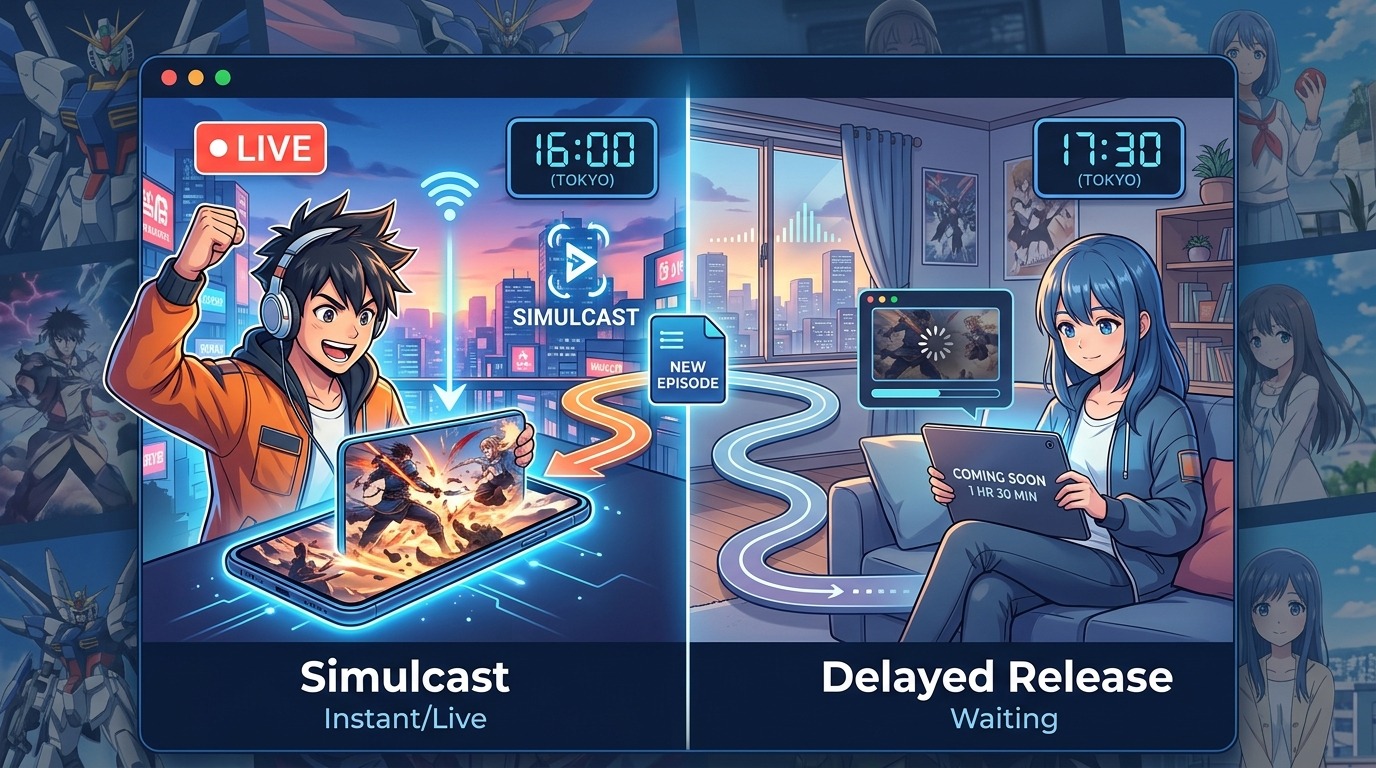
You’re halfway through a season and suddenly your platform doesn’t have the latest episode yet. Your friend on a different service already finished it hours ago. Frustrating, right?
The timing of anime episode releases varies wildly between streaming platforms. Some services offer simulcasts that air within an hour of the Japanese broadcast. Others wait days, weeks, or even months before adding new episodes. Understanding these patterns helps you choose the right subscription and avoid spoilers.
Anime episodes release at different times depending on your streaming platform. Crunchyroll and Funimation typically simulcast within one hour of Japanese airing. Netflix uses batch releases, dropping entire seasons weeks or months later. Regional licensing affects availability in Malaysia. Check each platform’s schedule page and enable notifications to catch new episodes immediately after they drop.
What Simulcast Actually Means
Simulcast refers to episodes released internationally within hours of their Japanese television broadcast. The term combines “simultaneous” and “broadcast.”
Most simulcasts appear 30 to 90 minutes after the original air time in Japan. This delay accounts for subtitle translation and quality checks. Some premium services reduce this window to as little as 15 minutes for popular titles.
The Japanese broadcast schedule determines everything. If a show airs in Tokyo at 11:00 PM JST on Saturday, Malaysian viewers can expect the simulcast around 10:00 PM to 11:30 PM MYT the same evening, accounting for the one-hour time difference.
Not every anime gets simulcast treatment. Licensing agreements, production schedules, and regional restrictions all play a role. A series might simulcast in North America but arrive weeks later in Southeast Asia.
Platform by Platform Release Patterns
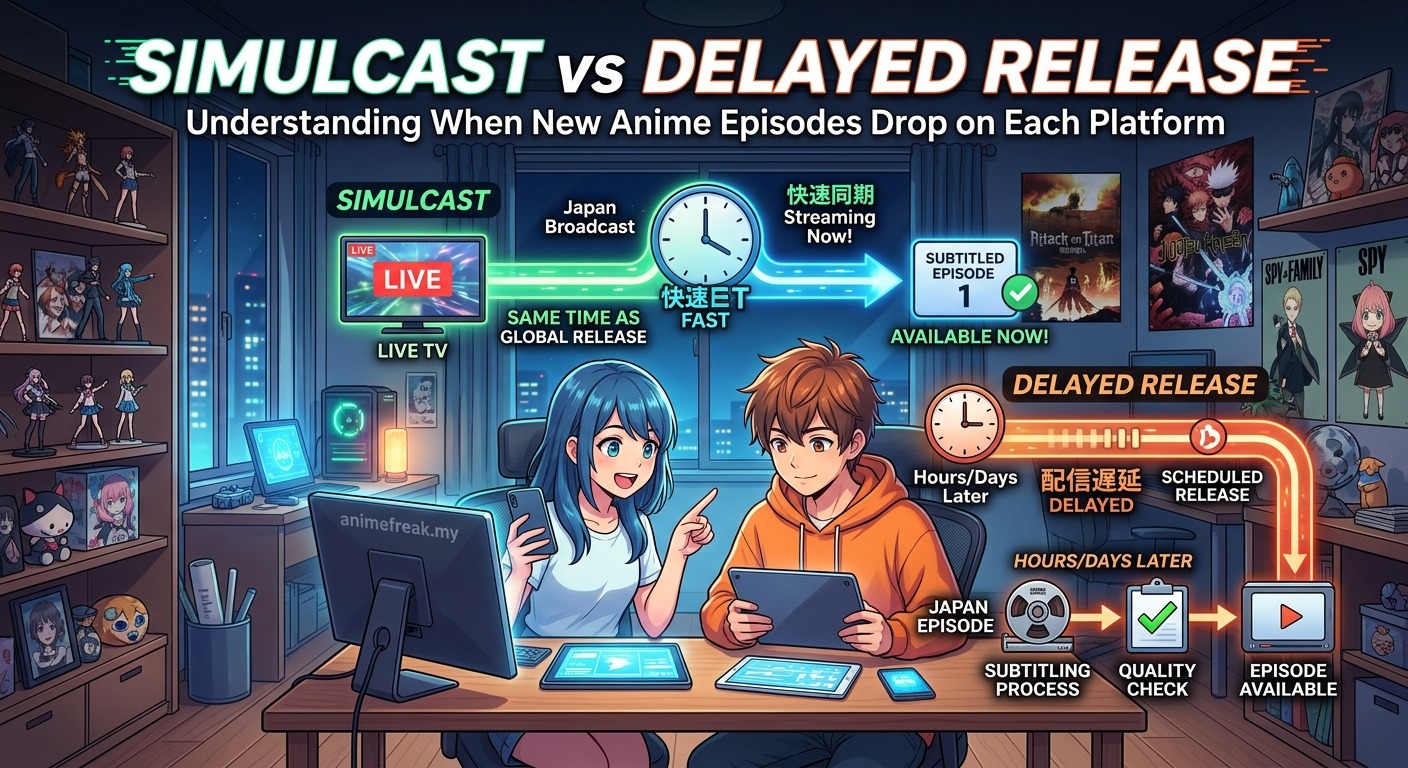
Different streaming services follow distinct release strategies. Understanding these patterns saves you time and subscription money.
Crunchyroll Release Schedule
Crunchyroll built its reputation on simulcasts. The platform releases most seasonal anime within one hour of Japanese broadcast.
New episodes typically drop at specific times based on Japanese air schedules:
- Saturday evenings see the highest concentration of releases
- Sunday mornings follow closely
- Weekday releases scatter throughout the afternoon and evening
Crunchyroll displays exact release times on each show’s page. Times appear in your local timezone automatically. The platform sends notifications through its app when episodes become available.
Premium subscribers access simulcasts immediately. Free tier users wait one week after initial release.
Netflix Batch Release Model
Netflix rarely does simulcasts for anime. The platform prefers batch releases, dropping entire seasons at once.
This creates significant delays. A show airing weekly in Japan won’t appear on Netflix until the season completes, often three to six months after the first episode aired. Some titles wait even longer for international dubbing.
Recent exceptions exist. Netflix experimented with weekly releases for select titles like “Komi Can’t Communicate” and “Cyberpunk: Edgerunners.” These remain outliers rather than the standard approach.
The batch model suits binge watchers but frustrates fans who want to follow seasonal discussions online.
Bilibili and Regional Platforms
Bilibili operates differently across regions. The international version available in Malaysia sometimes secures simulcast rights for Chinese-licensed anime.
Release times vary by title. Some appear within hours of Japanese broadcast. Others arrive days later. Check individual show pages for confirmed schedules.
Regional platforms often focus on specific genres or demographics, creating gaps in their seasonal lineup.
Disney+ Hotstar Strategy
Disney+ Hotstar entered anime distribution recently. Their approach mixes simulcasts and delayed releases depending on licensing deals.
Shows produced by studios with Disney partnerships often receive simulcast treatment. Other acquisitions arrive weeks or months behind Japanese broadcast.
The platform doesn’t always display precise release times in advance, making it harder to plan viewing schedules.
How to Find Exact Release Times
Knowing where to look saves you from constantly refreshing pages hoping for new episodes.
- Visit the show’s page on your streaming platform
- Scroll to the episode list section
- Look for countdown timers or listed release dates next to upcoming episodes
- Enable push notifications in your app settings
- Follow official social media accounts for schedule announcements
- Check community calendars maintained by fan sites
Most platforms display times in your device’s timezone automatically. Double check your device settings if times seem off.
Regional Licensing Affects Malaysian Viewers
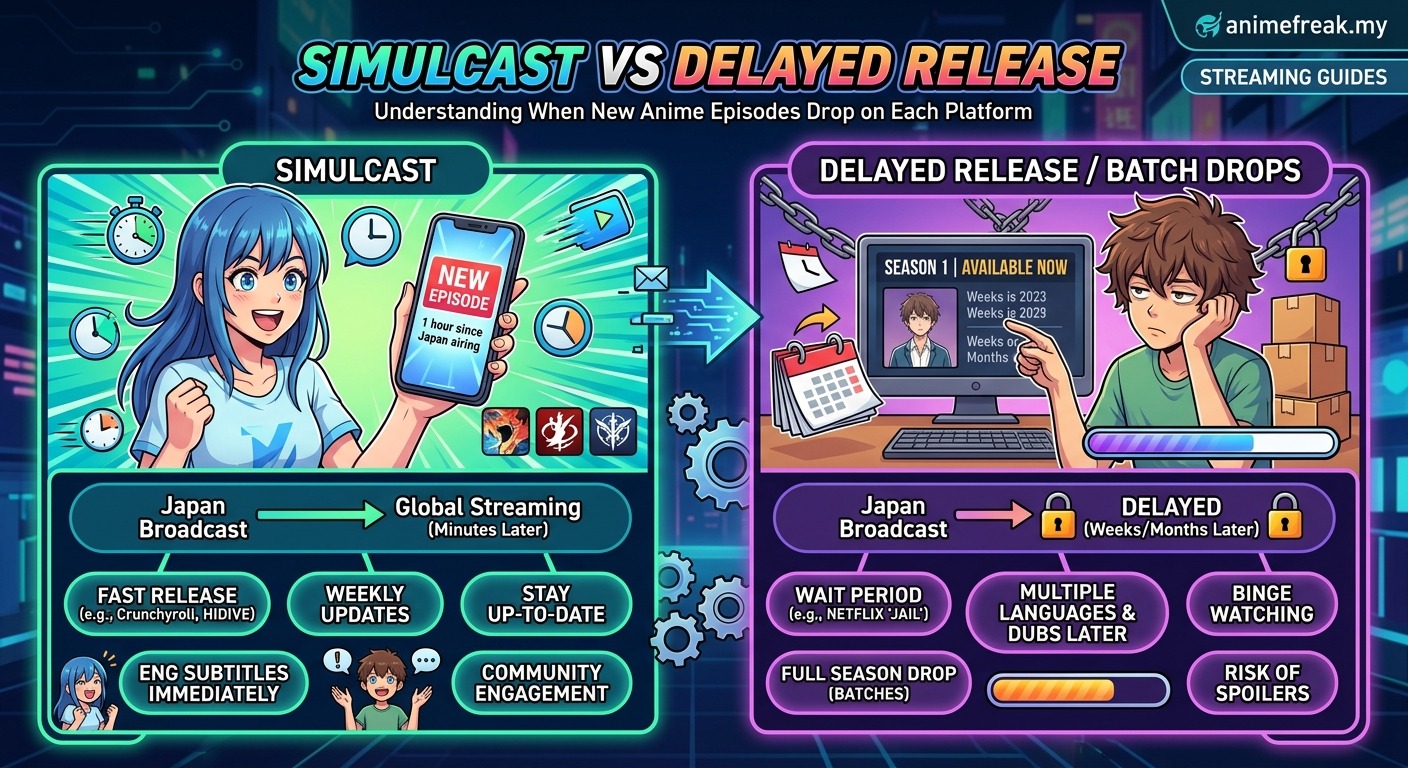
Not every simulcast reaches Malaysia simultaneously. Licensing agreements divide the world into territories, and Southeast Asia doesn’t always match North American or European schedules.
A show simulcasting in the United States might not have Malaysian distribution rights secured. The reverse also happens, with some anime available in Asia before Western markets.
| Platform | Typical Malaysia Access | Common Delays |
|---|---|---|
| Crunchyroll | Same day simulcast for most titles | Occasional geo-blocks on specific series |
| Netflix | 3-6 months after season completion | Can extend to 12+ months for some titles |
| Bilibili | Varies by Chinese licensing | 1-7 days typical when available |
| Disney+ Hotstar | Mixed simulcast and delayed | 2-4 weeks for non-priority titles |
VPN usage violates most streaming terms of service. Platforms actively block VPN traffic and may suspend accounts that circumvent regional restrictions.
Why Release Times Differ Between Services
Multiple factors create the timing gaps between platforms.
Licensing negotiations happen separately for each territory and platform. A studio might sell simulcast rights to one service while giving another delayed access at a lower cost.
Translation workflows vary in speed and quality standards. Subtitle teams working under tight deadlines can turn around episodes in under an hour. More thorough processes with multiple review stages take longer.
Broadcast rights in Japan sometimes include exclusivity windows. The original television network might require a 24-hour or 48-hour delay before international streaming begins.
Technical infrastructure matters too. Platforms with established encoding and distribution systems push content faster than those still building capacity.
“The difference between watching an episode at 10 PM versus 2 AM the next day might seem small, but it determines whether you participate in real-time fan discussions or encounter spoilers first thing in the morning.”
Tracking Multiple Shows Across Platforms
Following several seasonal anime across different services requires organization.
These strategies help:
- Create a spreadsheet listing each show, platform, and release time
- Use calendar apps to set reminders 15 minutes before new episodes drop
- Install platform apps on your phone for push notifications
- Join Discord servers or Telegram groups that post release alerts
- Bookmark community calendars like those on anime database sites
- Set specific days for specific platforms to establish routines
Some fans dedicate Saturday evenings to Crunchyroll simulcasts, then catch Netflix batch releases on Sunday afternoons. Routines reduce decision fatigue.
The Cost of Staying Current
Watching everything as it releases requires multiple subscriptions. Evaluate whether simultaneous access justifies the expense.
Consider these factors:
- How important is avoiding spoilers for specific shows?
- Do you participate in weekly episode discussions online?
- Would waiting a week or a season significantly reduce your enjoyment?
- Can you rotate subscriptions seasonally based on which platform has your priority shows?
Many fans maintain one simulcast subscription for current seasons while using a second service for back catalogue viewing. This balances cost with access.
Free tiers with delayed access work perfectly fine if you’re patient and avoid social media discussions for a week.
Handling Schedule Changes and Delays
Production issues, natural disasters, and broadcaster decisions cause schedule disruptions.
Japanese studios sometimes delay episodes due to animation quality concerns. These delays affect all platforms simultaneously since no new episode exists to distribute.
Streaming services occasionally experience technical problems that delay uploads by hours. Platform status pages and social media accounts usually announce these issues.
Seasonal breaks happen during Japanese holidays. Golden Week in late April and early May often interrupts broadcast schedules. New Year’s week typically sees delays as well.
Follow official announcements rather than assuming episodes will arrive like clockwork every week.
Making the Most of Release Windows
Catching episodes right when they drop enhances the viewing experience through shared excitement with the global community.
Live tweeting during simulcasts connects you with thousands of other viewers experiencing the same moments. Discussion threads on Reddit and forum sites fill with reactions within minutes of release.
Podcast recordings and YouTube reaction videos appear within hours, giving you multiple ways to extend your engagement with each episode.
Waiting even 12 hours often means encountering spoilers in thumbnails, titles, or casual social media posts. The internet moves fast.
For shows you care deeply about, prioritizing immediate viewing protects your experience.
Staying Informed About Your Shows
Streaming platforms improve their communication about release schedules, but gaps remain.
Set up these information sources:
- Enable all notifications in streaming apps
- Follow official anime Twitter accounts
- Subscribe to news sites covering seasonal anime
- Join subreddits for specific shows you’re watching
- Check platform blogs for licensing announcements
- Monitor announcements from Japanese production committees
Information flows through multiple channels. Redundancy ensures you don’t miss important updates about delays or surprise early releases.
Building Your Personal Watching Strategy
No single approach works for everyone. Your schedule, budget, and priorities determine the best strategy.
Some viewers focus exclusively on simulcasts, accepting that they’ll miss shows locked to delayed platforms. Others wait patiently for batch releases, treating anime seasons like Netflix dramas.
Many fans adopt a hybrid approach. They simulcast their top three priority shows while letting everything else accumulate for weekend binge sessions.
The key is matching your viewing habits to your real life. A university student with flexible evenings can catch simulcasts easily. Someone working night shifts might prefer weekend batches.
Experiment with different approaches across a season or two. You’ll quickly identify what feels sustainable and enjoyable rather than stressful.
Getting the Episodes You Want When You Want Them
Understanding release patterns across streaming platforms puts you in control of your viewing experience. You’ll know exactly when new episodes drop, which service to prioritize, and how to avoid spoilers.
The anime streaming landscape keeps evolving. New platforms enter the market. Existing services adjust their strategies. Staying informed about these changes ensures you always have access to the shows you love at the times that work best for you. Check your platform’s schedule pages regularly, set those notifications, and enjoy being part of the global conversation as each episode releases.