
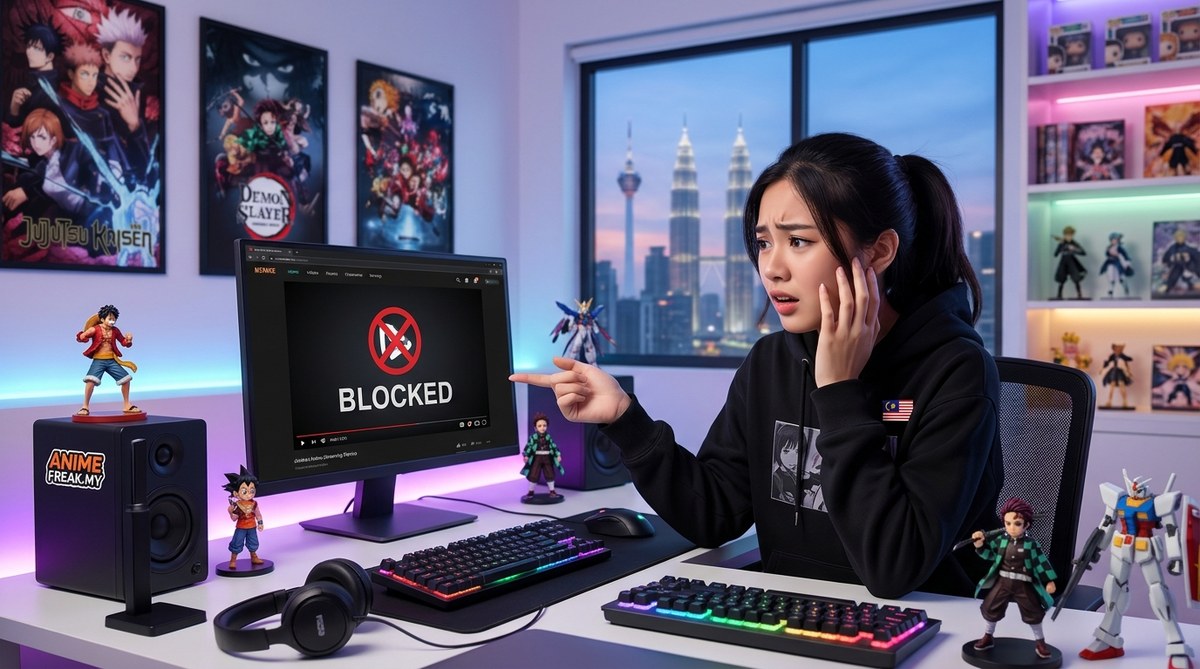
Malaysian anime fans are known for their passion. We queue for hours at Comic Fiesta, we debate the best waifu of the season over teh tarik, and we build entire communities around our favourite shows. So when a major anime streaming service became the target of a nationwide boycott, the reaction was loud, organised, and impossible to ignore. Twitter timelines filled with the hashtag, Telegram groups erupted, and many fans suddenly found themselves searching for new ways to watch their weekly episodes. If you have been scrolling through your feed wondering what sparked this firestorm, you have come to the right place. Let us break down exactly why the Malaysia anime streaming service boycott happened, what the service did wrong, and where the community stands now.
The boycott against this major streaming service was triggered by a combination of unfair regional pricing, poor subtitle quality, and censorship that went beyond local regulations. Malaysian fans felt disrespected as a market. The community has since rallied around alternative platforms, and viewership data shows a significant drop in subscriptions from Malaysian users. This article explains the full timeline, the core grievances, and your options for watching anime in Malaysia right now.
The Spark That Lit the Fire
The trouble started quietly. For months, users in Malaysian forums and subreddits had been complaining about a creeping decline in service quality. Subtitles for new simulcast episodes started arriving with obvious translation errors. Some sentences were left in English. Character names were inconsistent between episodes. Then came the pricing controversy.
The service introduced a new tier structure in early 2026. Malaysian subscribers noticed that the price for the ad-free plan had jumped by nearly 40 percent. When fans compared notes with friends in other countries, they discovered that Malaysian users were paying more than users in Thailand and the Philippines for the same library. The regional pricing felt arbitrary and unfair.
What pushed the community over the edge was the censorship issue. Several high profile anime series had scenes edited or removed entirely. This was not the standard censorship required by Malaysian laws, which already handle religious and racial sensitivities. The cuts seemed random. A dramatic fight scene would lose its impact because a few seconds of blood were removed. A character’s emotional backstory was shortened because it referenced a sensitive topic. Fans felt the platform was making decisions for them, treating Malaysian viewers as if they could not handle mature storytelling.
Breaking Down the Three Main Grievances
To understand the boycott fully, you need to see the three issues that united the community.
Unfair Pricing for Malaysian Users
The price hike was the first alarm bell. Many fans were willing to pay for a legal service, but they wanted to feel like they were getting fair value. When the new pricing was announced, the monthly subscription cost went from RM19.90 to RM27.90 for the premium tier. That is a significant jump for a household expense, especially when other entertainment options in Malaysia remain affordable.
Fans compared the price to local alternatives. Netflix Malaysia offers a mobile plan for RM12. A trip to the cinema for a new anime film costs around RM15. The streaming service was asking for more than a cinema ticket, but delivering a library that was shrinking due to licensing losses. The math did not add up for many people.
Poor Subtitle Quality and Translation Errors
This grievance hit hard because it affects the core viewing experience. Malaysian fans are a multilingual audience. Many of us grew up watching anime with English subtitles, but we also appreciate accurate translations that capture the nuance of the original Japanese dialogue. The service began outsourcing subtitle work to a third party that clearly lacked experienced translators.
Here is a sample of the errors that fans documented:
| Issue | Example | Impact |
|---|---|---|
| Wrong character name | “Gojo” translated as “Goyo” for three episodes | Confusion during discussions |
| Missing honorifics | “Senpai” and “Sensei” removed entirely | Lost social context |
| Grammar errors | “He don’t know” instead of “He doesn’t know” | Broke immersion |
| Cultural mistranslation | “Onigiri” changed to “sandwich” | Changed the scene’s meaning |
| Timing mismatch | Subtitles appeared 5 seconds late | Ruined comedic timing |
The table above shows just a fraction of the complaints. Fans began screenshotting errors and posting them on Twitter with the hashtag. The company issued a statement promising to improve, but the damage to trust was already done.
Excessive and Inconsistent Censorship
This was the tipping point. The service started applying censorship that went beyond what Malaysian law requires. Scenes with mild violence were blurred. Romantic moments between adult characters were cut. Some episodes were delayed by a day because the platform was editing them after receiving the original broadcast version.
Fans felt infantilised. Malaysia has a diverse audience that includes adults who have been watching anime for decades. The assumption that we needed to be protected from a splash of anime blood felt insulting. It also created a practical problem: fans who wanted to watch the uncut version had to resort to other means, which defeated the purpose of paying for a legal subscription.
How the Boycott Organised and Spread
The boycott did not start from a single post. It grew organically across multiple platforms.
- A popular anime fan page on Facebook posted a detailed breakdown of the price changes and asked followers if they felt the service was still worth it.
- A group on Telegram, with over 15,000 members, started a poll asking who was planning to cancel their subscription. The results showed 78 percent saying yes.
- A Twitter user created a simple graphic listing the three main grievances and encouraged others to share it. The graphic went viral within 24 hours.
- Several Malaysian cosplayers and content creators made videos explaining why they were cancelling their subscriptions and sharing their alternative watchlists.
- A change.org petition was created, demanding the service address the pricing and censorship issues. It gathered over 10,000 signatures in the first week.
The speed of the organisation surprised many observers. Malaysian otaku culture has always been strong, but this was the first time the community had mobilised so effectively against a streaming platform. The boycott became a talking point on local entertainment news sites and even caught the attention of international anime media.
“We are not asking for special treatment. We are asking to be treated like every other market. Fair pricing, accurate subtitles, and the same episodes that viewers in Japan get. That is not a radical request.” — Comment from a Malaysian fan organiser on the petition page.
Where Malaysian Fans Are Watching Now
The boycott has led to a significant shift in viewing habits. Many fans have moved to other platforms. Here are the most popular alternatives that Malaysian viewers are using in 2026.
- Netflix Malaysia has improved its anime catalogue significantly. It now carries major simulcast titles and has invested in localised marketing. The mobile plan at RM12 is hard to beat for budget conscious fans.
- Bilibili has a strong Southeast Asian presence and offers many simulcasts with accurate subtitles. Its community features, like live comments during episodes, appeal to fans who enjoy watching with others.
- Amazon Prime Video has picked up several exclusive anime licenses in 2026. Its integration with other Amazon services makes it convenient for families who already shop on the platform.
- Local platform iQIYI has expanded its anime section and offers competitive pricing in ringgit. It also includes Chinese donghua and manhua adaptations, which are growing in popularity among Malaysian audiences.
For fans who miss the convenience of having everything in one place, the situation is frustrating but manageable. Many have created shared spreadsheets where they track which platform holds which series. It is not as seamless as the old service, but the sense of community has actually grown stronger.
What the Streaming Service Has Done in Response
The company has not ignored the boycott. In the months since the controversy began, they have made several public moves.
They lowered the premium tier price back to RM22.90. They hired a new subtitle team and promised to review all existing translations. They also released a statement saying they would “respect local viewing preferences” regarding censorship, though the actual changes have been slow to appear on screen.
The response has been met with skepticism. Many fans argue that the price reduction is still higher than what other regional markets pay. The subtitle improvements are noticeable on new episodes, but the backlog of poorly translated shows remains untouched. The censorship issue is the hardest to fix because it involves renegotiating content agreements with Japanese studios.
A survey conducted by a Malaysian anime news site in November 2026 showed that only 23 percent of former subscribers have returned. The rest are either using alternative platforms or have returned to unofficial sources while they wait for the service to fully address their concerns.
Practical Steps If You Are Considering Your Options
If you are a Malaysian fan who is unhappy with the current situation, here is a simple process to evaluate your next move.
- Check your current subscription. Look at your billing history to see how much you have spent in the last six months. Compare that to how many shows you actually watched on the platform.
- Make a list of the anime you are currently following. Write down the titles and check which alternative platforms carry them. Use community spreadsheets or websites like MyAnimeList to find this information.
- Sign up for a free trial on one or two alternative services. Most platforms offer a 7 day or 30 day trial. Use this period to test the subtitle quality, streaming speed, and library size.
- Cancel your old subscription only after you have confirmed that your must watch shows are available elsewhere. This prevents you from missing a new episode while you are still setting up your new routine.
- Share your findings with the community. Post on Twitter or in your Telegram group about which platforms worked well for you. This helps other fans make informed decisions.
The Bigger Picture for Anime in Malaysia
This boycott is more than a temporary dispute. It reflects a shift in how Malaysian fans view themselves as a market. For years, we accepted whatever pricing and content was offered. Now, the community is demanding better treatment.
The rise of Southeast Asian representation in anime has also played a role. As more shows feature characters and settings inspired by our region, Malaysian fans feel a stronger connection to the medium. We want to support legal streaming, but only when the service respects us as an audience.
This movement has also encouraged local creators. The Malaysian anime scene is growing, with more artists and studios finding international deals. The boycott has shown that our community has power. If a platform does not treat us well, we will walk away and find other ways to enjoy the stories we love.
For a look at what is coming next, check out our list of 10 Most Anticipated Anime Adaptations Coming in 2026 That Will Break the Internet. And if you are curious about how local tastes are changing, read about Why Malaysian Anime Fans Are Celebrating the Rise of Southeast Asian Representation in Recent Releases.
What This Means for Your Next Binge Session
The Malaysia anime streaming service boycott has changed the landscape. The old convenience of a single subscription is gone for many fans, but the alternatives are solid and the community is more connected than ever. If you are still on the fence, take the time to test a new platform. You might discover a hidden gem in their library or enjoy a fresh viewing experience with better subtitles.
Your viewing habits do not have to suffer. With a little planning, you can still catch every simulcast, every emotional climax, and every stunning fight scene. The key is to stay informed and to support platforms that value you as a fan. The boycott has sent a clear message. Now it is up to the streaming services to listen.