
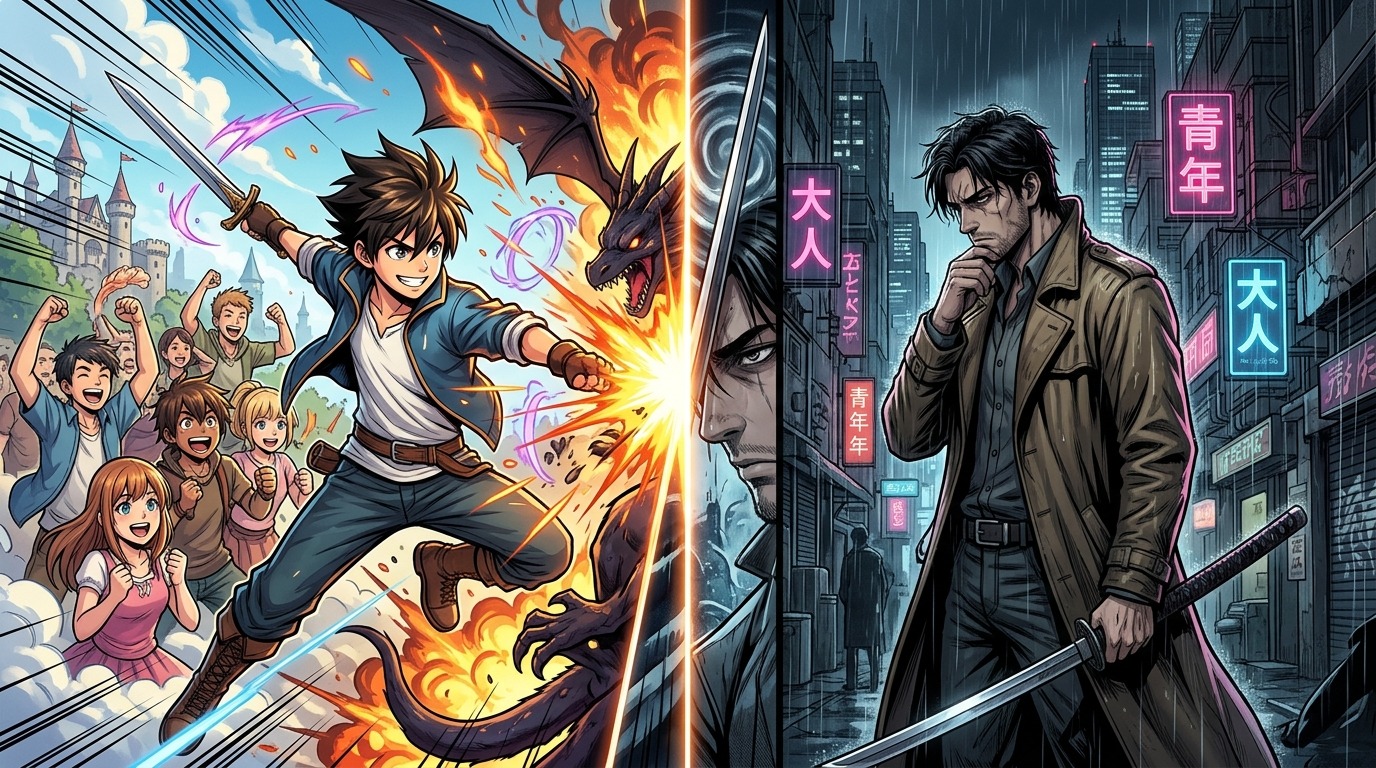
You’ve probably heard the terms seinen and shounen thrown around in anime and manga communities. Maybe you’ve wondered why Attack on Titan feels different from My Hero Academia, or why Berserk hits harder than Naruto. The answer lies in these demographic classifications, and understanding them will completely change how you choose your next read.
Seinen targets adult readers aged 18 and above with mature themes, complex narratives, and realistic consequences. Shounen caters to teenage boys aged 12 to 18, focusing on action, friendship, and personal growth through simpler storytelling. The difference between seinen and shounen lies in narrative complexity, thematic depth, character development approaches, and how violence and relationships are portrayed. Understanding these distinctions helps you find manga that matches your preferences and maturity level.
What Seinen and Shounen Actually Mean
The terms seinen and shounen aren’t genres. They’re demographic categories.
Shounen literally translates to “young boy” in Japanese. Publishers create shounen manga for teenage boys, typically between 12 and 18 years old. Think of magazines like Weekly Shounen Jump, Weekly Shounen Magazine, and Shounen Sunday. These publications shape what millions of readers consume every week.
Seinen means “young man” or “adult male.” This category targets readers 18 and older. Magazines like Young Animal, Weekly Young Jump, and Monthly Afternoon publish seinen content. The age gap might seem small, but the content difference is massive.
Your favourite manga’s demographic classification comes from the magazine where it first appeared. One Piece runs in Weekly Shounen Jump, making it shounen. Tokyo Ghoul started in Weekly Young Jump, making it seinen. The publisher decides the target audience before the first chapter even hits the shelves.
How Story Complexity Differs
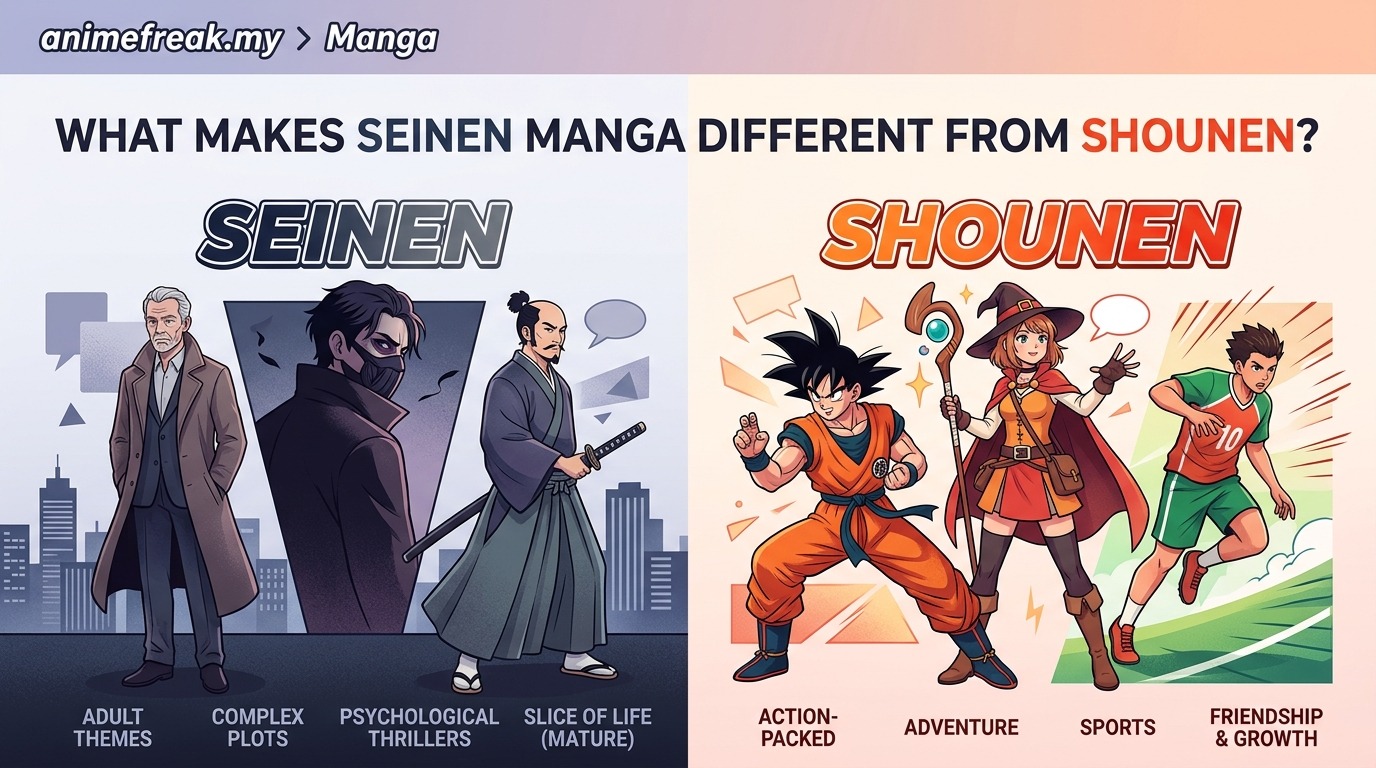
Shounen manga follows predictable patterns because younger readers need clear narrative structures.
The protagonist starts weak. They train hard. They face increasingly powerful enemies. They protect their friends. They never give up. This formula works brilliantly for teenage audiences learning about perseverance and friendship.
Seinen manga throws these patterns out the window.
Characters make morally grey choices. Protagonists sometimes fail permanently. The “good guys” might be worse than the villains. Stories branch into political intrigue, psychological warfare, and philosophical questions that don’t have clear answers.
Look at Vinland Saga. The protagonist spends years consumed by revenge, achieves it, and realizes it solved nothing. He then abandons violence entirely and tries building a peaceful society. No shounen manga would let its hero stop fighting for dozens of chapters.
Compare that to Demon Slayer. Tanjiro stays morally pure throughout the entire series. His goals never waver. The demons are evil. The demon slayers are good. The lines stay clear.
Seinen stories often feature:
- Multiple protagonists with conflicting goals
- Unreliable narrators who lie or misunderstand events
- Time skips that fundamentally change character dynamics
- Endings where nobody truly wins
- Subplots that question the main narrative’s premise
Shounen stories typically include:
- One clear protagonist with a defined dream
- Straightforward cause and effect storytelling
- Power progression that rewards hard work
- Victories that feel earned and satisfying
- Supporting cast that exists to help the hero grow
Violence and Consequences
Both demographics show violence, but the treatment differs dramatically.
Shounen violence serves the plot. Characters get beaten up, bleed, and recover by the next arc. Death happens to raise stakes, but main characters rarely die. When they do, it’s heroic and meaningful. The violence teaches lessons about courage and protecting others.
Seinen violence reflects reality. People die randomly. Minor characters you liked get killed without ceremony. Injuries have lasting consequences. PTSD exists. Revenge doesn’t heal wounds. War destroys everyone involved.
Fullmetal Alchemist shows this transition beautifully. The manga ran in Monthly Shounen Gangan, but it pushes shounen boundaries. Characters lose limbs permanently. The Ishvalan genocide gets extensive coverage. Moral questions about military duty and human experimentation take centre stage. Many fans debate whether it’s actually shounen or seinen in disguise.
True seinen like Gantz or Berserk goes further. Characters die in gruesome ways. Sexual violence appears on panel. The world feels genuinely dangerous because anyone can die at any moment, regardless of their importance to the story.
| Aspect | Shounen Approach | Seinen Approach |
|---|---|---|
| Character death | Rare, meaningful, heroic | Common, random, brutal |
| Injury recovery | Fast, minimal lasting impact | Realistic, permanent consequences |
| Violence purpose | Build tension, show determination | Examine human nature, create horror |
| Gore level | Minimal blood, implied damage | Graphic detail, visceral impact |
| Emotional aftermath | Characters bounce back | PTSD, trauma, lasting change |
Themes and Subject Matter
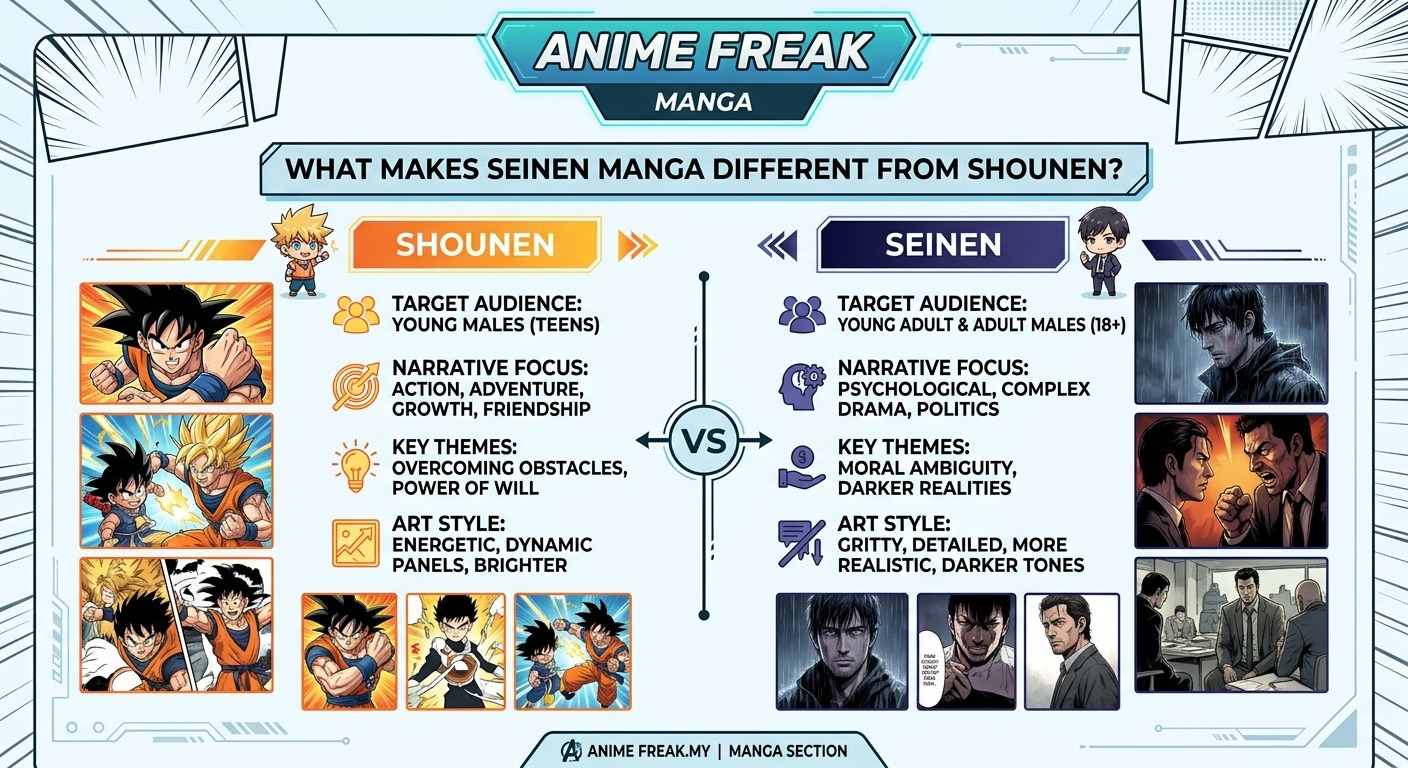
Shounen explores universal teenage experiences.
Friendship conquers all. Hard work beats natural talent. Never giving up leads to victory. Finding your place in the world matters. These themes resonate with teenagers navigating school, relationships, and identity formation.
My Hero Academia embodies this perfectly. Deku learns that heroism isn’t just about power. His friendships with Bakugo, Todoroki, and others help everyone grow. The series celebrates trying your best and supporting each other.
Seinen tackles adult realities.
Career dissatisfaction. Failed relationships. Existential dread. Financial stress. The gap between dreams and reality. Moral compromise. These themes hit harder when you’ve experienced them firsthand.
Oyasumi Punpun follows a character from childhood through adulthood, showing how trauma and poor choices compound over time. There’s no training arc that fixes Punpun’s problems. Therapy doesn’t solve everything. Some damage stays permanent. The manga asks whether happiness is even possible for some people.
Other common seinen themes include:
- Workplace politics and corporate culture
- Parenting challenges and family dysfunction
- Sexual relationships beyond innocent romance
- Mental illness portrayed with clinical accuracy
- Societal criticism and political commentary
Character Development Patterns
Shounen characters grow through external challenges.
They fight stronger enemies. They learn new techniques. They make new friends. Their character development ties directly to their power progression. Luffy becomes a better leader as he becomes a stronger pirate. Naruto gains respect as he gains strength.
The growth is visible and measurable. You can track it through power levels, new abilities, and expanding friend circles.
Seinen characters change through internal struggles.
They question their beliefs. They face consequences for past actions. They realize their goals were wrong. They compromise their values and live with the guilt. The changes are subtle, psychological, and sometimes regressive.
Monster features Dr. Tenma, who saves a boy’s life and watches that boy become a serial killer. Tenma’s entire journey involves questioning whether he made the right choice. His medical skills don’t improve. His “power level” doesn’t increase. He just becomes more morally exhausted as the story progresses.
The best seinen manga understands that adults don’t level up. We just accumulate scars, compromises, and regrets while trying to maintain our humanity. That’s why these stories hit different when you’re older.
Romance and Relationships
Shounen romance stays innocent and aspirational.
The protagonist likes someone. They’re too embarrassed to confess. Misunderstandings create comedy. Eventually, feelings are acknowledged. Maybe they hold hands. Perhaps a kiss happens in the final chapter. Sexual content stays minimal or non-existent.
Kaguya-sama: Love Is War runs in Young Jump, making it seinen, but it plays with shounen romance tropes. The difference? The characters actually discuss sexual attraction, societal pressure, and relationship anxiety with surprising depth.
Seinen romance explores adult relationships.
Sex happens on panel. Relationships fail for realistic reasons. Characters have multiple partners. Infidelity appears. People stay in unhealthy relationships for complex reasons. The romance serves character development rather than wish fulfilment.
Nana portrays two women named Nana navigating relationships, careers, and friendship in Tokyo. Characters make terrible romantic choices. Relationships crumble under real pressure. Nobody gets a fairy tale ending. The story feels authentic because it doesn’t shy away from how messy adult relationships actually are.
Art Style Differences
Shounen art prioritizes clarity and energy.
Action scenes need to read clearly during fast-paced weekly publication. Character designs stay distinctive so readers can identify everyone instantly. Backgrounds often simplify during action sequences. The art serves the story’s momentum.
Panel layouts follow readable patterns. Speed lines indicate movement. Impact frames show power. Everything focuses on making the action feel dynamic and exciting.
Seinen art experiments more freely.
Artists use unconventional panel layouts. Negative space creates mood. Realistic proportions replace stylized designs. Background detail increases. Some series use photography, mixed media, or intentionally ugly art to serve the narrative.
Oyasumi Punpun draws the protagonist as a simple bird sketch while rendering everything else realistically. This artistic choice emphasizes Punpun’s disconnect from reality and his inability to see himself clearly. No shounen manga would risk confusing readers with such an unconventional choice.
Pacing and Story Structure
Shounen manga moves fast because weekly serialization demands constant excitement.
New challenges appear regularly. Training arcs last a few chapters. Fights span multiple episodes but resolve before readers lose interest. The story maintains forward momentum through clear short-term goals leading to long-term dreams.
One Piece has run for over 1,000 chapters by constantly introducing new islands, enemies, and mysteries. Each arc feels distinct. The pacing never stalls for too long.
Seinen manga allows slower, more deliberate pacing.
Stories can spend chapters on character introspection. Entire volumes might cover a single conversation. Time skips happen frequently. Some plot threads remain unresolved for years. The pacing serves the story rather than publication demands.
Vagabond dedicates entire chapters to Musashi sitting alone, thinking about swordsmanship and life. No fights happen. No plot advances. Just a character contemplating existence. Readers accept this because seinen audiences have patience for atmospheric storytelling.
How to Choose What to Read
Understanding these differences helps you find manga that matches your current mood and maturity level.
Start here:
- Consider your age and life experience. Seinen themes resonate more when you’ve faced adult challenges.
- Think about what you want from the story. Entertainment and inspiration? Try shounen. Reflection and realism? Try seinen.
- Check your tolerance for mature content. Seinen doesn’t hold back on violence, sex, and disturbing themes.
Don’t let demographics limit you.
Plenty of adults love shounen for its optimism and energy. Many teenagers appreciate seinen’s complexity and honesty. The categories indicate target audiences, not strict age restrictions.
Some manga blur the lines intentionally. Attack on Titan started in a shounen magazine but features seinen levels of violence and moral complexity. The Promised Neverland combines shounen’s hopeful tone with seinen’s willingness to kill children.
Your best approach? Sample both demographics. Notice what resonates. Pay attention to which stories you remember months later and why.
Finding Your Perfect Match
The difference between seinen and shounen ultimately comes down to how stories treat their readers.
Shounen assumes you want hope, excitement, and clear heroes to root for. It celebrates effort, friendship, and never giving up. These stories remind us why we fell in love with manga in the first place.
Seinen assumes you can handle complexity, ambiguity, and uncomfortable truths. It challenges your assumptions and refuses easy answers. These stories grow with you as you age and experience more of life’s complications.
Neither is better. They serve different purposes.
Some days you need Haikyuu!! to remind you that hard work and teamwork matter. Other days you need Goodnight Punpun to feel less alone in your struggles. Your manga library should include both.
Start paying attention to which magazine published the series you’re reading. Notice the patterns. You’ll quickly develop an instinct for which demographic matches your current headspace. That awareness transforms you from a casual reader into someone who truly understands manga as a medium.