
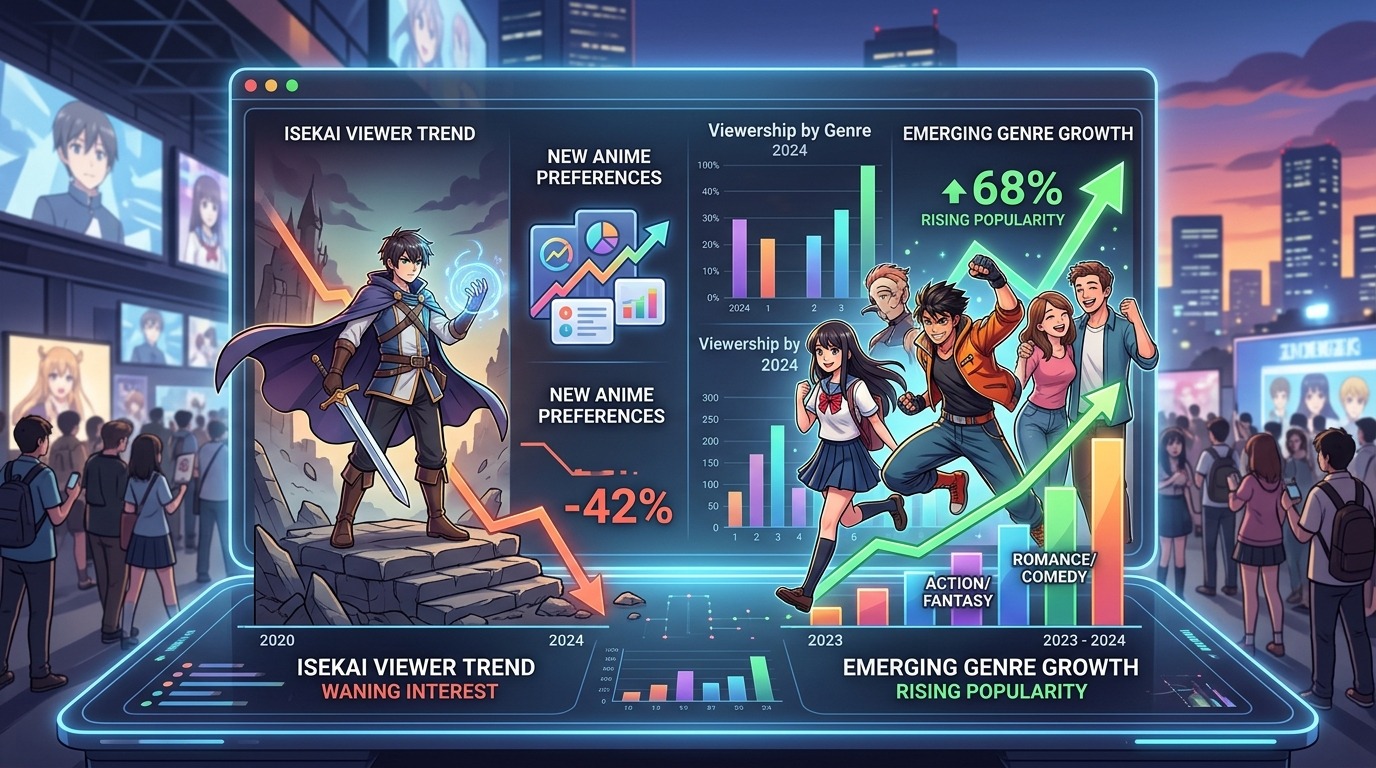
The isekai genre has dominated anime for nearly a decade. Every season brings dozens of new shows featuring protagonists transported to fantasy worlds. But lately, something feels different. Fans complain about repetitive plots, studios announce fewer adaptations, and some of the biggest titles struggle to maintain their earlier viewership numbers.
Isekai isn’t dying, but it’s transforming. While generic power fantasy shows see declining viewership, innovative titles like Frieren and Mushoku Tensei thrive. The genre faces oversaturation with 30-40 isekai per year, forcing studios to prioritise quality over quantity. Audiences now demand unique worldbuilding, character development, and fresh mechanics beyond standard “overpowered protagonist” formulas. The shift signals genre evolution, not extinction.
What the Numbers Actually Tell Us
Streaming data from 2023 and early 2024 reveals a complicated picture. Total isekai production remains high, with approximately 35 to 40 titles per year across all seasons. That number hasn’t dropped significantly since 2020.
However, viewership concentration tells a different story. The top five isekai shows capture 60 to 70 percent of genre viewership, while the remaining 30-plus titles fight for scraps. This wasn’t always the case. In 2019, viewership spread more evenly across 15 to 20 popular titles.
Consider these patterns:
- Generic isekai with standard “truck-kun” openings see 40 percent lower completion rates than five years ago
- Shows with unique premises or subversions maintain strong viewership throughout their runs
- Light novel adaptations face steeper competition from manga and webtoon sources
- Second seasons perform inconsistently, with many dropping 30 to 50 percent of their original audience
The data suggests viewers have become selective. They’ll watch isekai, but only if it offers something beyond the baseline formula.
The Oversaturation Problem
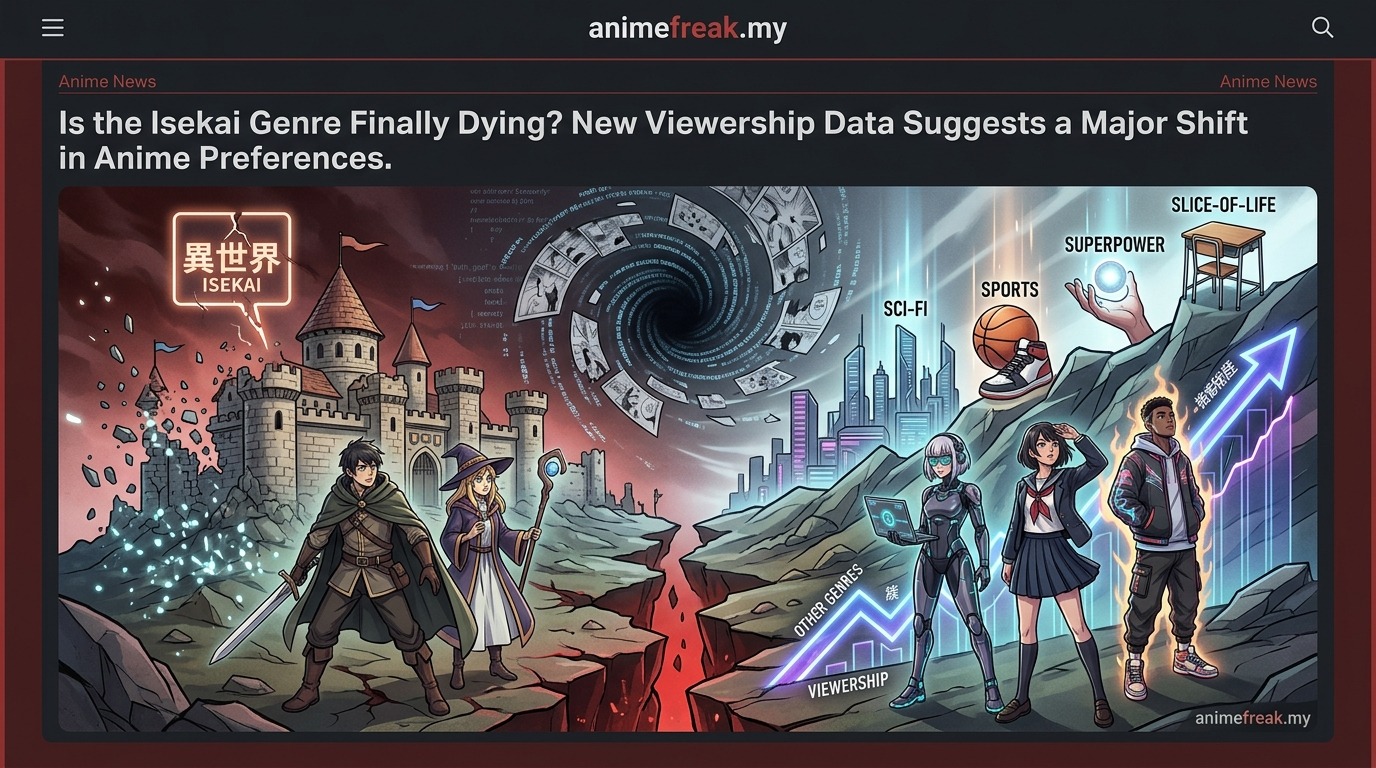
Walk through any anime streaming service and count the isekai titles. Winter 2024 alone featured 12 new isekai shows, plus continuing series from previous seasons. That’s roughly one isekai for every three new anime releases.
This saturation creates several problems:
- Marketing budgets spread thin across too many similar products
- Talented staff divided among numerous projects instead of concentrated on fewer high-quality productions
- Viewer attention fragmented, making it harder for any single show to build momentum
- Studios greenlight projects based on existing IP recognition rather than creative merit
The result? A crowded marketplace where mediocre shows disappear within weeks of premiere. Only exceptional titles or those with massive marketing pushes break through the noise.
| Show Quality Tier | Viewership Share | Production Count | Completion Rate |
|---|---|---|---|
| Premium (Frieren, Mushoku Tensei) | 45% | 3-5 per year | 75-85% |
| Mid-tier (decent execution) | 30% | 8-12 per year | 40-55% |
| Generic (formulaic) | 25% | 20-25 per year | 15-30% |
The table reveals a harsh reality. Most isekai productions compete for a quarter of available viewership while suffering abysmal completion rates. Viewers start these shows but rarely finish them.
What Successful Isekai Do Differently
The shows that thrive share common characteristics that separate them from the pack. These aren’t secret formulas, but rather fundamental storytelling principles applied with care.
Frieren: Beyond Journey’s End succeeds by inverting typical isekai pacing. Instead of rushing toward the next power level, it contemplates mortality, legacy, and the weight of immortality. The protagonist isn’t overpowered for wish fulfillment but to examine how extreme longevity affects relationships.
Mushoku Tensei tackles reincarnation with genuine consequences. The protagonist’s past-life flaws don’t vanish upon transport. Character growth happens gradually, painfully, with real setbacks. The world feels lived-in rather than generated as background for power fantasies.
The Eminence in Shadow works because it openly mocks genre conventions while delivering the power fantasy it satirises. Self-awareness becomes the hook rather than a liability.
These shows understand a crucial principle:
“Audiences don’t reject isekai as a genre. They reject lazy execution. Give viewers compelling characters, meaningful stakes, and worlds that function beyond serving protagonist convenience, and they’ll watch regardless of how many similar shows exist.” — Industry analyst examining seasonal performance data
The Studio Perspective Shift
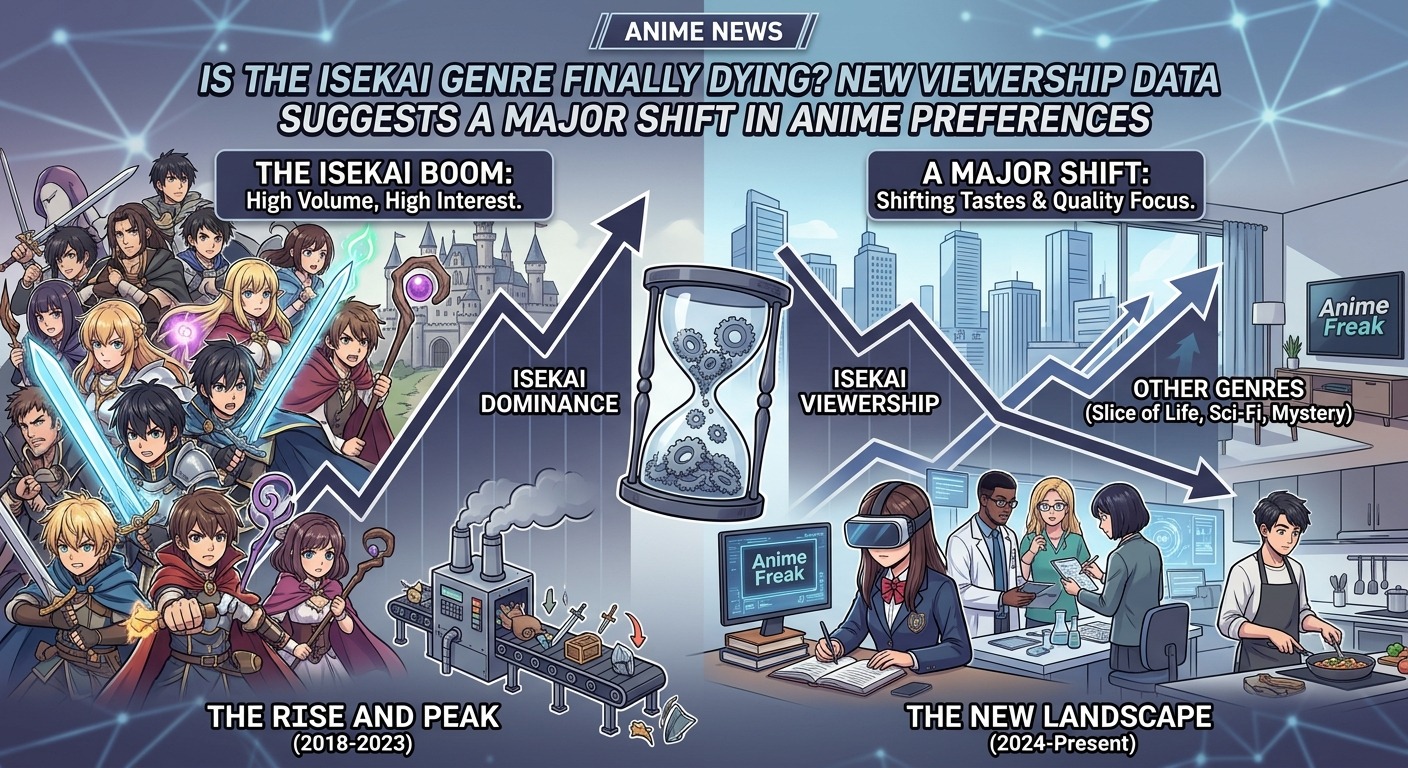
Production committees now approach isekai differently than they did three years ago. The guaranteed-profit assumption has evaporated. Studios can’t simply adapt any light novel with “reincarnation” in the title and expect returns.
Several major studios have publicly reduced their isekai slate for 2024 and 2025. They’re not abandoning the genre but becoming choosier about which properties deserve adaptation budgets.
This selectivity manifests in three ways:
- Longer pre-production periods to ensure quality
- Higher barriers for light novel adaptations without proven sales
- Increased investment in fewer projects rather than spreading budgets thin
- More original isekai concepts developed in-house rather than adapted from existing works
The shift benefits viewers who want quality but creates anxiety among light novel authors who previously relied on adaptation opportunities for income and exposure.
Why Some Fans Feel Isekai Fatigue
Viewer burnout stems from pattern recognition. After watching your tenth show featuring a salaryman reincarnated with cheat skills, the formula becomes transparent. The mystery evaporates. Emotional investment becomes difficult when you can predict every plot beat by episode three.
This fatigue doesn’t mean the genre itself is broken. Romance anime follows predictable patterns. Sports anime hit familiar beats. Battle shounen recycle training arcs and tournament structures. Yet these genres persist because exceptional examples remind us why the formulas work.
Isekai faces a unique challenge: its explosion happened rapidly. What took shounen decades to establish, isekai compressed into five to seven years. The market flooded before quality control mechanisms could develop.
Common complaints include:
- Protagonists who face no meaningful challenges
- Harems that exist for fan service rather than character dynamics
- Game-like systems that reduce storytelling to stat sheets
- Worlds that pause when the protagonist isn’t present
- Supporting characters who exist only to praise the main character
- Conflict resolved through power reveals rather than strategy or growth
These issues aren’t inherent to isekai. They’re symptoms of rushed production and risk-averse writing.
The Genre Evolution Happening Now
Rather than dying, isekai is fragmenting into subgenres with distinct audiences. The monolithic “isekai” category now contains multiple branches:
Slow-life isekai focuses on crafting, cooking, and building communities rather than combat. Shows like Campfire Cooking in Another World prioritise atmosphere over action.
Reverse isekai brings fantasy characters to modern Earth, flipping the usual dynamic. The Devil is a Part-Timer! pioneered this approach, with newer titles expanding the concept.
Villainess isekai targets female audiences with reincarnation into otome game antagonist roles. These shows emphasise social maneuvering and relationship building over power scaling.
Isekai deconstruction examines genre conventions critically. Re:Zero tortures its protagonist to question power fantasy assumptions. Overlord follows a villain protagonist to examine heroism from another angle.
Each subgenre attracts different viewers with different expectations. This specialisation allows the broader category to survive even as generic entries fail.
What 2024 and Beyond Look Like
Current production announcements suggest cautious optimism from studios. The isekai pipeline remains full, but with noticeable quality improvements in announced projects.
Several trends are emerging:
- More female protagonists and diverse character types beyond “average Japanese salaryman”
- Isekai settings inspired by non-European fantasy traditions
- Protagonists who aren’t the strongest character in their new world
- Stories that begin after the typical isekai narrative would end
- Greater emphasis on ensemble casts rather than solo protagonists
These shifts respond directly to viewer feedback and viewership data. Studios are listening, even if change happens slowly due to production timelines locked in years ahead.
The question isn’t whether isekai will survive but what form it will take. Just as mecha anime evolved from super robots to real robots to psychological deconstructions, isekai is entering its maturation phase.
Where the Genre Goes From Here
Isekai isn’t dying. It’s growing up.
The genre’s explosive growth phase is ending, replaced by sustainable production that prioritises quality over quantity. Viewers will see fewer isekai per season, but those that air will likely justify their existence with stronger writing, better animation, and more thoughtful worldbuilding.
For fans worried about losing their favourite genre, the evidence suggests the opposite. The isekai that survive this transition will be the ones worth watching. Studios will invest in projects that stand out rather than chasing trends that already passed.
The next time someone asks if isekai is dying, check what’s actually airing that season. You’ll probably find at least one show that reminds you why the genre captured imaginations in the first place. That’s not a death rattle. That’s evolution in action.