
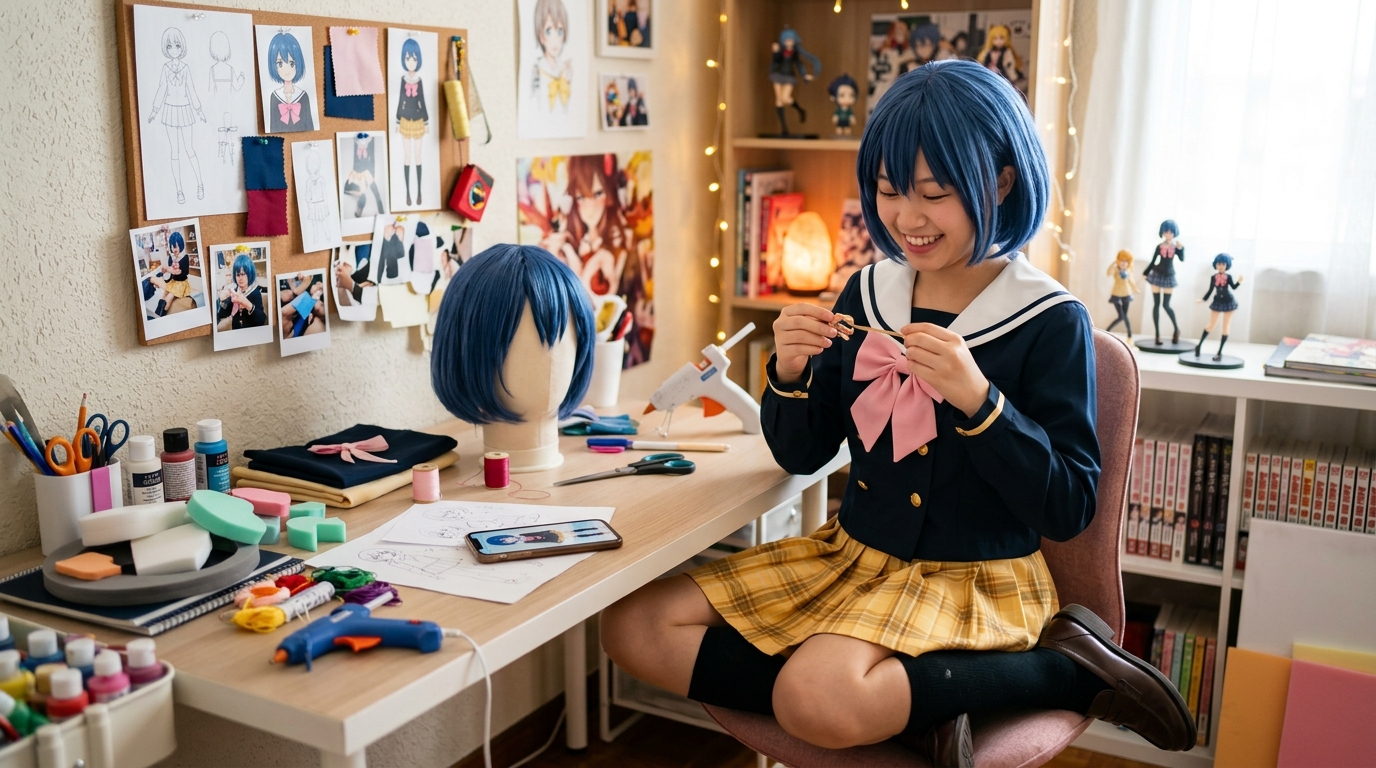
Cosplay doesn’t have to drain your wallet. You can bring your favourite anime character to life without spending hundreds of ringgit on store-bought costumes or expensive fabrics. The secret lies in smart planning, creative reuse, and knowing where to cut costs without cutting corners on the final look.
Budget cosplay succeeds through strategic character selection, thrift store hunting, DIY prop making, and material substitution. Focus spending on visible costume elements while improvising accessories. Repurpose household items, borrow from friends, and prioritise wigs or signature pieces that define your character. Planning ahead prevents impulse purchases and allows time for creative problem solving without last-minute expensive fixes.
Pick Characters That Match Your Resources
Start by choosing characters whose costumes align with what you already own or can easily find. School uniform characters like Haruhi Fujioka from Ouran High School Host Club need basic blazers and trousers you might already have hanging in your wardrobe.
Modern-day characters offer the best value. Casual outfits require fewer specialised materials than fantasy armour or elaborate period costumes. A character wearing jeans and a hoodie costs significantly less than one in a full suit of armour.
Consider these budget-friendly character types:
- High school students in uniform
- Casual streetwear characters
- Simple colour-blocked outfits
- Characters with minimal accessories
- Looks that rely on distinctive hairstyles rather than complex clothing
Analyse the character’s design before committing. Count how many unique pieces you need. A costume with seven different components costs more than one with three, even if both look equally impressive in photos.
Hunt Through Thrift Stores Like a Pro
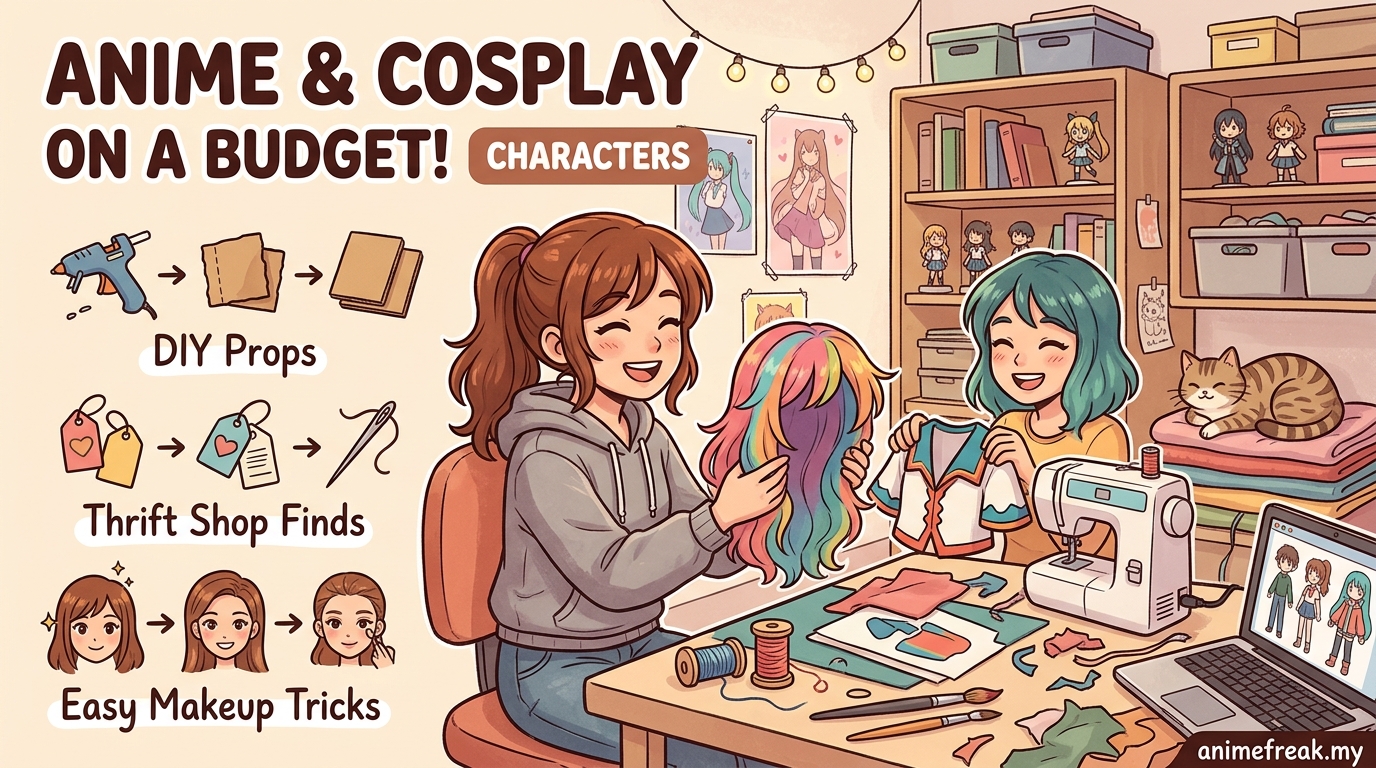
Thrift stores and charity shops are goldmines for cosplay base pieces. Visit regularly because inventory changes weekly. Bring reference photos on your phone to compare colours and styles while browsing.
Look beyond the obvious. A formal dress can become a magical girl costume with some modifications. Oversized blazers work perfectly for androgynous characters. Old curtains transform into capes or flowing robes.
Check these sections every visit:
- Formal wear for fancy character outfits
- Sports equipment for props and armour bases
- Bedding and curtains for fabric yardage
- Accessories for belts, bags, and jewellery
- Children’s toys for prop components
Timing matters. Shop during weekdays when stores are less crowded and you can take your time examining items. End-of-season sales at regular retail stores also offer cheap base pieces like plain shirts or trousers.
Bring a measuring tape. Ill-fitting thrift finds can be altered if you know basic sewing, but you need to know your measurements first.
Master Simple Sewing and Modification Skills
You don’t need to be a professional seamstress to modify clothes. Learning three basic skills opens up massive possibilities for transforming cheap finds into costume pieces.
- Hemming allows you to shorten trousers, skirts, or sleeves to match your character’s proportions
- Adding or removing buttons changes the style of shirts and jackets dramatically
- Fabric glue or iron-on hem tape provides no-sew alternatives for simple modifications
Watch free tutorial videos to learn these techniques. Practice on old clothes you don’t care about before working on your actual costume pieces.
Dyeing fabric changes colours cheaply. A white shirt becomes any colour you need with a packet of fabric dye that costs less than RM15. Follow package instructions carefully and test on a small fabric scrap first.
Remove unwanted details rather than adding them. Cutting off collars, removing pockets, or taking out shoulder pads often creates the clean look you need without requiring advanced skills.
Substitute Expensive Materials With Clever Alternatives
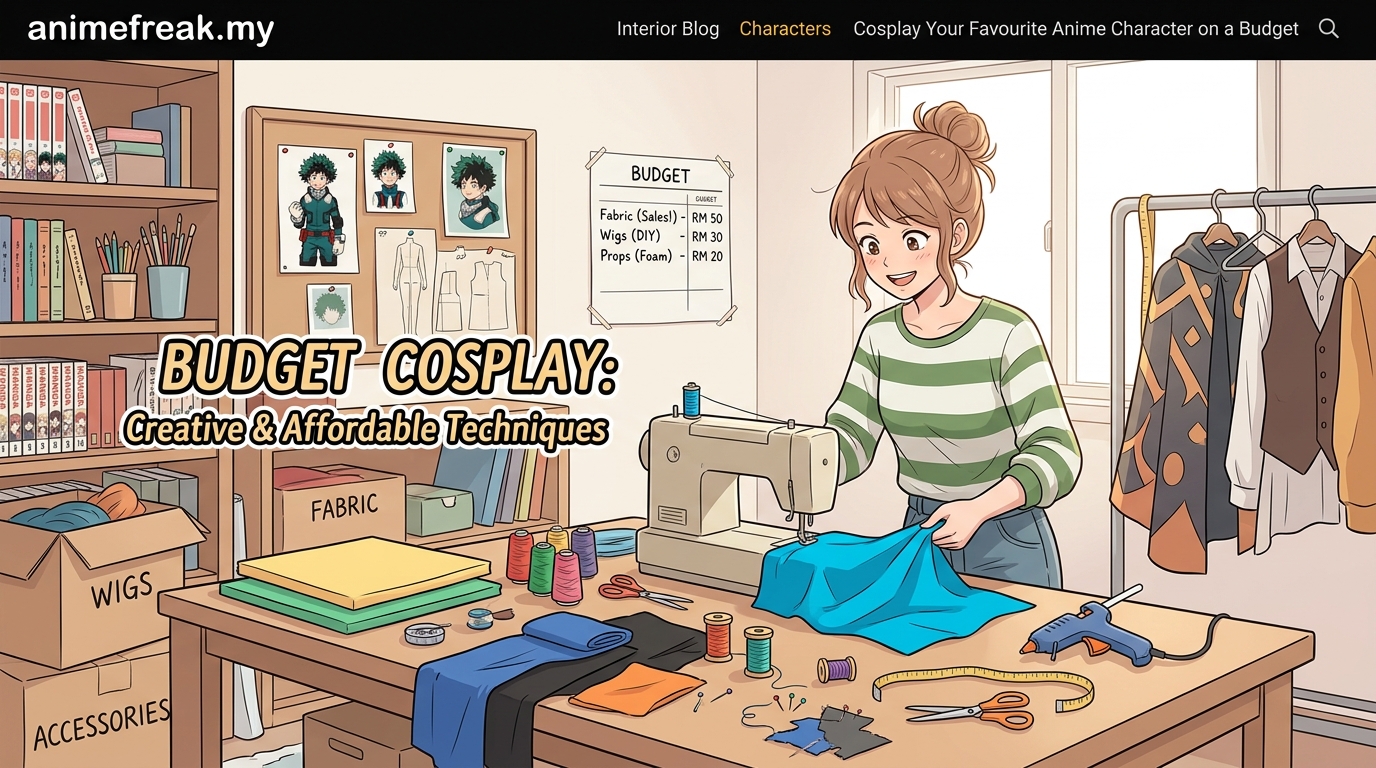
Professional cosplayers use expensive materials like Worbla or EVA foam, but beginners can achieve similar results with household items and craft store basics.
| Expensive Material | Budget Alternative | Best Used For |
|---|---|---|
| Worbla thermoplastic | Cardboard and papier-mâché | Armour pieces and props |
| EVA foam sheets | Foam floor mats from hardware stores | Shoulder pads and lightweight armour |
| Leather | Pleather fabric or painted canvas | Belts, bags, and trim details |
| Speciality wig | Styled synthetic wig from beauty supply stores | Most character hairstyles |
| Professional fabric paint | Acrylic paint mixed with fabric medium | Details and designs on fabric |
Cardboard becomes surprisingly sturdy when layered and sealed with mod podge or watered-down glue. Paint it with acrylics and seal with a clear coat for a professional finish.
Foam floor mats from Mr DIY or hardware stores cost a fraction of cosplay-specific foam. They cut easily with scissors or craft knives and can be shaped with a hair dryer.
Hot glue holds most lightweight materials together. A glue gun costs around RM20 and provides enough adhesive for multiple costumes.
Focus Your Budget on Signature Pieces
Every character has one or two elements that make them instantly recognisable. Invest your limited budget in getting those pieces right while improvising everything else.
For Naruto, the orange jumpsuit matters more than perfect ninja shoes. For Sailor Moon, the wig and bow are more important than the exact shade of blue in the skirt.
Identify the three most distinctive elements of your character’s design. Spend 70% of your budget on those pieces and improvise the rest. Most people will only notice whether you nailed the signature look.
Wigs often deserve budget priority. A good wig in the right colour and style carries a costume even if other elements are simplified. Beauty supply stores offer synthetic wigs for RM30 to RM80 that work perfectly for most anime hairstyles.
Shoes rarely need to be perfect. Most convention photos crop at the ankles or show characters sitting down. Plain boots or sneakers in approximately the right colour work fine for most costumes.
Create Props From Recycled Materials
Props add authenticity but can cost a fortune if purchased ready-made. Making your own from recycled materials costs almost nothing and often looks better than cheap plastic alternatives.
Cardboard tubes from wrapping paper become sword handles, magic wands, or staff bases. Pool noodles create lightweight weapons that are safe for crowded conventions. PVC pipes from hardware stores form sturdy prop bases for larger items.
Paint transforms cheap materials into convincing replicas. Spray paint provides even coverage on large surfaces. Acrylic paint works for details and weathering effects.
Layer materials for dimension. Glue foam shapes onto cardboard bases. Add texture with crumpled tissue paper, sandpaper, or textured fabric scraps.
For electronics or glowing effects, use battery-operated LED strips or small torch lights from RM5 shops. They create impressive effects without expensive electronics knowledge.
Borrow and Trade With Other Cosplayers
The cosplay community thrives on sharing and collaboration. Other cosplayers often have pieces sitting unused that might be perfect for your costume.
Join local cosplay groups on social media. Post what you’re looking for and what you have available to trade or lend. Many cosplayers are happy to lend items they’ve finished using, especially to beginners.
Costume swaps work brilliantly for conventions. If you and a friend wear similar sizes, you can effectively double your costume options by sharing pieces between different character builds.
Split material costs when possible. Fabric often comes in larger quantities than one costume needs. Find someone working on a costume using similar colours and split a fabric bolt between you.
Plan Around Sales and Discount Periods
Timing your purchases saves significant money. Craft stores run regular sales, often discounting fabric and supplies by 40% to 50%.
Sign up for email lists from craft stores like Spotlight or Kaison. They send coupon codes and sale notifications that can slash your material costs.
Buy off-season when possible. Halloween costumes and accessories go on clearance in November. Use these as base pieces or harvest them for materials and trims.
Online marketplaces like Shopee or Lazada offer cheap cosplay basics, but order well ahead of your deadline. Shipping from overseas takes time, and you might need to make returns if items don’t match descriptions.
Compare prices across multiple stores before buying. The same wig might cost RM80 at one shop and RM45 at another.
Style Wigs Without Professional Tools
Wigs intimidate beginners, but basic styling needs only scissors, hairspray, and patience. You don’t need expensive wig styling products to achieve good results.
Watch character-specific wig tutorials before cutting. Wigs are unforgiving if you cut too much. Start conservative and trim more if needed.
Use regular strong-hold hairspray for most styling. Spray sections, shape them, and let them dry. Layer multiple applications for gravity-defying anime hairstyles.
For spikes, backcomb sections before spraying. Twist hair into the desired spike shape and hold until the spray sets. Some cosplayers use watered-down glue for extremely stubborn styles, but hairspray works for most characters.
Heat styling works on some synthetic wigs, but test on a small hidden section first. Too much heat melts synthetic fibres instantly.
Simplify Makeup Techniques
Anime characters often have dramatic eye designs that look complicated but can be simplified for real-life cosplay.
Focus on eye shape and colour rather than trying to replicate every detail. Eyeliner creates larger eye shapes. Eyeshadow in character-appropriate colours suggests the look without requiring professional makeup skills.
Cheap makeup from pharmacies works fine for cosplay. You’re wearing it for a few hours, not all day every day. Drugstore brands offer bright colours that expensive brands don’t always carry.
Use these budget makeup essentials:
- Black eyeliner for defining eye shapes
- White eyeliner for highlights and enlarging eyes
- Eyeshadow palette with your character’s colours
- Basic foundation or BB cream
- Setting spray to prevent smudging
Practice before the event. Take photos in different lighting to see how your makeup reads in pictures. Convention lighting often washes out subtle makeup, so go slightly bolder than feels natural.
Photograph Your Costume Strategically
Good photography makes budget costumes look expensive. Angles, lighting, and backgrounds matter more than costume perfection.
Natural outdoor lighting works better than indoor convention hall fluorescents. Find spots with even shade rather than harsh direct sunlight.
Choose backgrounds that match your character’s world. A park works for fantasy characters. Urban settings suit modern anime. Plain walls provide clean backdrops that keep focus on your costume.
Pose confidently. Character expression and body language sell a cosplay more than perfect accuracy. Study how your character stands and moves.
Close-up shots hide budget compromises in less-visible costume areas. Full-body shots work best when your costume is most complete.
Test Everything Before the Event
Nothing reveals costume problems like actually wearing it for several hours. Do a full dress rehearsal at least one week before your convention or event.
Wear the complete costume around your house. Sit down, walk up stairs, raise your arms. Note anything that restricts movement, falls off, or feels uncomfortable.
Check these potential issues:
- Shoes that seem fine for five minutes but hurt after an hour
- Wigs that slip or feel too tight
- Props that are too heavy to carry all day
- Makeup that smudges or runs
- Costume pieces that need safety pins or adjustments
Make fixes while you still have time. Last-minute problems at the event lead to expensive emergency purchases or uncomfortable days.
Take test photos in your costume. Sometimes pieces that look great in the mirror photograph strangely. Better to discover this at home than at the event.
Bring Your Character to Life With Confidence
The best part of budget cosplay is proving that creativity beats expensive materials every time. Your resourcefulness and problem-solving make you a better cosplayer than someone who just bought everything pre-made.
Start small with your first budget build. Choose a character you love and tackle their costume one piece at a time. You’ll learn techniques with each project that make the next one easier and cheaper.
Remember that everyone at conventions started somewhere. Other cosplayers respect the effort and creativity in budget builds. The community celebrates clever solutions and DIY ingenuity.
Your RM200 costume can photograph just as impressively as someone’s RM2000 version if you focus on the elements that matter most. Plan smart, shop creatively, and don’t be afraid to improvise. The skills you build creating budget cosplay will serve you for years, whether you eventually spend more or keep finding ingenious ways to cosplay for less.