
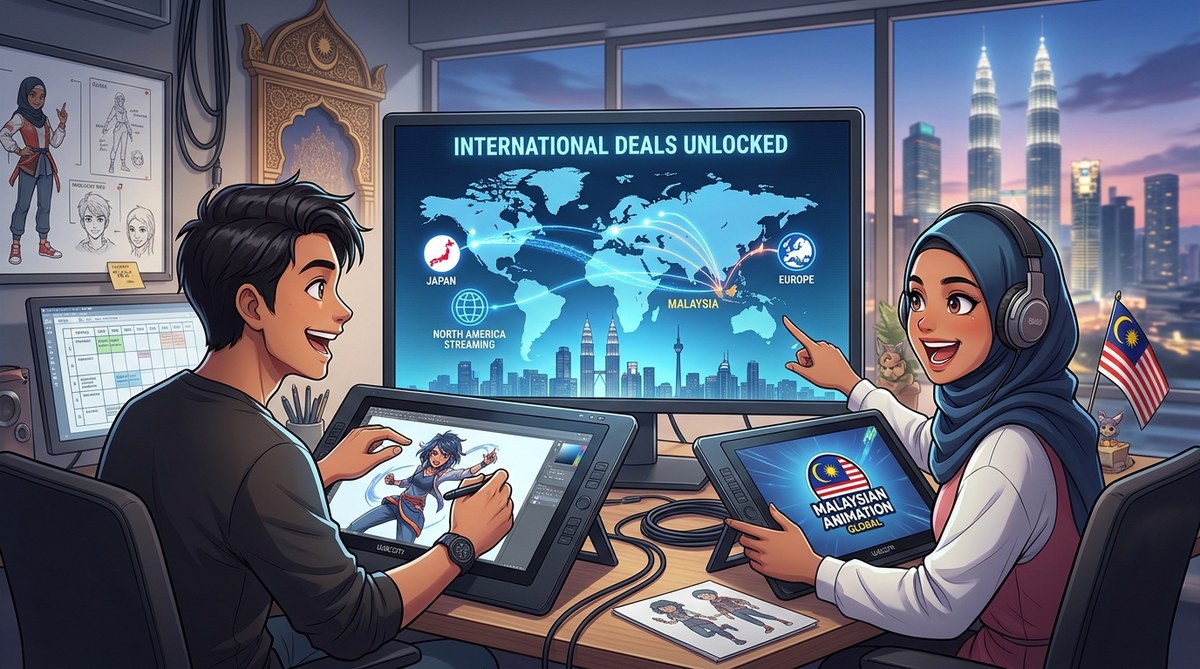
The Malaysian animation industry has been quietly building something special for years, but 2026 feels different. Local creators are no longer just producing content for local audiences. They are signing international distribution deals, partnering with Japanese studios, and getting their shows picked up by global streaming platforms. If you have been following the Malaysian anime scene, you already know that the energy has shifted. This is not just a small win for a few studios. This is a structural change that signals how Malaysian animation is finally getting the global attention it deserves.
The Malaysian anime scene is experiencing a surge in international deals thanks to a combination of government incentives, improved animation quality, and a growing global appetite for Southeast Asian stories. Local studios are securing co-production agreements with Japanese partners and landing shows on platforms like Netflix and Crunchyroll. This guide explains how it happened and what it means for creators and fans alike.
How Malaysian Creators Are Landing International Deals
The path to an international deal is not a straight line, but several Malaysian studios have found a formula that works. They focus on stories that feel local but appeal to universal emotions. They invest in animation quality that matches global standards. And they actively participate in international markets like the Annecy International Animation Film Festival or the Tokyo Anime Fair.
One clear example is the recent partnership between a Kuala Lumpur based studio and a Japanese production committee. The deal allows the Malaysian team to handle key animation sequences for a major anime series set to release later this year. This is a big step. It shows that Japanese studios trust Malaysian talent enough to hand over critical work.
Another example involves a Malaysian original IP that was picked up by a streaming platform for distribution across Southeast Asia and beyond. The show features folklore inspired characters but uses modern animation techniques. It resonated with audiences in Indonesia, Thailand, and even parts of Europe. That kind of cross border appeal is exactly what international buyers look for.
For more context on how global trends are affecting local viewing habits, check out our piece on why Malaysian anime fans are celebrating the rise of Southeast Asian representation in recent releases.
The Role of Government Support and Incentives
You cannot talk about the Malaysian anime scene international deals without mentioning the role of government agencies. The Malaysia Digital Economy Corporation (MDEC) and the National Film Development Corporation Malaysia (FINAS) have introduced several programs that make it easier for studios to pitch their work abroad.
These include:
- Financial grants for attending international trade shows.
- Tax incentives for studios that secure co-production deals.
- Training programs that connect local animators with international mentors.
- Funding for prototype development of new IPs.
One studio founder I spoke to said that the grant they received to attend the Annecy festival was the single most important factor in landing their first international client. Without that support, they would not have been able to afford the trip. It is a good reminder that behind every successful deal, there is often a support system that helped make it possible.
A Step by Step Process for Studios Seeking International Deals
If you are a local creator wondering how to get started, here is a practical process that has worked for several Malaysian studios:
-
Polish your portfolio. International buyers will judge your work within the first few seconds. Make sure your demo reel is high quality and shows a range of styles.
-
Research the right markets. Not every festival or trade show is right for every studio. Look at events where buyers for your specific genre or style are likely to attend.
-
Prepare a professional pitch deck. This should include character designs, a synopsis, a budget estimate, and a timeline. Keep it clear and to the point.
-
Network before the event. Connect with potential partners on LinkedIn or through industry groups. A warm introduction is always better than a cold approach.
-
Follow up consistently. Many deals are lost because people do not follow up. Send a polite email a week after the event. Keep the conversation alive.
-
Consider a co-production model. Partnering with a studio in Japan or South Korea can open doors that would otherwise remain closed. It also helps with distribution.
-
Protect your IP. Work with a lawyer who understands international copyright law. You want to make sure your ownership rights are clear in any agreement.
What International Buyers Look For in Malaysian Content
Understanding the buyer’s perspective is crucial. I have spoken to several acquisition executives over the past year, and they consistently mention the same factors. Here is a table that breaks down what works and what does not.
| What works | What does not work |
|---|---|
| Unique cultural stories with universal themes | Generic stories that copy existing Japanese anime |
| High production value in key scenes | Inconsistent animation quality across episodes |
| A clear target audience | Trying to appeal to everyone at once |
| Strong character design | Confusing or derivative character art |
| A completed or near completed pilot | Just a concept with no visual proof |
International buyers are not looking for the next copy of Naruto. They are looking for something fresh. They want stories that only a Malaysian creator can tell, but told in a way that anyone in the world can understand.
Common Mistakes Studios Make When Pitching
Even experienced studios make mistakes when they start pitching internationally. Here are some of the most common ones, along with advice on how to avoid them.
- Pitching too early. Some studios approach buyers before they have a solid script or visual style. Wait until you have something concrete to show.
- Ignoring cultural differences. What works in Malaysia may not work in Japan or the US. Be open to feedback about how your story might be perceived.
- Not having a budget ready. Buyers need to know how much the project will cost. If you do not have numbers, they will move on.
- Overpromising on timelines. It is better to deliver late than to promise a date you cannot meet. Trust is everything in this industry.
- Forgetting about marketing. Buyers want to know how you plan to promote the show. Having a marketing plan shows you are serious.
“The biggest mistake I see Malaysian studios make is thinking that a good story is enough. It is not. You also need a solid business plan, a clear target market, and a realistic budget. International buyers are investors. They need to see a return.” — Senior acquisition executive at a regional streaming platform.
The Streaming Landscape and What It Means for Malaysian Anime
Streaming platforms have changed the game for everyone. In the past, Malaysian studios had to rely on local television networks or DVD sales. Now, they can reach audiences directly through platforms like Netflix, Crunchyroll, and Disney+ Hotstar.
This shift has made it easier for Malaysian content to find an audience. For example, a show that might have only reached 100,000 viewers on local TV can now reach millions across multiple countries. That kind of scale is attractive to investors and partners.
However, the competition is also fiercer. Every week, dozens of new shows launch on these platforms. Standing out requires more than just good animation. It requires a strong marketing push, a loyal fanbase, and sometimes a bit of luck.
For a deeper look at how these platforms are evolving, read our analysis on which anime streaming platform offers the best value in Malaysia for 2026.
What This Means for Malaysian Fans
For fans, this is an exciting time. The rise of international deals means more Malaysian stories will be available on the platforms you already use. It also means more opportunities to see local talent working on major international projects.
You can support this growth by:
- Watching and sharing local animated shows when they launch.
- Following Malaysian animators and studios on social media.
- Attending local anime conventions that showcase homegrown talent.
- Providing constructive feedback to creators.
The more the local community supports its own, the stronger the industry becomes. And a stronger industry means more deals, more jobs, and more content for everyone.
What the Future Holds for Malaysian Animation in 2026 and Beyond
Looking ahead, the trajectory is positive. More studios are investing in original IPs. More animators are returning to Malaysia after gaining experience abroad. And more international partners are paying attention.
Several projects currently in development are expected to be announced later this year. Some involve co-productions with Japanese studios. Others are original shows that have already secured distribution deals. The pipeline is healthier than it has ever been.
That said, challenges remain. The talent shortage is real. Many experienced animators are still being lured away by higher salaries in Japan, Canada, and Australia. Studios need to find ways to retain their best people. Competitive pay, creative freedom, and a healthy work culture are all part of the solution.
Another challenge is the need for more experienced producers. Animation is a business, and having someone who understands budgets, schedules, and contracts is just as important as having a great director.
For those interested in the broader industry trends, our article on how studio MAPPA’s latest production controversy is changing the anime industry forever offers a fascinating look at how global studio dynamics affect local markets.
How You Can Stay Updated on New Deals and Releases
If you want to keep track of the latest Malaysian anime scene international deals, there are a few reliable ways to stay informed.
- Follow industry news sites like Animefreak MY for regular updates.
- Join local animation groups on Facebook or Discord where creators share news.
- Subscribe to newsletters from FINAS or MDEC for official announcements.
- Attend events like the Malaysia International Animation Festival or Comic Fiesta.
Staying connected to the community is the best way to hear about new projects before they are officially announced. It also helps you build relationships that could lead to opportunities down the line.
A Final Word for Aspiring Creators
If you are a Malaysian creator reading this and wondering if you have what it takes to land an international deal, the answer is yes. The path is not easy, but it is clearer now than it has ever been. Focus on your craft. Build a network. Learn the business side of things. And do not be afraid to pitch your work.
The global animation industry is hungry for fresh voices. Malaysian stories, with their unique blend of cultures, languages, and traditions, have something that no one else can offer. It is time to share that with the world.
For more practical advice, check out our guide on how to watch seasonal anime legally without breaking the bank. It may not be directly about production, but understanding how audiences consume content is a valuable skill for any creator.