
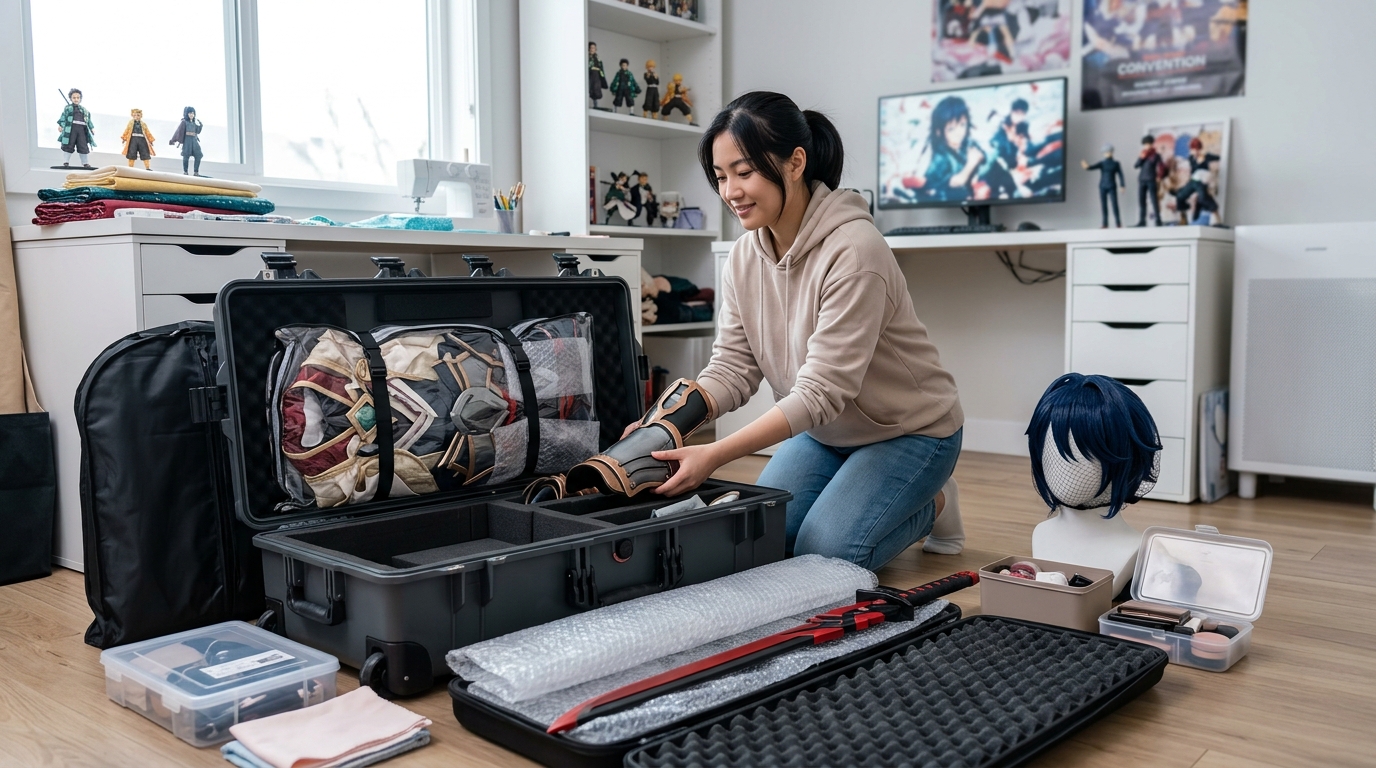
You’ve spent weeks crafting the perfect cosplay. Every stitch, every detail, every carefully painted prop represents hours of dedication. Then you arrive at the convention only to find a crushed wig, a snapped sword, or makeup smeared across your costume. Heartbreaking doesn’t begin to cover it.
Transporting cosplay safely requires strategic packing based on your travel method. Use garment bags for costumes, hard cases for props, and carry fragile items separately. Pack wigs with tissue paper in dedicated containers. Plan for wrinkles by bringing a steamer. Layer protection around delicate pieces and always carry repair supplies. Your preparation determines whether your cosplay arrives convention-ready or disaster-struck.
Understanding Your Transport Method
Different travel methods demand different packing strategies.
Driving to a convention gives you the most control. You can bring larger props, multiple costume changes, and emergency supplies without weight restrictions. Your car becomes a mobile dressing room.
Flying creates challenges. Airlines impose size limits, weight restrictions, and baggage fees. Security might question your foam sword. Overhead bins crush delicate pieces. You need compact, protective solutions.
Public transport sits somewhere between. You’re limited by what you can carry comfortably. Stairs become your enemy when hauling a massive prop box.
Choose your packing method based on how you’re getting there.
Packing Costumes Without Wrinkles
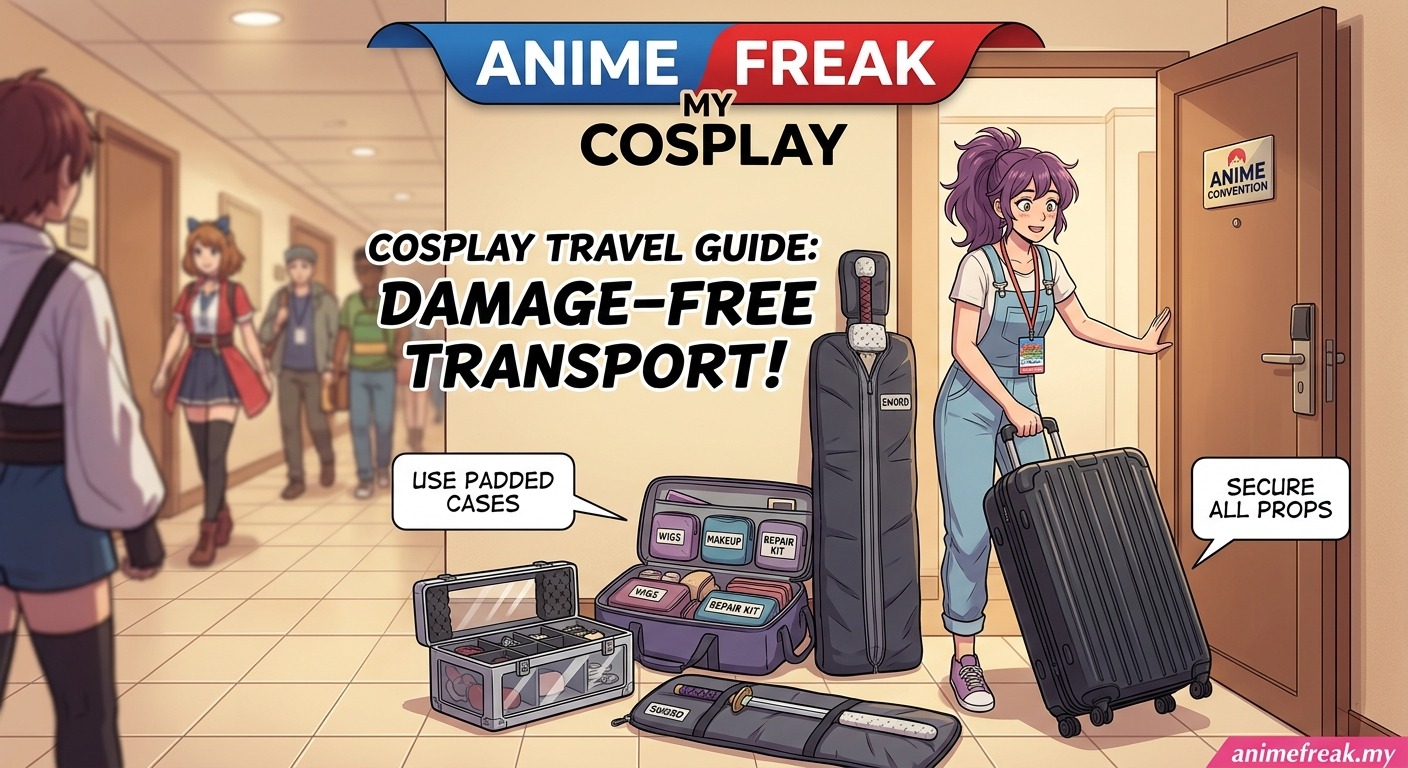
Fabric damage ruins the cleanest construction work.
Garment bags are non-negotiable for structured costumes. Hang dresses, jackets, and anything with defined shapes. The vertical position prevents crushing. Add tissue paper between layers to maintain volume.
For car travel, hang garment bags across the back seat using the handles above the doors. Secure them so they don’t swing during turns.
For flights, invest in a tri-fold garment bag that fits carry-on dimensions. These compress without crushing. Pack your most valuable costume pieces here.
Rolling works for flexible fabrics like t-shirts, leggings, and base layers. Roll tightly and pack vertically in a hard-shell suitcase. This method actually prevents wrinkles better than folding.
Avoid folding structured pieces. Every fold line becomes a wrinkle that’s harder to remove from cosplay fabrics like vinyl, leather, or heavily interfaced materials.
Pack a travel steamer in your luggage. Hotel irons often leak or stick. A compact steamer fixes wrinkles in minutes and works on delicate fabrics that can’t handle direct heat.
Protecting Props and Weapons
Props break easier than you think.
Hard cases are worth every ringgit for valuable props. Pelican cases, camera equipment boxes, or musical instrument cases provide crush-proof protection. Cut foam inserts to match your prop’s exact shape.
PVC pipe works brilliantly for long weapons. Cap both ends, label it clearly, and pack it in checked luggage if flying. Airlines allow sporting equipment, and a sealed tube raises fewer questions than a visible sword.
Bubble wrap is your baseline protection. Wrap props in at least three layers. Tape carefully so removal doesn’t damage paint or details.
Pool noodles protect edges and points. Slice them lengthwise and slide them over blade edges, staff ends, or anything that might puncture your luggage from inside.
For car transport, use the trunk strategically. Place props flat on the bottom, never standing upright where they can topple. Secure them with bungee cords or non-slip mats.
Wig Care During Travel

Wigs are surprisingly fragile.
Wig heads maintain shape during transport. Place your styled wig on a foam or canvas head. Cover it with a hairnet to keep the style intact.
For car travel, set wig heads in a plastic container or box that won’t shift. The passenger seat floor works well since it’s relatively stable.
For flights, pack wigs in a dedicated wig box or hat box. Stuff the interior with tissue paper to prevent movement. Mark the box as fragile.
Never pack wigs loose in a suitcase. The weight of other items will flatten spikes, crush curls, and destroy your styling work.
Bring styling supplies. Even protected wigs need touch-ups after travel. Pack:
- Travel-size hairspray
- Wig brush or wide-tooth comb
- Bobby pins
- Small scissors for flyaways
- Got2b Glued or your preferred styling product
Makeup and Small Accessories
Small items disappear or break without proper organization.
Use a dedicated makeup bag with compartments. Hard-shell cosmetic cases protect pressed powders and eyeshadow palettes from shattering.
Liquid products must follow airline regulations if flying. Keep them in a clear, quart-sized bag. Consider buying travel sizes or decanting products into smaller containers.
Jewelry and accessories need individual protection. Use a pill organizer for earrings, small gems, or buttons. Wrap necklaces in tissue paper and seal them in small bags to prevent tangling.
Contact lenses require special attention. Pack solution in checked luggage if flying to avoid liquid restrictions. Carry your actual lenses in your personal item with a small bottle of solution.
Store everything in clear, labeled bags. When you’re rushing to change costumes, you don’t want to dig through opaque pouches guessing which contains your spirit gum.
Creating a Packing Checklist
Organization prevents forgotten essentials.
Create a master list for every convention. Adjust based on specific costumes, but maintain core categories:
- Costume pieces (list each garment separately)
- Props and weapons (with protection method noted)
- Wigs and wig supplies
- Makeup and application tools
- Shoes and boot covers
- Undergarments and shapewear
- Emergency repair kit
- Documentation (if carrying prop weapons)
Check items off as you pack them. Take photos of packed bags so you remember what went where.
Pack an emergency kit separately. This travels in your carry-on or personal bag, never checked luggage:
- Needle and thread (multiple colors)
- Fabric glue
- Safety pins (various sizes)
- Double-sided tape
- Small scissors
- Super glue for prop repairs
- Baby wipes for makeup fixes
- Pain relievers
Strategies for Different Costume Types
Different builds need different approaches.
| Costume Type | Best Transport Method | Key Protection |
|---|---|---|
| Armor (foam) | Hard case or car trunk | Padding between pieces, avoid stacking |
| Ballgown | Garment bag, hung | Tissue paper in skirt, petticoat separate |
| Wings | Custom box or car | Bubble wrap joints, remove if detachable |
| Bodysuits | Rolled in carry-on | Inside-out to protect paint/prints |
| Elaborate headpieces | Dedicated box | Stuff interior, pad exterior |
Modular costumes travel easier. Design pieces to detach when possible. Wings that unclip, armor that separates into sections, and props that break down all pack more efficiently.
Test your packing method before the convention. Do a full pack and unpack at home. Time how long it takes. Check for damage points. Adjust your strategy based on what you learn.
Flying With Cosplay
Airlines add complexity.
Check TSA regulations before packing prop weapons. Even foam swords might be questioned. Print documentation showing your props are convention-safe.
Carry-on your most valuable pieces. Checked luggage gets thrown, crushed, and sometimes lost. Your main costume should stay with you.
Wear comfortable clothes but bring costume shoes in carry-on. If your checked bag goes missing, you can at least assemble a partial cosplay.
Book direct flights when possible. Every connection increases the chance of lost luggage or damage.
Arrive early for security screening. Explain your items calmly if questioned. Most security staff understand convention travel, but patience helps.
Consider shipping extremely large props ahead. Convention hotels often accept packages if you call ahead. This costs more but guarantees arrival for irreplaceable pieces.
Day-of Transport at the Convention
Getting from hotel to convention center matters too.
Use a garment bag even for the short walk. Weather happens. A sudden rain shower ruins makeup and dampens fabric.
Bring a rolling cart for props and bags. Your hands need to be free for doors, badges, and phone navigation.
Change at the hotel when possible. Wearing elaborate costumes through lobbies and streets risks damage and exhaustion.
For multi-day conventions, plan daily transport. Don’t carry every costume every day. Return to your room between costume changes if the hotel is close.
Store costumes properly in hotel rooms. Hang garments immediately. Don’t leave props on the floor where you might step on them in the dark.
Common Transport Mistakes to Avoid
Learn from others’ painful lessons.
Overpacking is tempting but dangerous. Every extra item adds weight and bulk. Bring what you’ll actually wear, not every costume you own.
Forgetting to label bags causes chaos. If you’re traveling with a group, identical black suitcases blend together. Use colored tape, luggage tags, or ribbons.
Packing the night before leads to forgotten items. Start three days early. Add items as you remember them.
Ignoring weather forecasts creates problems. Check the convention city’s weather. Bring appropriate protection for outdoor photoshoots or lines.
Skipping the repair kit seems fine until a strap breaks. Always pack emergency supplies.
Assuming you’ll buy supplies there costs time and money. Convention center shops charge premium prices and might not stock what you need.
Making Transport Part of Your Build
Smart construction simplifies travel.
Design costumes with transport in mind. Detachable pieces, collapsible props, and modular armor all pack better.
Choose materials that travel well. Some fabrics wrinkle less. Some paints chip easily. Factor durability into your material selection.
Document your costume construction. Take photos of how pieces attach, how props assemble, and how makeup applies. Reference these at the hotel when your memory fails.
Create a costume-specific packing guide. After your first convention with a costume, write down exactly how you packed it. Future you will be grateful.
Your Cosplay Deserves Safe Arrival
Transport planning isn’t glamorous, but it’s essential. The difference between a successful convention and a stressful disaster often comes down to how well you packed.
Start with your travel method and work backwards. Choose containers that fit your transport. Protect fragile elements with appropriate materials. Organize small items so nothing disappears. Test your system before the actual trip.
Your cosplay represents your creativity and effort. Give it the protection it deserves. Pack thoughtfully, travel carefully, and arrive ready to enjoy the convention instead of scrambling for emergency repairs. The memories you make will be worth every minute of preparation.