
The anime voice acting world never stops moving. Every month brings fresh announcements that reshape the industry landscape. This week alone, several prominent seiyuu revealed plans that will transform their professional paths and change how fans experience their work.
Recent announcements from five prominent anime voice actors reveal significant career transitions, including moves to international markets, shifts into directing roles, establishment of independent studios, retirement plans, and expansion into music careers. These changes reflect evolving industry dynamics and will impact casting choices, production schedules, and fan experiences across multiple upcoming anime series and projects throughout 2024 and beyond.
Understanding Why Voice Actors Make Big Career Moves
Voice actors don’t announce major changes on a whim. Years of industry pressure, creative ambitions, and personal circumstances build up before these decisions surface publicly.
The anime industry has transformed dramatically over the past decade. Streaming platforms expanded global reach. International co-productions became common. Voice actors now face opportunities their predecessors never imagined.
Many seiyuu start feeling constrained by traditional studio systems. They want creative control. Some pursue international recognition. Others seek better work-life balance after years of grueling recording schedules.
Financial considerations matter too. Top-tier voice actors can earn substantially more through independent ventures, music careers, or international projects compared to standard anime roles.
Health concerns push some towards change. Recording sessions demand intense vocal performance. Years of strain take their toll. Some actors choose less demanding paths before permanent damage occurs.
Five Voice Actors Reshaping Their Careers Right Now
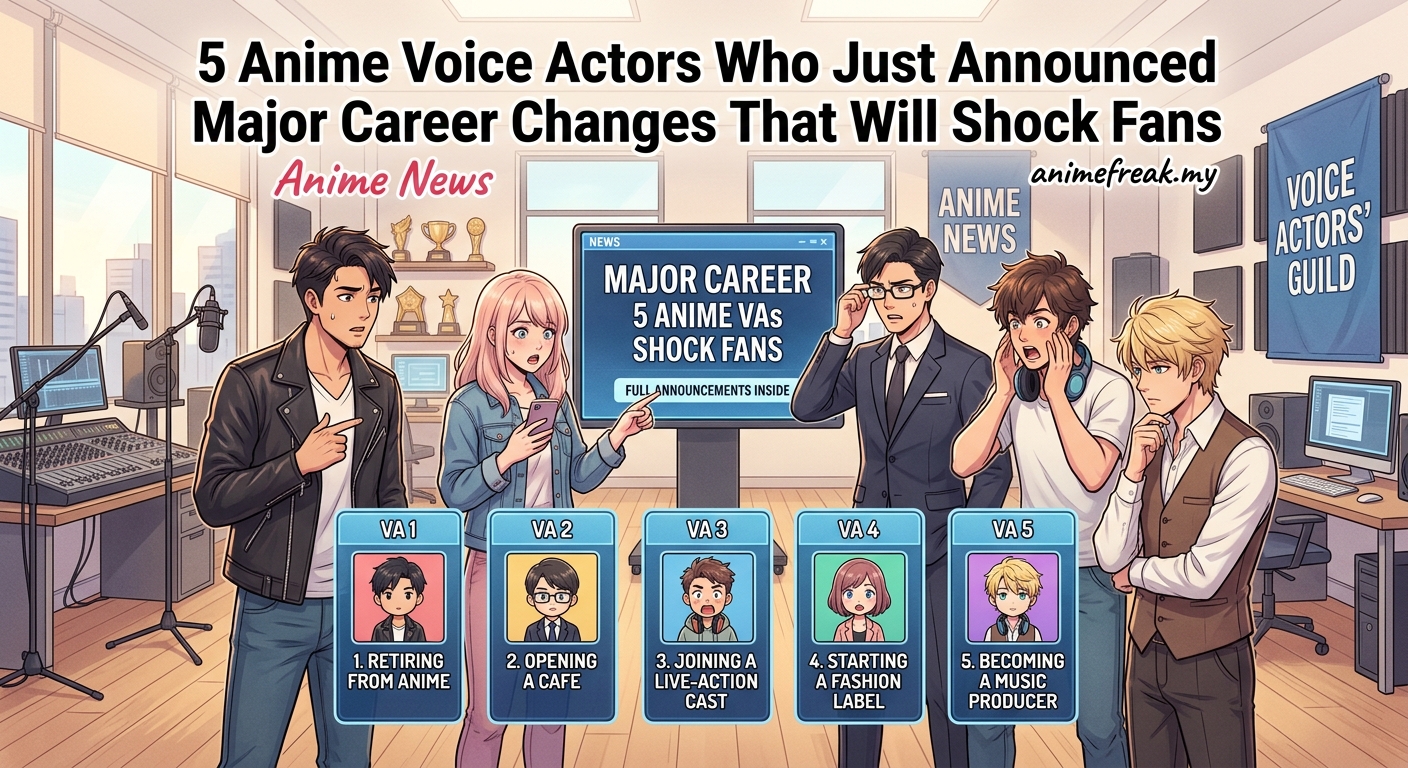
1. Yuki Kaji Expanding Into International Voice Direction
Yuki Kaji, known for voicing Eren Yeager in Attack on Titan and Meliodas in The Seven Deadly Sins, announced plans to establish a voice direction consultancy focused on bridging Japanese and Western animation markets.
His new venture will help Western studios achieve authentic anime-style performances from English-speaking actors. He’ll also guide Japanese actors working on international co-productions.
This shift doesn’t mean retirement from voice acting. Kaji plans to continue selective anime roles whilst building his consulting business throughout 2024.
The announcement surprised fans who expected him to focus purely on performance. Instead, he’s positioning himself as an industry bridge builder.
What this means for fans:
- Fewer lead roles in seasonal anime
- Potential for better English dubs on major titles
- More behind-the-scenes content about voice direction processes
2. Aoi Yuuki Launching an Independent Animation Studio
Aoi Yuuki shocked the industry by announcing her own animation production company. The studio will focus on short-form content with complete creative freedom for voice actors in the development process.
She voiced Tanya Degurechaff in The Saga of Tanya the Evil and Kumoko in So I’m a Spider, So What? Her extensive experience across genres positions her uniquely for this transition.
The studio aims to produce its first original series by late 2025. Yuuki will serve as executive producer and voice director whilst maintaining her acting career.
This represents a growing trend. More established voice actors want ownership over their projects rather than working exclusively as hired talent.
3. Mamoru Miyano Transitioning to Full-Time Music Career
Mamoru Miyano, the voice behind Light Yagami in Death Note and Rintaro Okabe in Steins;Gate, announced he’ll reduce anime commitments to 70% to focus on his music career.
He’s planning a world tour spanning 15 countries throughout 2024 and 2025. His agency confirmed he’ll only accept anime roles that accommodate his touring schedule.
Miyano built a substantial music following over the years. His concerts regularly sell out venues across Japan. The international expansion feels like a natural progression.
Voice actors with successful music careers often face this choice. The touring demands and recording schedules conflict with anime production timelines.
Expected impact:
- Longer gaps between his anime appearances
- Potential recasting for long-running series
- More music releases and international performances
4. Nao Touyama Announcing Partial Retirement Plans
Nao Touyama revealed plans to reduce her workload significantly starting in 2025. She voiced Chitoge Kirisaki in Nisekoi and Yui Yuigahama in My Teen Romantic Comedy SNAFU.
Her announcement cited health concerns and desire for better work-life balance. She’ll continue voicing established characters but won’t audition for new lead roles.
The industry has seen several similar announcements recently. Voice actors are speaking more openly about burnout and unsustainable work conditions.
Touyama’s decision reflects broader conversations about mental health in Japan’s entertainment industry. Her transparency has earned respect from fans and colleagues.
She plans to focus on radio work, occasional narration projects, and mentoring younger voice actors through workshops.
5. Tomokazu Sugita Establishing a Voice Acting School
Tomokazu Sugita, famous for voicing Gintoki Sakata in Gintama and Joseph Joestar in JoJo’s Bizarre Adventure, announced plans to open a specialized voice acting academy.
The school will operate differently from traditional seiyuu training programs. It emphasizes improvisation, character development, and business skills alongside technical voice training.
Sugita won’t retire from acting. He views teaching as complementary to his performance career. The academy opens in April 2024 with an initial class of 30 students.
His curriculum includes modules on navigating the modern voice acting industry, including international opportunities, social media presence, and contract negotiation.
How These Changes Affect the Anime Industry
Voice actor career shifts create ripple effects throughout production pipelines. Studios must adjust casting strategies. Producers face scheduling challenges. Fans experience changes in their favourite series.
| Impact Area | Short-Term Effect | Long-Term Consequence |
|---|---|---|
| Casting Decisions | More auditions needed for established roles | Rise of new talent in prominent positions |
| Production Schedules | Potential delays for ongoing series | Studios develop more flexible recording systems |
| International Projects | Better quality cross-cultural productions | Increased global collaboration standards |
| Fan Experience | Adjustment period for new voices | Broader diversity in performance styles |
| Industry Standards | Spotlight on working conditions | Improved contracts and health protections |
These transitions highlight structural issues within anime production. The traditional studio system struggles to accommodate modern career aspirations.
Younger voice actors watching these announcements see new possibilities. The career path isn’t limited to studio employment anymore.
What Fans Should Watch For Next
These five announcements likely represent the beginning of a larger trend. Several factors suggest more career changes coming soon.
The anime industry continues expanding internationally. Voice actors with language skills and cross-cultural understanding will pursue opportunities outside Japan.
Streaming platforms invest heavily in original anime content. This creates alternative funding sources and production models that allow greater creative freedom.
Social media gives voice actors direct fan connections. They can build personal brands independent of studio backing. This independence enables career pivots that weren’t feasible a decade ago.
Signs to watch for upcoming announcements:
- Voice actors becoming less active on social media
- Cancelled or rescheduled convention appearances
- Vague statements about “new projects” without details
- Increased involvement in non-anime entertainment sectors
- Public discussions about industry working conditions
“The voice acting industry is at a turning point. Actors who built their careers in the 2010s now have enough influence and resources to reshape how the business operates. We’re watching the emergence of a new generation of industry leaders who also happen to be performers.” — Industry analyst Kenji Watanabe
Preparing for Changes in Your Favourite Shows
When a voice actor announces a career change, fans immediately worry about their favourite characters. Will they be recast? Will the series continue?
Here’s a practical approach to handling these transitions:
-
Check official announcements from production studios. They typically address recasting decisions within weeks of a voice actor’s announcement.
-
Follow the voice actor’s social media for clarification. Most actors specify which roles they’ll continue and which they’re leaving.
-
Give replacement actors a fair chance. New voices often grow on fans after a few episodes, even when initial reactions are negative.
-
Understand that some delays are inevitable. Production schedules may shift whilst studios arrange new recording sessions.
-
Support the voice actor’s new ventures if you’re interested. Many actors announce career changes because they’re pursuing passion projects worth checking out.
Studios handle these situations differently depending on circumstances. Long-running shows with established voices face the toughest decisions.
Some series pause production temporarily. Others recast immediately. A few write character departures into the story to accommodate the change.
International fans often experience less disruption. English dubs typically cast separately from Japanese originals, so changes in Japanese voice actors don’t always affect dubbed versions.
The Business Side of Voice Acting Transitions
Career changes reveal the business realities behind anime production. Voice actors are independent contractors, not employees. They negotiate each role separately.
This arrangement offers flexibility but limited security. No guaranteed income between projects. No benefits package. No retirement plan beyond personal savings.
Top-tier voice actors with recognizable names can command higher fees. They also attract sponsorship opportunities, merchandise deals, and appearance fees.
Mid-tier actors face more precarious situations. They need constant work to maintain income. This pressure leads to burnout and health issues.
The actors announcing major changes all achieved financial stability first. They can afford to take risks because they built substantial savings and diverse income streams.
Younger voice actors watching these transitions learn important lessons about career planning. Building a personal brand matters. Diversifying income sources provides security. Knowing when to say no prevents burnout.
How International Expansion Changes Everything
The global anime market transformed career possibilities for Japanese voice actors. International fans follow specific actors. Convention appearances in other countries provide substantial income.
Some voice actors now earn more from international activities than domestic anime work. This shift changes their career calculations entirely.
Yuki Kaji’s move into international voice direction makes perfect business sense. He’s capitalizing on his name recognition whilst the global anime market continues expanding.
Western animation studios increasingly want authentic anime-style performances. They need consultants who understand both markets. Kaji positioned himself perfectly for this demand.
International co-productions will only increase. Streaming platforms want content that appeals across multiple markets. Voice actors who can navigate both Japanese and Western entertainment systems become invaluable.
- Growing international convention circuit
- Increased demand for English-speaking Japanese voice actors
- Cross-cultural collaboration opportunities
- Higher fees for actors with global recognition
- Social media enabling direct international fan engagement
The Creative Freedom Factor
Several announced career changes emphasize creative control. Aoi Yuuki’s animation studio. Mamoru Miyano’s music focus. These moves reflect frustration with traditional production constraints.
Voice actors typically have minimal input on character development or story direction. They receive scripts and direction, then perform. Creative collaboration happens rarely.
Some actors want more. They develop story ideas. They understand character psychology deeply. They see potential the original creators might miss.
Starting independent ventures lets them exercise creative muscles beyond pure performance. It’s risky but potentially more fulfilling.
The anime industry has room for these experiments. Independent productions and crowdfunding create paths that didn’t exist before.
Fans benefit when talented performers expand their creative roles. Fresh perspectives and innovative storytelling approaches emerge.
Keeping Track of Your Favourite Voice Actors
Following anime voice actors career changes requires staying connected to multiple information sources. Japanese entertainment news moves fast and doesn’t always translate immediately.
Here’s how to stay informed:
Official sources:
* Voice actor agency websites and social media accounts
* Anime studio announcements
* Industry trade publications like Anime News Network
* Voice actor personal social media (Twitter remains most common)
Community sources:
* Reddit communities dedicated to voice acting
* Anime forums with news sections
* Fan translation groups who monitor Japanese announcements
* YouTube channels covering anime industry news
Set up alerts for your favourite voice actors. Most social media platforms allow notifications when specific accounts post updates.
Remember that initial reports sometimes contain errors. Wait for official confirmation before assuming major changes are final.
Why These Changes Matter for Anime’s Future
The five career announcements discussed here represent more than individual decisions. They signal shifting power dynamics within the anime industry.
Voice actors are asserting more control over their careers. They’re refusing to accept unsustainable working conditions. They’re building alternative career paths that offer better balance and creative satisfaction.
This benefits everyone long-term. Better working conditions attract talented performers. Creative freedom produces innovative content. International expansion grows the market.
Studios must adapt. The old model of interchangeable voice actors working under strict studio control is fading. The new model treats top voice actors as creative partners with valuable input.
Younger actors entering the industry now have more options and better examples to follow. They see successful performers who built sustainable careers without sacrificing health or creative ambitions.
Your Role as an Anime Fan
Fans play a crucial part in supporting healthy industry evolution. How audiences react to career changes influences how studios and actors approach future decisions.
Supporting voice actors through transitions helps. Follow their new ventures. Attend their events. Purchase their music or other projects.
Giving new voice actors fair chances matters too. Recasting happens. Initial unfamiliarity fades with time. Many replacement actors eventually win over skeptical fans through quality performances.
Discussing working conditions constructively helps raise awareness. The anime industry has real problems with overwork and burnout. Fan pressure can encourage positive changes.
Understanding the business realities behind your favourite shows creates more realistic expectations. Production challenges are real. Career changes sometimes cause delays. Patience helps everyone.
The Next Chapter for Anime Voice Acting
These five announcements mark a turning point. The anime voice acting industry is maturing. Performers are taking control of their careers in unprecedented ways.
More changes will come. Watch for additional announcements over the next year. The trend towards independence, international work, and creative control will likely accelerate.
The anime you love will continue evolving. New voices will emerge. Established actors will surprise you with unexpected career moves. The industry will adapt and grow stronger.
Stay curious about the people behind your favourite characters. Their career journeys are just as interesting as the stories they bring to life. These transitions ultimately enrich the anime landscape with fresh perspectives and innovative approaches.