
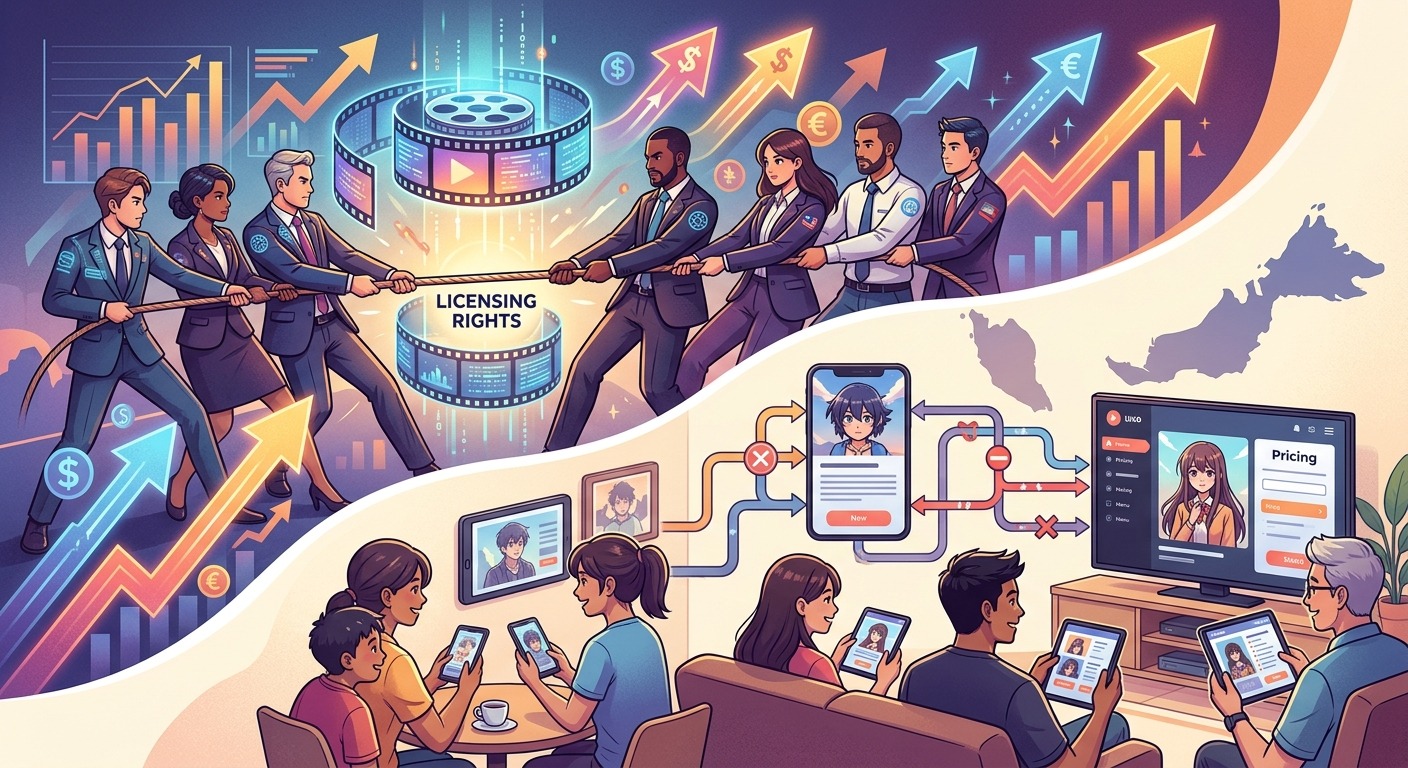
The price tags attached to anime licensing deals have climbed to eye-watering heights over the past few years. What once cost streaming platforms a few thousand dollars per episode now routinely runs into six or even seven figures for popular titles. Malaysian anime fans have felt the ripple effects through subscription hikes, shrinking catalogues, and delayed releases.
Anime licensing cost has surged due to global streaming competition, production committee demands, and bidding wars. Malaysian platforms face budget constraints that limit catalogue depth. Fans see fewer simultaneous releases, higher subscription fees, and fragmented libraries. Understanding these economics helps explain why your favourite shows sometimes vanish or arrive late on local services.
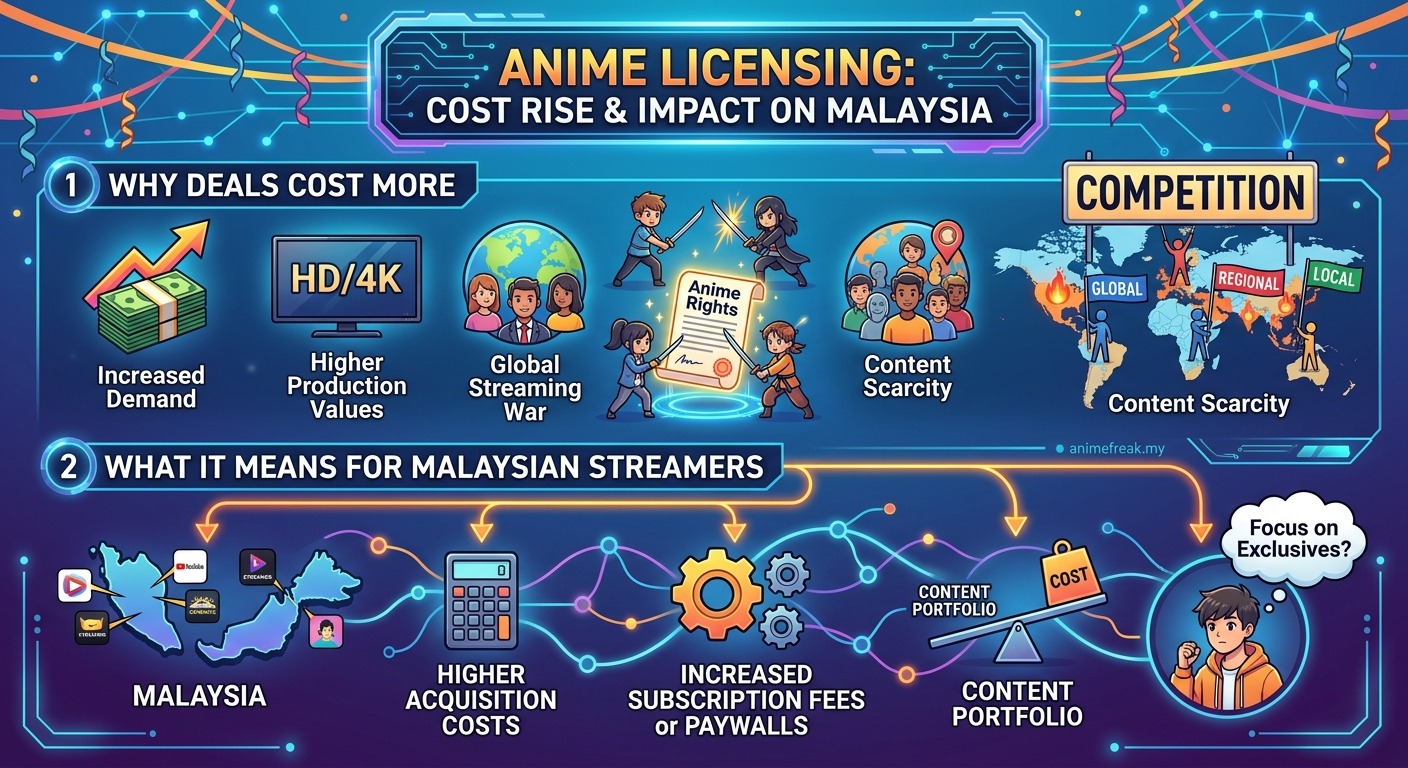
Why anime licensing deals have become so expensive
The anime industry has transformed from a niche market into a global entertainment powerhouse. Streaming platforms worldwide now compete fiercely for the same titles, driving prices upward.
Production committees in Japan hold significant leverage. These committees fund anime creation and control distribution rights. They’ve noticed the international appetite for their content and adjusted pricing accordingly.
A single popular seasonal anime can attract bids from Netflix, Crunchyroll, Disney+, and regional platforms simultaneously. This competitive environment naturally inflates costs. Platforms that want exclusive rights pay even steeper premiums.
The shift from physical media to streaming changed the game entirely. DVD and Blu-ray sales once provided reliable revenue streams for licensors. Now, streaming rights represent the primary international income source for many titles.
Japanese studios have also become more selective about partners. They want platforms that can deliver quality subtitles, robust marketing, and reliable payment terms. Meeting these standards requires investment beyond the base licensing fee.
How production committees set their prices
Production committees operate differently than traditional studios. Multiple stakeholders invest in each anime project, including publishers, toy manufacturers, music labels, and broadcasting networks.
Each stakeholder wants maximum return on investment. When setting international licensing prices, committees consider several factors:
- Projected popularity based on manga sales or light novel rankings
- Previous performance of similar genres in target markets
- Star power of voice actors and directors attached to the project
- Merchandise potential and cross-media opportunities
- Competition among potential licensees
Committees often tier their pricing. A slice-of-life romance might cost significantly less than a battle shounen with proven franchise appeal. Malaysian platforms must navigate these tiers carefully to build balanced catalogues within budget constraints.
The committee structure also means slower decision-making. Multiple parties need approval before finalising any deal. This bureaucracy can delay announcements and frustrate platforms trying to secure day-and-date releases.
The bidding war phenomenon
Bidding wars have become standard practice for high-profile titles. When a new season of a popular franchise approaches, platforms prepare their wallets.
Here’s how a typical bidding process unfolds:
- The production committee or their licensing agent announces availability of rights for specific territories
- Interested platforms submit initial bids along with their distribution plans
- The committee evaluates bids based on price, platform reach, and marketing commitments
- Top bidders enter a second round where prices escalate
- The committee selects a winner or splits rights among multiple platforms
Malaysian platforms often find themselves outbid by larger international competitors. A global player might pay premium rates to secure Southeast Asian rights as part of a broader regional package.
Some platforms have adopted different strategies to manage costs. They focus on acquiring back catalogue titles at lower prices rather than chasing every new seasonal release. Others form partnerships to share licensing expenses across multiple territories.
Regional pricing and Malaysian market challenges
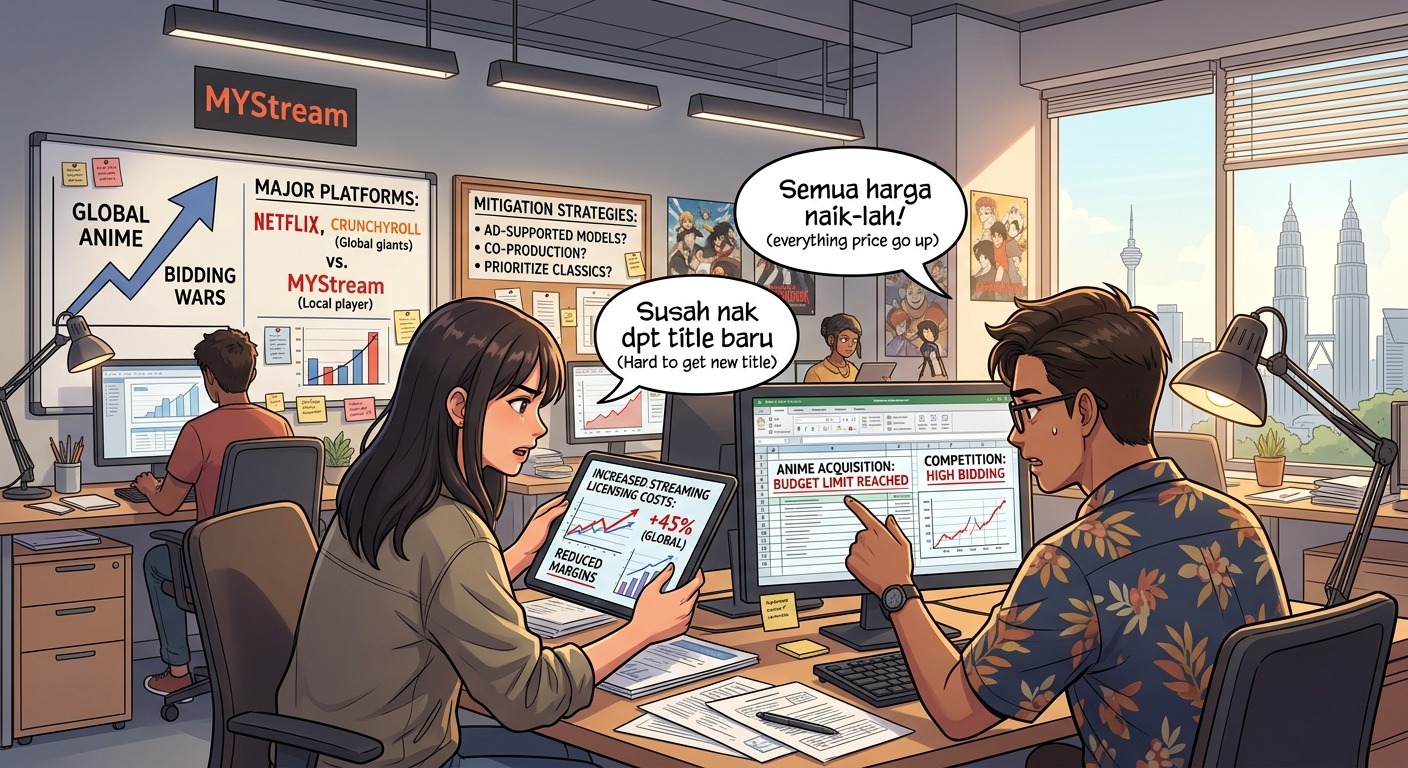
The Malaysian market presents unique challenges for anime licensing. Population size and average subscription spending power differ significantly from markets like the United States or Japan.
Licensors rarely offer Malaysia-specific pricing. Instead, they bundle the country into broader Southeast Asian packages. This means Malaysian platforms pay rates influenced by larger markets like Indonesia, Thailand, and the Philippines.
Currency fluctuations add another layer of complexity. Licensing deals are typically negotiated in Japanese yen or US dollars. When the ringgit weakens, the effective cost for Malaysian platforms increases even if the base price remains stable.
“We love bringing anime to Malaysian fans, but we’re competing against platforms with budgets ten times our size. Every licensing decision involves careful calculation of subscriber numbers versus content costs.” – Anonymous streaming platform executive
Local platforms must also contend with regional restrictions. A title licensed for Malaysia might have different availability windows than neighbouring countries. Fans notice these gaps and sometimes turn to unofficial sources, which undermines the platform’s investment.
What drives costs higher year after year
Several interconnected factors push anime licensing cost upward annually.
Anime production budgets have increased substantially. Better animation quality, higher staff salaries, and more elaborate marketing campaigns all cost money. Production committees naturally want licensing fees that reflect these investments.
The number of anime produced each season has also grown. More titles mean more competition for viewer attention. Committees price their strongest properties aggressively while offering discounts on riskier experimental shows.
Streaming platforms themselves bear some responsibility. Their willingness to pay premium prices for exclusive content has reset market expectations. Once one platform pays a record amount, committees use that figure as a baseline for future negotiations.
Global fandom growth sustains high prices. Anime conventions attract larger crowds. Merchandise sales break records. Social media buzz generates free marketing. All these signals tell production committees their content holds tremendous value.
How licensing costs affect Malaysian streaming catalogues
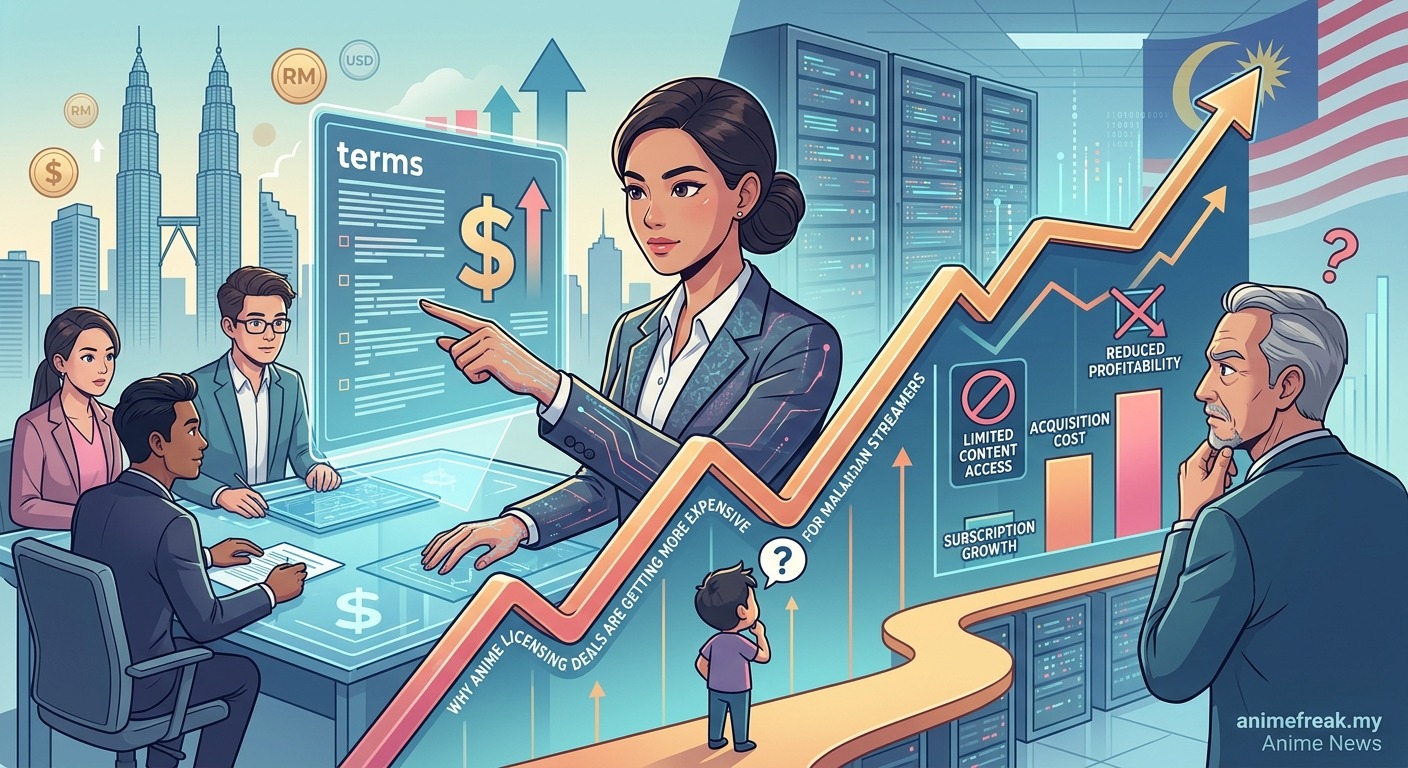
Budget constraints force Malaysian platforms to make difficult choices. They cannot license every desirable title, so they prioritise based on expected return on investment.
Popular shounen action series typically receive priority. These shows attract broad audiences and generate subscriber growth. Romance, slice-of-life, and niche genres often get overlooked despite having dedicated fanbases.
Platforms also stagger releases to spread costs across quarters. Instead of licensing ten shows in one season, they might secure five and wait for prices to drop on the others. Fans experience this as delayed availability.
Some platforms have shifted toward licensing older catalogue titles. Classic anime from the 1990s and 2000s costs far less than current seasonal releases. This strategy fills library gaps affordably but doesn’t satisfy fans craving the latest episodes.
The table below illustrates how different licensing strategies impact catalogue composition:
| Strategy | Catalogue Depth | Current Seasonals | Cost Efficiency | Fan Satisfaction |
|---|---|---|---|---|
| Premium exclusives | Shallow | High | Low | Mixed |
| Balanced mix | Moderate | Moderate | Moderate | Good |
| Catalogue focus | Deep | Low | High | Frustrated core fans |
| Shared licensing | Moderate | Moderate | Good | Acceptable |
Subscription price impacts for Malaysian fans
Rising licensing costs eventually reach consumers. Malaysian streaming platforms have raised subscription prices multiple times in recent years.
A basic anime streaming subscription that cost RM15 monthly five years ago now often runs RM25 or higher. Premium tiers with simultaneous releases and ad-free viewing can exceed RM40 monthly.
These increases strain budgets, especially for students and young adults who form the core anime audience. Many fans subscribe to multiple platforms to access different exclusive titles, compounding the expense.
Some platforms have introduced ad-supported free tiers to maintain accessibility. However, these tiers typically exclude the newest and most popular titles, which remain locked behind premium subscriptions.
Family and group plans offer some relief. Sharing a subscription among friends reduces individual costs, though platforms have started implementing stricter account-sharing policies.
Alternative revenue streams and their limitations
Platforms have explored various revenue models beyond subscriptions to offset licensing costs.
Advertising represents the most common alternative. Free tiers supported by ads generate income without charging viewers directly. However, ad rates in Malaysia remain lower than in Western markets, limiting revenue potential.
Merchandise partnerships offer another avenue. Some platforms collaborate with licensors to sell official goods through integrated storefronts. Profit margins on merchandise can exceed subscription revenue for popular titles.
Live events and cinema screenings provide occasional windfalls. Anime films can draw substantial crowds in Malaysian cinemas, and platforms sometimes negotiate theatrical rights alongside streaming licences.
These alternatives help but rarely cover the full cost of premium licensing deals. Subscription revenue remains the primary funding source for most platforms.
How fans can support sustainable licensing
Malaysian anime fans who want robust local catalogues can take several actions to support platforms financially.
Maintaining active paid subscriptions sends clear signals about demand. Platforms track viewing metrics closely. High engagement with licensed content justifies continued investment in similar titles.
Participating in official merchandise sales helps too. When platforms see strong merchandise performance, they gain confidence in licensing related properties.
Providing constructive feedback through official channels influences content decisions. Platforms want to know which genres and titles their subscribers value most.
Avoiding unofficial streaming sites protects the ecosystem. Piracy undermines the financial case for licensing. Every view on an unofficial platform represents lost revenue that could fund future acquisitions.
Sharing content legally on social media also helps. Clips and screenshots posted within platform guidelines generate organic marketing that attracts new subscribers.
Future trends in anime licensing economics
Several emerging trends will shape anime licensing cost over the coming years.
Consolidation among streaming platforms may reduce bidding war intensity. As smaller players exit or merge, fewer competitors remain to drive prices upward. However, this could also reduce consumer choice.
Direct licensing from Japanese studios to international platforms might increase. Some studios have established their own distribution arms to capture more revenue. This disintermediation could lower costs for platforms but requires studios to build new capabilities.
Blockchain and NFT experiments have appeared in anime licensing discussions. While still speculative, these technologies could enable new revenue models that reduce dependence on traditional licensing fees.
Co-production deals between Malaysian platforms and Japanese studios represent another possibility. Platforms that invest in production gain favourable licensing terms for the resulting content.
Regional collaboration among Southeast Asian platforms could improve bargaining power. A unified approach to licensing negotiations might secure better rates than individual platforms bidding separately.
Making sense of the shifting landscape
The economics behind anime licensing affect everyone in the ecosystem. Production committees want fair compensation for their creative investments. Platforms need sustainable business models. Fans desire affordable access to diverse content.
Understanding these dynamics helps set realistic expectations. When a beloved series doesn’t appear on your preferred platform, budget constraints and bidding outcomes often explain the absence rather than lack of interest.
Malaysian platforms operate in a challenging middle ground. They serve passionate audiences but lack the resources of global giants. Supporting these platforms through subscriptions and engagement helps build a case for continued investment in anime licensing.
The cost pressures aren’t disappearing anytime soon. As anime’s global popularity grows, so will competition for rights. Finding balance between affordability and content quality will define the industry’s trajectory in Malaysia and beyond.