
You’ve probably noticed more vertical scrolling comics popping up on your phone lately. Korean manhwa and Chinese manhua are everywhere now, from anime adaptations to trending social media posts. But what actually makes them different from the Japanese manga you grew up reading?
Manhwa (Korean) and manga (Japanese) differ primarily in reading direction, art style, and format. Manga reads right to left in black and white print volumes. Manhwa typically reads left to right or vertically in full colour digital chapters. Both offer unique storytelling approaches, with manhwa optimised for mobile reading and manga rooted in traditional print culture. Understanding these differences helps readers appreciate each medium’s strengths.
Where each format comes from
Manga originated in Japan during the post-war era, though its artistic roots trace back centuries to traditional Japanese art forms. The modern manga industry exploded in the 1950s and 1960s, establishing conventions that still define the medium today.
Manhwa developed in Korea with its own distinct history. While early Korean comics borrowed some Japanese influences, manhwa evolved separately, especially after Korea’s digital revolution in the early 2000s. The rise of smartphones and high-speed internet transformed how Koreans consumed comics.
Manhua represents Chinese comics, with traditions stretching back even further than Japanese manga. However, modern manhua faces different market conditions and censorship requirements that shape its content and distribution.
Each format reflects its country’s publishing industry, technology adoption, and reading culture.
Reading direction matters more than you think
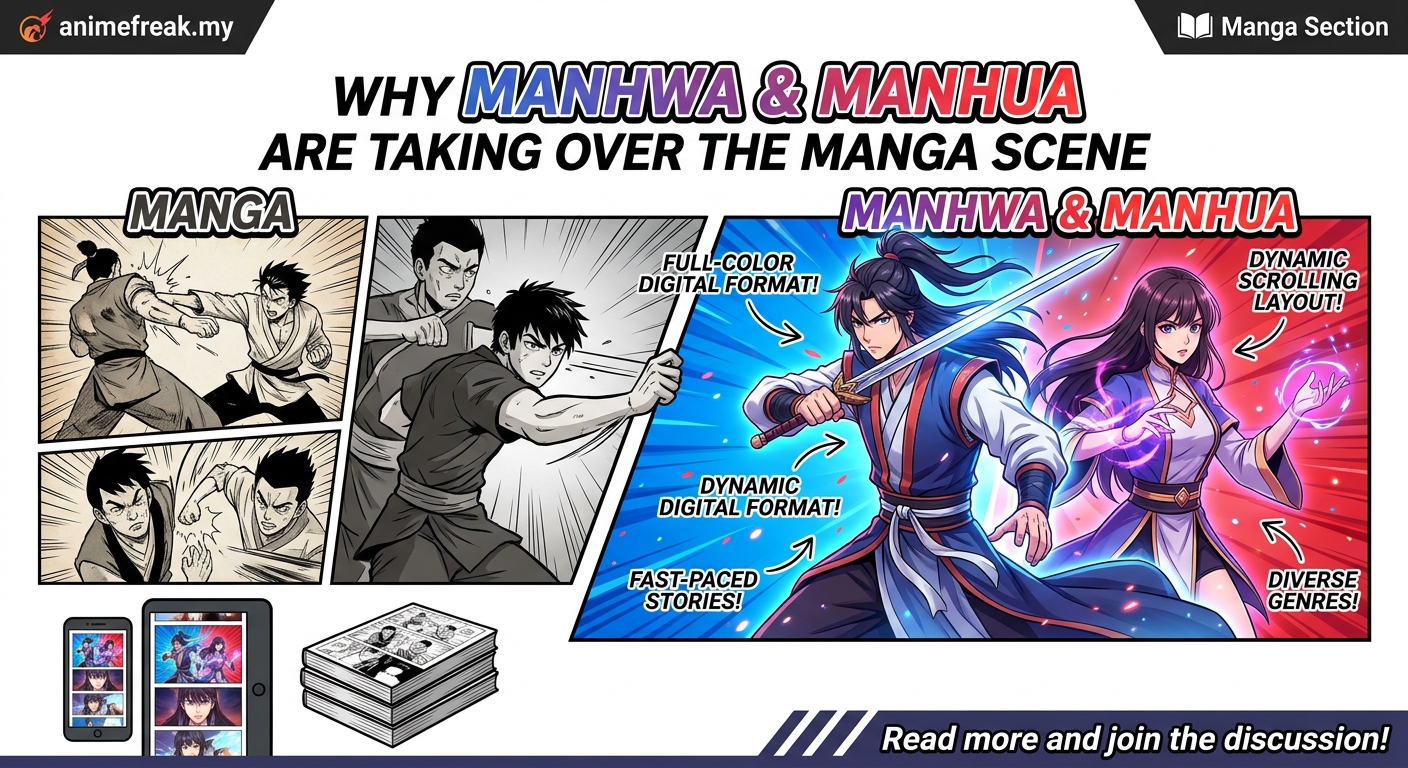
This might seem like a small detail, but reading direction fundamentally changes how stories unfold.
Traditional manga reads right to left, top to bottom. You start at what Western readers consider the “back” of the book. Panel layouts flow accordingly, with action moving from right to left across the page. This preserves the original Japanese reading order.
Manhwa typically reads left to right, matching Western reading habits. This makes sense because Korean text (Hangul) flows left to right horizontally. However, many modern manhwa use vertical scrolling formats designed for phones, where reading direction becomes simply “down.”
Manhua also generally reads left to right in modern formats, though older Chinese comics sometimes used traditional right to left vertical columns.
Why does this matter? Because it affects panel composition, action sequences, and even emotional beats. Manga artists compose panels knowing your eye travels right to left. Manhwa creators design for left to right or continuous vertical flow.
Getting used to manga’s right to left reading takes practice if you’re new to it. But once you adjust, you’ll notice how naturally the storytelling flows in that direction.
Colour versus black and white
Walk into any bookstore and you’ll spot this difference immediately.
Most manga is published in black and white. This tradition stems from Japan’s weekly magazine system, where speed and cost efficiency matter. Artists use screentones, hatching, and solid blacks to create depth and texture without colour.
Manhwa, especially webtoons, almost always appears in full colour. Digital platforms made colour economically viable. Artists use vibrant palettes that pop on phone screens. The colour enhances mood and makes characters instantly recognisable.
Manhua also frequently uses colour, though styles vary widely depending on the publisher and target audience.
The black and white versus colour debate isn’t about quality. Both approaches have artistic merit. Manga artists have refined black and white techniques into an art form. The stark contrast and careful linework create stunning visual storytelling.
Colour manhwa offers different advantages. Atmospheric scenes benefit from colour gradients. Fantasy worlds feel more immersive with rich colour palettes. Character designs can use colour coding that black and white can’t match.
Some manga do get colour releases, usually for special editions or digital versions. But the core format remains monochrome.
Print versus digital formats
The publishing model shapes everything about how these comics are made.
Manga follows a traditional print pipeline:
- Artists create chapters for weekly or monthly magazines
- Popular series get collected into tankobon volumes
- International publishers license and translate these volumes
- Readers buy physical books or official digital versions
This system has existed for decades. It’s reliable but slower. You might wait months between volume releases.
Manhwa, particularly webtoons, pioneered a digital-first approach:
- Artists publish episodes directly to platforms like Naver or KakaoPage
- Readers access chapters on phones or computers
- Episodes release weekly or even multiple times per week
- Physical print collections come later, if at all
This creates different reader experiences. Manga readers often binge entire volumes at once. Manhwa readers follow ongoing series episode by episode, similar to watching weekly TV shows.
The vertical scroll format of webtoons changed comic composition entirely. Instead of page turns and panel borders, manhwa artists create continuous vertical canvases. Dramatic reveals happen as you scroll down. Cliffhangers land right before you need to wait for the next episode.
Art style and paneling techniques
Look at a manga page and a manhwa episode side by side. The visual language differs significantly.
Manga uses complex panel layouts. A single page might contain anywhere from three to ten panels of varying sizes and shapes. Artists use panel borders creatively, breaking them for dramatic effect or overlapping them to show simultaneous action.
Speed lines, impact frames, and dramatic close-ups define manga’s visual vocabulary. Artists often use minimalist backgrounds to focus on character expressions during emotional moments.
Manhwa panels, especially in webtoon format, flow vertically with more uniform sizing. Wide horizontal panels stack on top of each other. This creates a cinematic feel, almost like storyboards.
Background art in manhwa tends to be more consistently detailed, partly because colour helps distinguish characters from settings. The vertical format allows for tall, impressive establishing shots that would be impossible in manga’s page-based format.
Character designs show cultural differences too. Manga characters often have larger, more expressive eyes and varied hair colours (even in black and white). Manhwa characters typically feature more realistic proportions and hair colours that exist in nature.
Neither style is better. They serve different storytelling needs and platform requirements.
Story structure and pacing differences
The publishing format directly impacts how stories unfold.
Manga chapters typically run 18 to 40 pages, designed to fill magazine slots. Stories pace themselves around these chapter breaks. Cliffhangers land at chapter ends. Story arcs span multiple chapters collected into volumes.
This creates a particular rhythm. Action sequences might take several pages. Quiet character moments get space to breathe. Pacing can feel slower because artists have pages to work with.
Manhwa episodes usually run shorter, maybe 40 to 80 vertical panels. Each episode needs a hook to bring readers back next week. Pacing tends to be brisker. Story beats hit more frequently.
The vertical scroll format also changes dramatic timing. Artists control exactly when you see each panel by spacing them vertically. A shocking reveal might appear after several panels of white space, making you scroll through suspense.
Manhwa also tends to favour longer, continuous narratives. A single story might run 100+ episodes without breaks. Manga more often works in defined arcs with clear stopping points.
Genre trends and popular themes
Both formats cover similar genres, but certain themes dominate each medium.
Popular manga genres include:
- Shonen action adventures with tournament arcs and power systems
- Slice of life school stories
- Psychological thrillers and horror
- Sports manga with detailed technique breakdowns
- Romance with complex relationship dynamics
Manhwa has its own trending genres:
- Isekai and regression stories (returning to the past with knowledge)
- System-based fantasies with game mechanics
- Revenge and underdog narratives
- Modern fantasy set in contemporary Korea
- Historical dramas with political intrigue
Manhua often features cultivation stories, martial arts epics, and business revenge plots.
These trends reflect cultural storytelling preferences. Japanese manga draws from decades of established genre conventions. Korean manhwa incorporates gaming culture and modern web novel trends. Chinese manhua connects to wuxia traditions and contemporary Chinese web fiction.
The popularity of certain manhwa has introduced these Korean storytelling patterns to global audiences. Series like Solo Leveling brought system-based progression fantasies into mainstream awareness.
How release schedules affect the experience
Waiting for new content shapes your relationship with a series.
Manga volumes release every few months. You might wait three to six months between volumes for ongoing series. This creates anticipation but also frustration. Following an ongoing manga means accepting long waits.
Some manga magazines publish weekly (like Weekly Shonen Jump), giving you new chapters every week. But you’re still reading multiple series in the magazine, not just one.
Manhwa episodes typically release weekly. Some popular series even release twice weekly. This consistent schedule keeps readers engaged. You know exactly when to check for updates.
The trade-off? Manhwa artists face brutal schedules. Creating full-colour episodes weekly requires either a team of assistants or unsustainable work hours. Some manhwa go on hiatus when artists burn out.
Manga artists also work intense schedules, but the black and white format and assistant system has evolved over decades to be somewhat more sustainable.
As a reader, weekly manhwa releases mean you’re never far from new content. But binge-reading completed series offers a different satisfaction that’s harder to find with ongoing manhwa.
Comparing reading experiences
| Aspect | Manga | Manhwa |
|---|---|---|
| Reading direction | Right to left | Left to right or vertical scroll |
| Colour | Usually black and white | Usually full colour |
| Primary format | Print volumes | Digital episodes |
| Panel layout | Complex, varied per page | Uniform, vertical stacking |
| Episode length | 18-40 pages per chapter | 40-80 panels per episode |
| Release frequency | Monthly volumes or weekly chapters | Weekly or twice-weekly episodes |
| Typical access | Purchase volumes or subscription apps | Free with ads or paid episodes |
| Best reading device | Physical book or tablet | Smartphone |
This table simplifies complex formats, but it captures the core differences you’ll notice as a reader.
Why manhwa is gaining ground globally
Several factors explain manhwa’s recent explosion in popularity.
Mobile optimization matters enormously. More people read on phones than ever before. Manhwa’s vertical scroll format feels native to smartphone browsing. You read it the same way you scroll through social media.
Manga requires either physical books or larger screens to appreciate the page layouts properly. Reading traditional manga on a phone means zooming and panning, which breaks immersion.
Free access with ads has introduced countless readers to manhwa. Platforms like Webtoon and Tapas offer extensive free libraries. You can start reading immediately without buying anything.
Manga typically requires purchase, whether physical volumes or digital subscriptions. The barrier to entry is higher.
Fresh storytelling approaches attract readers tired of familiar manga tropes. Korean web novels and manhwa developed their own conventions that feel new to international audiences.
Successful anime adaptations brought manhwa to broader audiences. Tower of God, The God of High School, and Solo Leveling introduced anime fans to manhwa source material.
The global digital distribution of manhwa means simultaneous worldwide releases. You’re reading the same episode as Korean readers, just translated. Manga often faces licensing delays and regional restrictions.
What manga still does better
Despite manhwa’s growth, manga maintains significant advantages.
Decades of refinement show in manga’s craft. The best manga artists have mastered visual storytelling in ways that newer manhwa creators are still learning. Panel composition, page turns, and visual flow in top-tier manga remain unmatched.
The physical book experience matters to many readers. Collecting manga volumes, feeling the paper, and arranging them on shelves creates a different relationship with the medium. Manhwa’s digital nature lacks this tangible aspect.
Manga’s diversity is staggering. Decades of publication mean genres and subgenres that manhwa hasn’t fully developed yet. Looking for obscure sports manga about a specific activity? It probably exists. Want experimental art styles? Manga has them.
The manga industry supports more creators at various levels. While brutal in its own ways, the system allows artists to build careers through assistantships before launching their own series.
Manga’s international licensing system, though slower, means professional translations and quality control. Manhwa translations can be inconsistent, with some platforms using machine translation or rushed human translation.
“Both formats offer incredible stories. The ‘best’ one depends entirely on what you value as a reader. If you want mobile-friendly colour comics with frequent updates, manhwa delivers. If you prefer refined black and white artistry in physical volumes, manga excels. Most fans end up enjoying both.” – Advice from experienced comic readers
How to start reading both formats
Getting into manhwa and manga is easier than ever.
For manga, start with:
- Visit a local bookstore with a manga section to browse physically
- Try a subscription service like Shonen Jump for affordable legal access
- Pick a highly-rated series in a genre you already enjoy
- Give the right-to-left reading direction a few chapters to feel natural
For manhwa, try this:
- Download the Webtoon app or visit webtoon.com
- Browse the featured and popular sections
- Start with completed series so you can binge without waiting
- Explore different genres since the variety might surprise you
Don’t feel pressured to choose one over the other. Many readers enjoy both formats for different reasons. You might read manhwa on your phone during commutes and save manga volumes for relaxed evening reading.
Start with popular, well-regarded series in each format. Solo Leveling, Omniscient Reader’s Viewpoint, or True Beauty for manhwa. My Hero Academia, One Piece, or Spy x Family for manga. These popular series are popular for good reason.
Pay attention to what you enjoy about each format. Do you prefer the cinematic flow of vertical scrolling? Or the carefully composed page layouts of manga? Your preferences will guide you toward more series you’ll love.
Common mistakes when switching between formats
Readers switching from manga to manhwa (or vice versa) often stumble over these issues:
- Reading manga left to right and getting confused about the story flow
- Expecting manhwa to have the same panel complexity as manga pages
- Trying to read vertical manhwa on devices too small to appreciate the art
- Comparing black and white manga art unfavourably to colour manhwa without appreciating different artistic approaches
- Assuming one format is “better” rather than recognizing they serve different purposes
- Getting frustrated with different pacing styles instead of adjusting expectations
- Missing cultural context that explains certain story choices or character behaviours
Each format developed its conventions for good reasons. Understanding those reasons helps you appreciate both rather than judging one by the other’s standards.
Understanding the cultural context
The stories reflect their cultures of origin.
Manga incorporates Japanese school systems, social hierarchies, and cultural practices. Understanding concepts like senpai/kohai relationships, Japanese school festivals, or specific cultural holidays enriches your reading.
Manhwa includes Korean cultural elements. Military service references, Korean school systems, gaming culture, and specific social dynamics appear frequently. The intense academic pressure in Korean society influences many school-set manhwa.
Manhua reflects Chinese culture, history, and sometimes governmental influence on content. Cultivation systems draw from Daoist concepts. Historical manhua references Chinese dynasties and classical literature.
You don’t need deep cultural knowledge to enjoy these comics. But being curious about cultural differences enhances understanding. When something seems odd or unexplained, it might be a cultural element that needs context.
Many official translations include translator notes explaining cultural references. These notes help bridge the gap between cultures.
The future of both formats
Both manga and manhwa continue evolving.
Manga publishers are slowly adapting to digital-first readers. More simultaneous digital releases, colour digital editions, and vertical manga experiments appear regularly. The core format remains print-based, but digital options expand.
Manhwa platforms refine their models. Better monetization helps creators earn sustainable incomes. International expansion brings manhwa to more readers worldwide. Anime and live-action adaptations increase mainstream awareness.
Cross-pollination is happening too. Some manga artists experiment with vertical formats. Some manhwa adopts page-based layouts for print editions. Creators learn from each other’s strengths.
Technology will keep pushing changes. Better translation AI might enable faster official releases. VR or AR could transform how we experience visual storytelling. But the core appeal of good stories with compelling art remains constant.
The rivalry between formats isn’t really a competition. Both can thrive by serving readers who want different experiences. The real winner is anyone who gets to enjoy incredible stories from talented creators across multiple countries and formats.
Finding what works for your reading style
Your personal preferences matter most.
Some readers love collecting physical manga volumes. The tangible library brings joy. Others prefer the convenience of reading entire manhwa libraries on their phones during any spare moment.
Maybe you appreciate the artistic challenge of black and white manga. Or perhaps colour manhwa’s vibrant visuals captivate you more. Both choices are valid.
Consider your reading habits. Do you binge entire stories in marathon sessions? Completed manhwa series or manga box sets might suit you. Do you prefer following ongoing stories with weekly updates? Current manhwa or magazine manga works better.
Think about where you read most. Commuting on public transport? Manhwa on your phone is perfect. Reading at home with dedicated time? Physical manga volumes or tablet reading offers more options.
Budget matters too. Free manhwa with ads costs nothing. Manga volumes add up financially. Subscription services offer middle ground for both formats.
Try everything. Read some popular manga. Scroll through trending manhwa. See what clicks with your preferences. Your reading journey doesn’t need to be exclusive to one format.
The beautiful thing about this moment in comic history is the abundance of choice. Decades of manga and rapidly growing manhwa libraries mean you’ll never run out of stories.
Your reading journey starts here
Understanding the differences between manhwa and manga helps you appreciate what makes each format special.
Manga’s refined page layouts and black and white artistry represent decades of evolution. The physical book experience and complex panel work create one type of reading pleasure.
Manhwa’s mobile-optimized vertical scrolling and vibrant colour offer a different experience perfectly suited to modern digital life. Frequent updates and accessible platforms make it easy to follow multiple series.
Neither format is objectively better. They excel at different things. Manga delivers carefully crafted page compositions and a collectible physical format. Manhwa provides smartphone-friendly reading and colour-enhanced storytelling.
Most importantly, both formats give you access to incredible stories from talented creators. Whether you’re reading about heroes saving the world, students navigating school life, or complex characters facing impossible choices, great storytelling transcends format differences.
Start exploring both. Notice what you enjoy about each. Let your preferences guide you toward more series that match your taste. The world of comics is richer when you can appreciate multiple approaches to visual storytelling.
Your next favourite series might be a manga or a manhwa. The only way to find out is to start reading.