
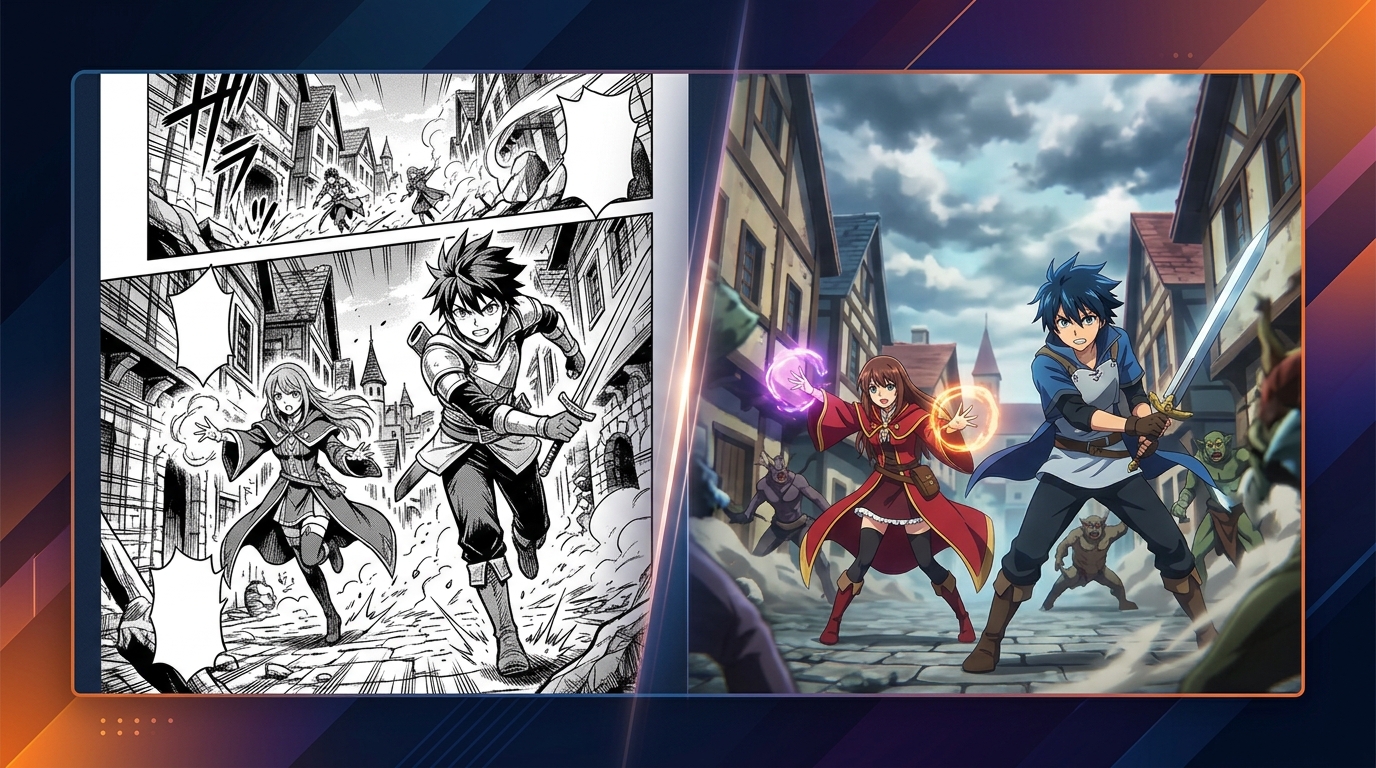
You’re halfway through an anime season when someone tells you the manga does it better. Or maybe you’ve just finished a manga arc and wonder if the anime will capture the same magic. This debate has split fans for decades, and the answer isn’t as simple as picking one side.
Manga typically offers better pacing and narrative control since creators work without time or budget constraints. Anime excels at emotional impact through voice acting, music, and animation. The superior version depends on the specific series, adaptation quality, and your personal preferences. Many fans enjoy both mediums for different reasons rather than choosing one exclusively.
How Pacing Shapes Your Experience
Manga moves at the reader’s pace. You control how fast you flip pages, how long you study each panel, and when you take breaks. This control matters more than most people realise.
Anime locks you into 24 minutes per episode. Studios must fit story beats into fixed time slots, which creates two common problems. They either rush through content to catch up with the manga, or they pad episodes with filler to avoid overtaking the source material.
Take One Piece as an example. The manga keeps a steady rhythm, with Eiichiro Oda controlling every panel’s timing. The anime stretches single manga chapters across entire episodes, adding reaction shots and extended fight sequences that weren’t in the original.
This doesn’t make anime bad. It just changes the experience. Some viewers love the slower pace because it gives them time to absorb emotional moments. Others find it frustrating when a cliffhanger takes three episodes to resolve.
Manga readers can binge 50 chapters in one sitting if they want. Anime watchers need to wait weekly for new episodes, even when the story is building toward a major reveal. That waiting period changes how you experience the narrative.
Visual Storytelling Techniques
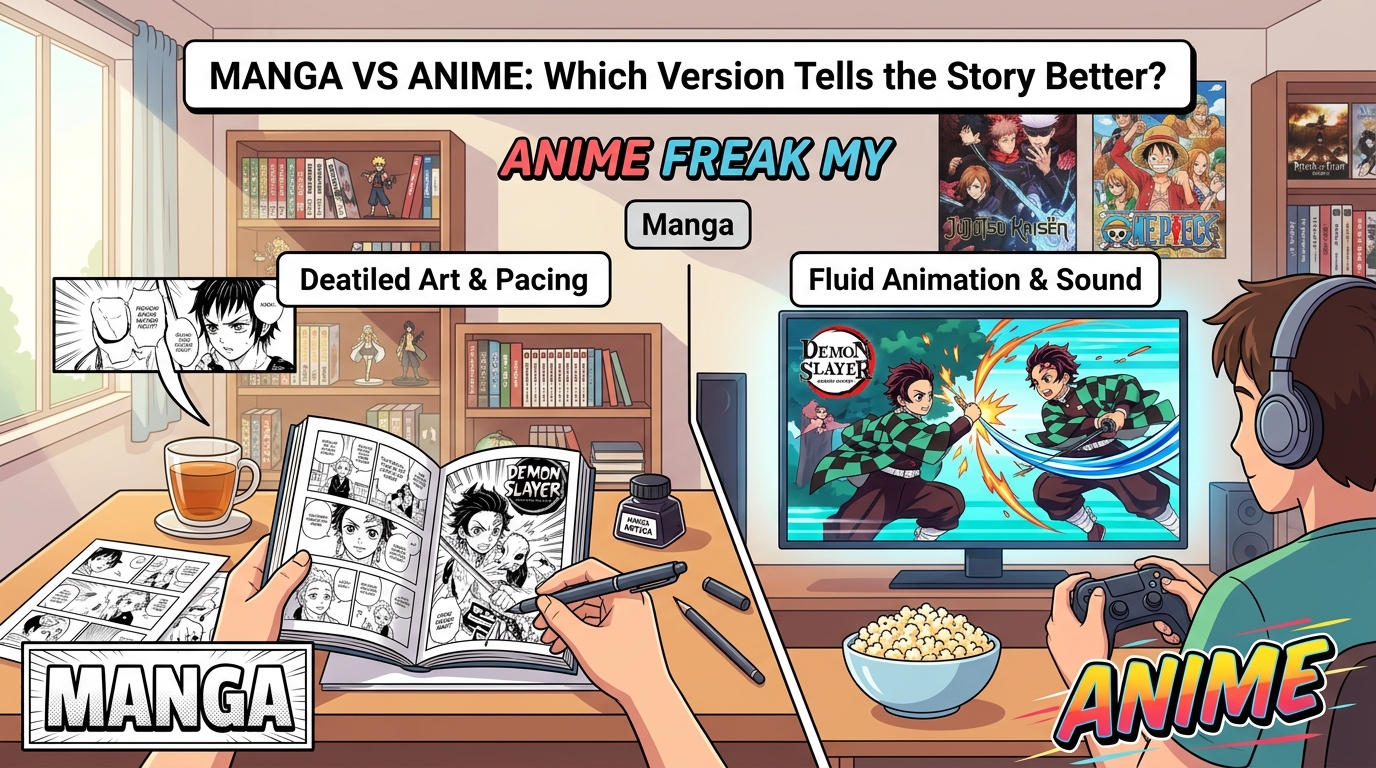
Manga artists use panel layouts to control your eye movement and create rhythm. A full-page spread signals an important moment. Tiny panels speed up action sequences. White space around a character shows isolation.
These techniques don’t always translate to animation. Anime directors must convert static images into moving scenes, which requires interpretation. Sometimes this enhances the story. Other times it misses the original intent.
Berserk’s manga features incredibly detailed artwork that creates a specific dark atmosphere. The 2016 anime adaptation used CGI that many fans felt destroyed that carefully crafted mood. The 1997 anime, despite limited animation, captured the tone better by focusing on atmosphere over flashy movement.
Anime adds elements manga can’t provide:
- Voice acting that brings characters to life
- Background music that amplifies emotional beats
- Colour palettes that establish mood
- Fluid motion during action sequences
- Sound effects that create immersion
These additions can elevate a story. Demon Slayer’s anime became a cultural phenomenon partly because ufotable’s animation made fight scenes visually stunning. The manga is excellent, but the anime’s production quality attracted millions of new fans.
Creative Control and Adaptation Choices
Manga creators typically have final say over their stories. They decide plot points, character development, and pacing without outside interference (though editors provide input).
Anime production involves committees, producers, directors, and studios. More people making decisions means more chances for the vision to shift.
Here’s what commonly changes in anime adaptations:
| Element | Manga Version | Anime Version |
|---|---|---|
| Ending | Creator’s planned conclusion | May diverge if manga is incomplete |
| Character depth | Full internal monologues | Often shortened for time |
| Side plots | All included | Sometimes cut for pacing |
| Art consistency | One artist’s vision | Varies by episode director and budget |
| Filler content | Rarely present | Added to prevent catching up |
Fullmetal Alchemist (2003) created an original ending because the manga wasn’t finished. Fullmetal Alchemist: Brotherhood (2009) followed the complete manga story. Both are excellent anime, but they tell fundamentally different stories in their second halves.
Tokyo Ghoul’s anime made significant changes to character motivations and plot events. Many fans felt these changes weakened the story’s impact. The manga maintained better narrative coherence.
Reading Between the Panels
Manga excels at internal character thoughts. Authors can include lengthy monologues that reveal motivations, fears, and decision-making processes.
Anime must show these thoughts through visual cues, dialogue changes, or voice acting. This isn’t always worse, but it is different. Some nuance gets lost in translation.
Attack on Titan’s manga includes detailed political discussions and character introspection. The anime streamlines these sections to maintain momentum. Both approaches work, but they create different viewing experiences.
“The manga is the purest form of the creator’s vision. Anime is a collaborative interpretation of that vision. Neither is inherently superior, they’re different art forms.” – Common sentiment among long-time fans
Monster’s anime stays remarkably faithful to Naoki Urasawa’s manga, preserving the psychological thriller’s slow burn pacing. This works because the studio committed to the source material’s rhythm rather than trying to speed it up for broader appeal.
When Anime Surpasses the Source Material
Some anime adaptations genuinely improve on their manga. This happens when studios understand what makes the story work and enhance those elements.
Mob Psycho 100’s manga has a unique art style that some readers find off-putting. The anime adaptation by Studio Bones maintains the style’s energy while making it more accessible. The animation during psychic battles adds impact that static panels can’t match.
K-On! took a four-panel comedy manga and created an anime that defined a generation of slice-of-life shows. The studio added musical performances, expanded character interactions, and created emotional depth beyond the source material.
Here’s how to evaluate which version tells a story better:
- Watch or read the first major arc in both formats
- Compare how each handles a key emotional scene
- Check if the anime adds meaningful content or just padding
- Notice whether adaptation changes enhance or contradict character development
- Consider production quality and whether it matches the story’s needs
The Practical Reader’s Approach
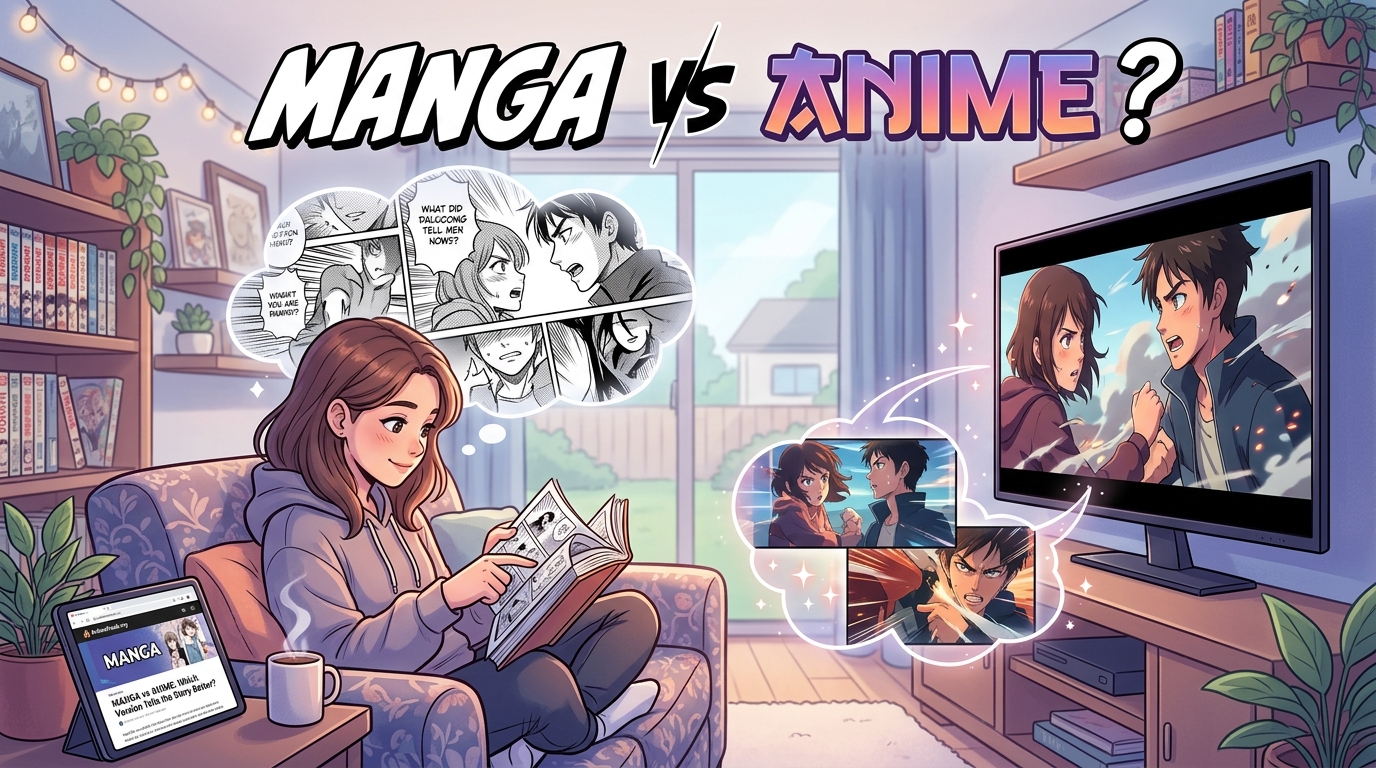
Your lifestyle affects which medium works better. Commuting on public transport? Manga is easier to read on your phone. Prefer multitasking while eating dinner? Anime lets you watch without holding anything.
Budget matters too. Manga volumes cost money, though you can read many series through subscription services or at bookstores. Anime is widely available on streaming platforms, some free with ads.
Language barriers play a role. If you’re learning Japanese, manga provides reading practice at your own pace. Anime offers listening practice but moves too fast for beginners to catch everything.
Some series simply work better in one format:
- Better as manga: Complex political stories, series with important visual details in backgrounds, stories relying on internal monologue
- Better as anime: Music-focused stories, comedies with timing-based jokes, action series with choreographed fights, atmospheric horror
Death Note works brilliantly in both formats but for different reasons. The manga lets you study the strategic mind games at your own pace. The anime adds tension through music and voice acting that makes confrontations more dramatic.
Series-Specific Recommendations
Vinland Saga’s anime adaptation received praise for its faithful adaptation and strong production values. Both versions tell Thorfinn’s story effectively, though the manga’s art evolution over time shows Yukimura Makoto’s growth as an artist.
The Promised Neverland’s first anime season closely followed the manga and was excellent. The second season made drastic changes that most fans disliked, skipping entire arcs and rushing to an anime-original ending. This is a clear case where the manga tells the complete story better.
My Hero Academia maintains quality in both formats. The anime adds spectacular fight animation and emotional music, while the manga moves faster through training arcs that some viewers find slow.
Blue Period’s manga beautifully depicts the artistic process and internal struggles of creating art. The anime adaptation is decent but can’t quite capture the detailed artwork that’s central to the story’s themes.
Making Your Personal Choice
You don’t have to pick one medium exclusively. Many fans read manga for series they’re passionate about, then watch anime adaptations to see their favourite moments animated.
Starting with anime often works well because it requires less commitment. If you enjoy a series, you can read the manga to get more content or see the original vision. Going the opposite direction works too, experiencing how a studio interprets scenes you’ve already read.
Some fans wait until an anime season finishes, check reviews, then decide whether to watch or just continue reading. This prevents disappointment from poor adaptations.
Consider experiencing both versions for series you truly love. Seeing how different creative teams interpret the same story adds appreciation for both mediums. You’ll notice directorial choices, understand why certain scenes were cut, and catch details each version emphasises differently.
Finding What Works for Your Story Preferences
Neither manga nor anime tells stories better universally. The answer changes based on the specific series, the adaptation team’s skill, and what aspects of storytelling you value most.
If you prioritise the creator’s original vision and complete narrative control, manga typically delivers. If you value production elements like voice acting, music, and fluid animation, quality anime adaptations can enhance the experience beyond what pages allow.
The best approach? Stay flexible. Judge each series individually rather than assuming one medium always wins. Read reviews from fans who’ve experienced both versions. Sample a few chapters and episodes before committing fully.
Your time matters, so choose the format that fits your lifestyle and gives you the most enjoyment. Some stories will speak to you more powerfully as manga. Others will hit harder as anime. That’s perfectly fine. The goal isn’t picking the “correct” medium but finding the version that makes you care most about the characters and their journey.