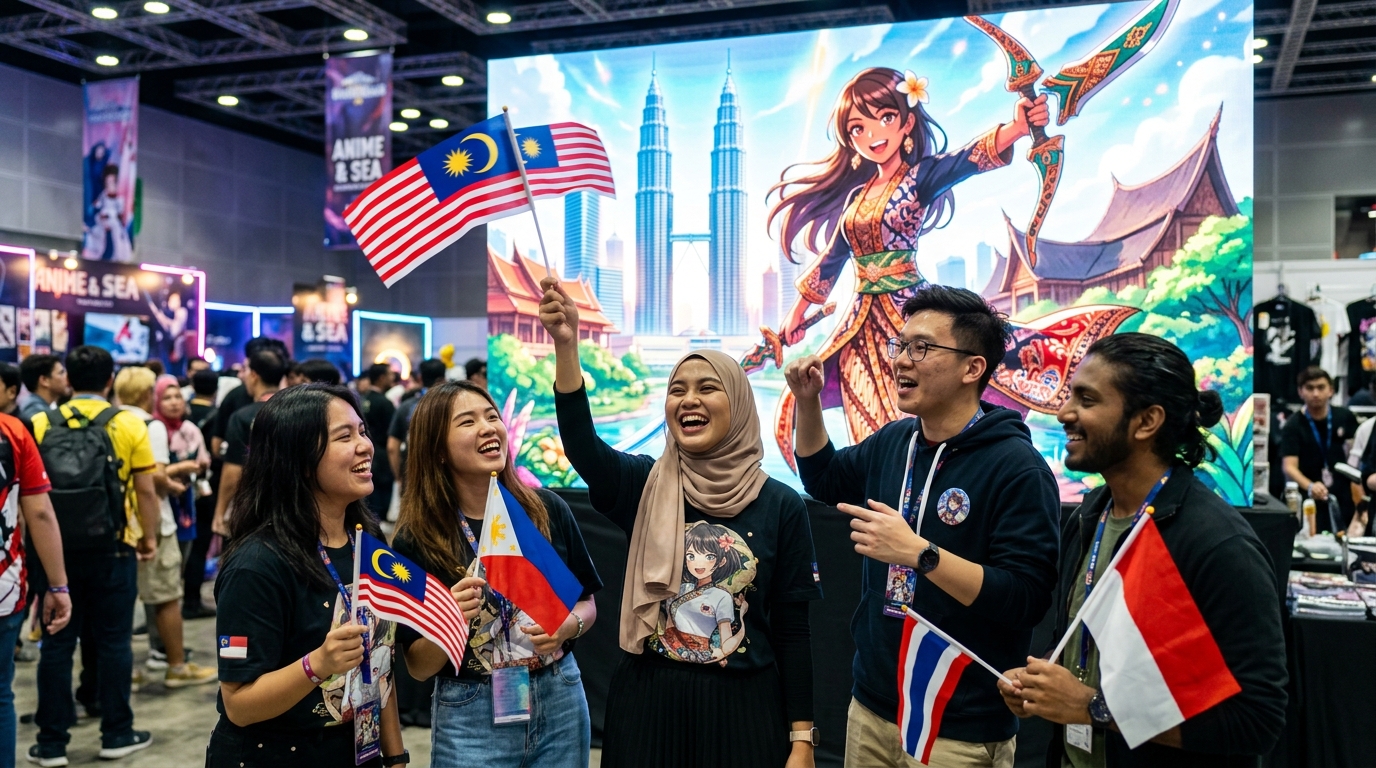
Anime has always drawn inspiration from around the world, but for the longest time, Southeast Asian fans watched stories set in Japan, Europe, or imaginary worlds that looked nothing like home. That’s changing now. Recent releases feature Malaysian landmarks, Thai festivals, Indonesian folklore, and Filipino characters who actually feel real. This shift matters because representation affects how we see ourselves and how the world sees us.
Southeast Asian representation in anime has grown significantly in recent years, with studios incorporating authentic cultural elements, settings, and characters from Malaysia, Thailand, Indonesia, the Philippines, and Vietnam. This shift reflects both the region’s growing economic importance and creators’ genuine interest in telling diverse stories that resonate with local audiences whilst introducing global viewers to Southeast Asian cultures.
Why studios are finally paying attention to our region
The anime industry noticed something important. Southeast Asia has one of the fastest-growing anime markets globally. Malaysia alone has millions of active anime viewers who stream, buy merchandise, and attend conventions. Thailand’s anime cafes are packed every weekend. Indonesia’s cosplay community rivals Japan’s in creativity and scale.
Money talks, but that’s not the only reason. Japanese creators have started travelling more to Southeast Asian countries. They’re visiting Penang’s street art, Bangkok’s floating markets, and Manila’s jeepneys. These experiences show up in their work as authentic details rather than stereotyped versions of “generic Asian country.”
Studios also hire cultural consultants now. When an anime features a Malaysian character or setting, someone from Malaysia checks the script. They catch mistakes before they become embarrassing viral moments. This attention to accuracy makes Southeast Asian viewers feel seen rather than tokenised.
Anime that got Southeast Asian culture right
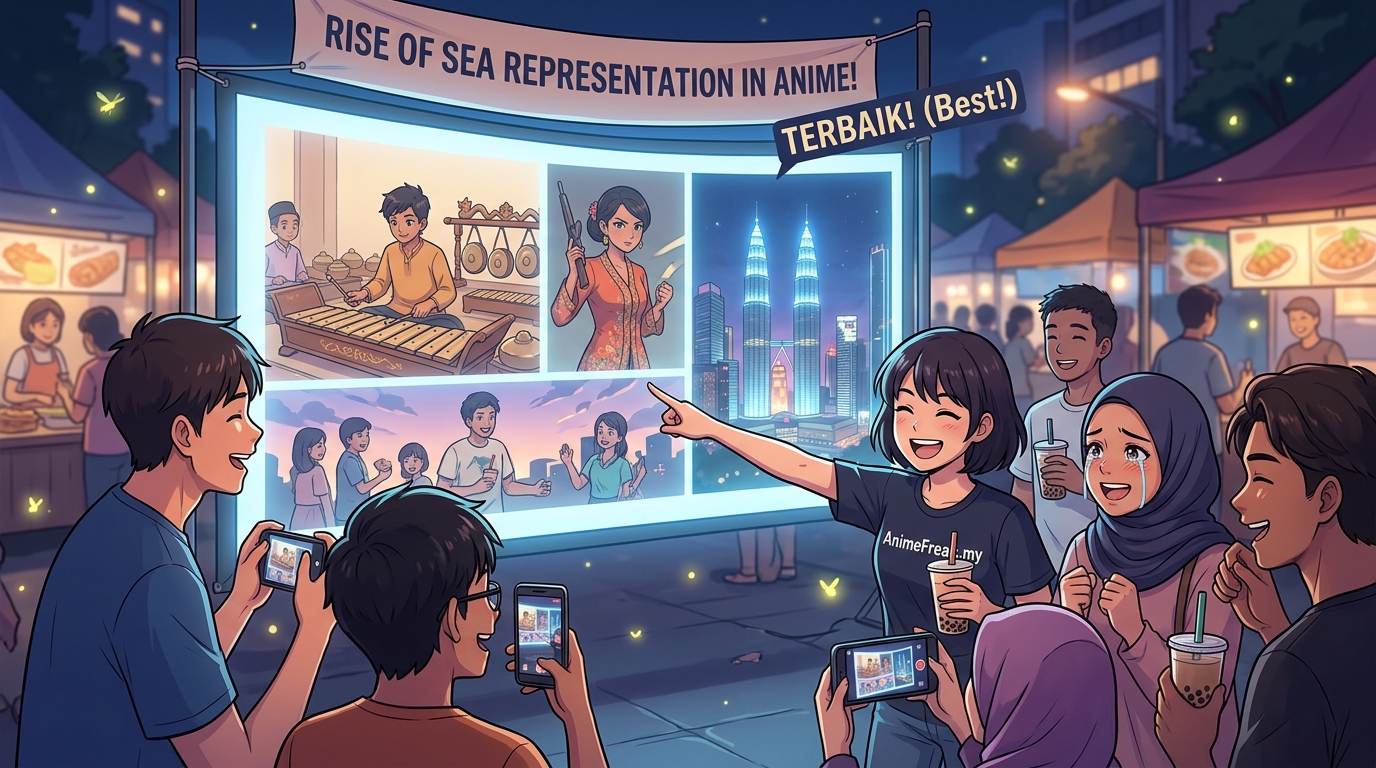
Several recent releases stand out for their respectful and accurate portrayal of the region.
“Trese” brought Filipino folklore to Netflix with aswang, tikbalang, and other creatures from Manila’s urban legends. The animation style stayed true to the original comics whilst making the supernatural elements feel grounded in real Filipino neighbourhoods. Viewers recognised the jeepneys, the street food, even the way characters spoke Tagalog mixed with English.
“Ejen Ali” from Malaysia showcases Kuala Lumpur as a futuristic setting without erasing its cultural identity. The characters eat roti canai, celebrate Hari Raya, and navigate family dynamics that Malaysian viewers immediately recognise. It proves you can have high-tech spy adventures without defaulting to Western or Japanese cultural frameworks.
Several Japanese productions have featured Southeast Asian settings as well. “Great Pretender” included an arc set in Singapore with accurate depictions of Marina Bay Sands and hawker centres. The animators clearly did their homework on how the city actually looks and functions.
What makes representation feel authentic versus tokenistic
Good representation goes beyond showing a landmark or having a character mention they’re from Thailand. Authentic portrayals include these elements:
- Cultural practices shown as normal parts of life, not exotic curiosities
- Characters who speak and behave like actual people from the region
- Settings that capture both modern cities and rural areas accurately
- Food, festivals, and family structures depicted with specific details
- Conflicts and motivations that reflect real cultural values
Tokenistic representation, on the other hand, treats Southeast Asian elements as decoration. A character might be “from Thailand” but show no actual Thai cultural traits. A story might be “set in Malaysia” but only feature generic tropical backgrounds with no recognisable Malaysian characteristics.
The difference shows in small details. Does the character remove their shoes before entering a home? Do they use honorifics appropriately? Is the food drawn with actual care, or does every dish look the same? These details tell viewers whether creators genuinely care about accuracy.
How Southeast Asian creators are leading the change
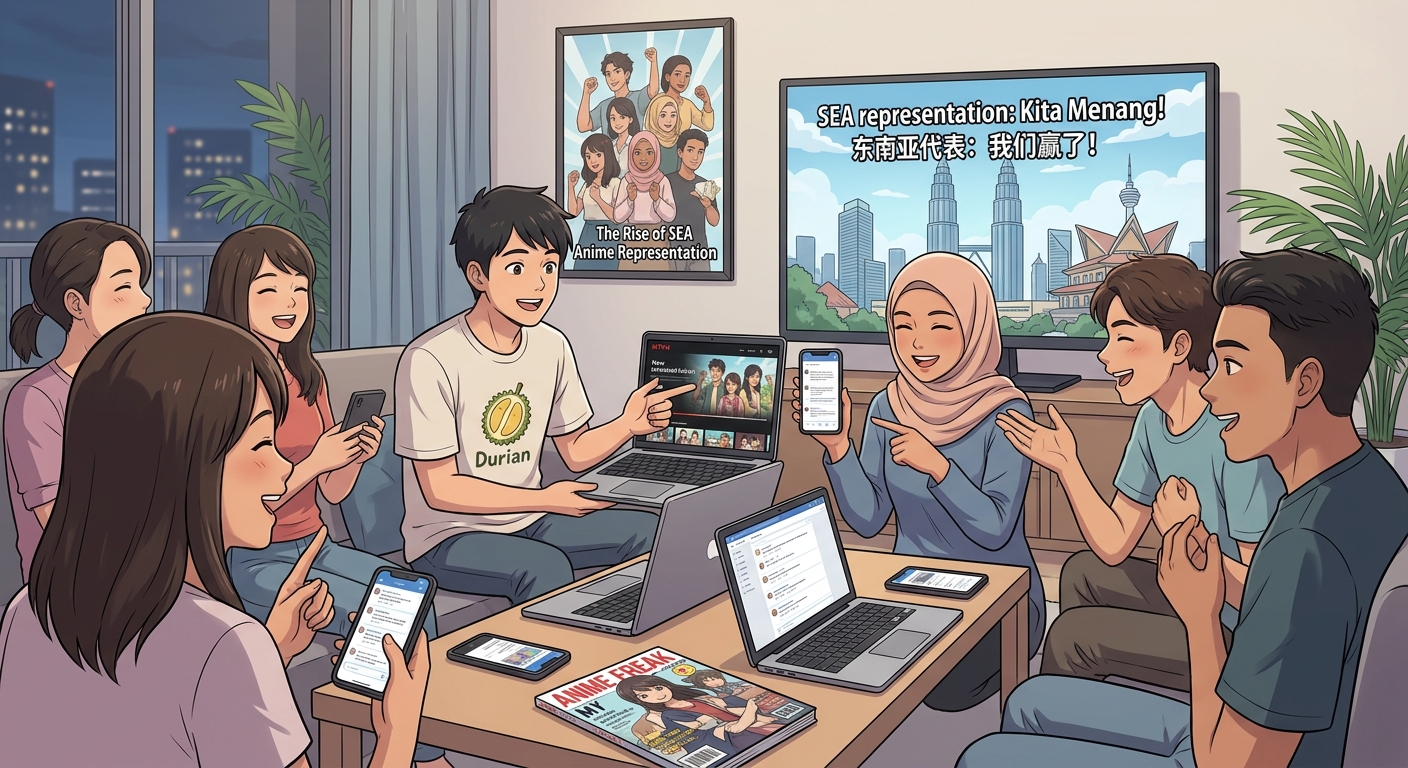
The best Southeast Asian representation often comes from Southeast Asian creators themselves. Local animation studios in Malaysia, Singapore, Thailand, Indonesia, and the Philippines are producing work that competes with Japanese anime in quality whilst staying rooted in regional stories.
Malaysia’s “Mechamato” combines superhero action with everyday Malaysian life. The protagonist deals with alien robots and school exams simultaneously. His family dynamics, friendship patterns, and even the way he gets scolded by teachers feel authentically Malaysian.
Thailand’s “Khan Kluay” told the story of a war elephant through traditional Thai artistic styles. The animation incorporated Thai temple art, classical dance movements, and historical details that Thai viewers recognised immediately.
Indonesian studios are adapting local legends like Bawang Merah Bawang Putih and Timun Mas with modern animation techniques. These stories carry moral lessons specific to Indonesian culture whilst being entertaining enough to attract international audiences.
“When I see a character in anime who actually acts like my cousins or talks like my friends, it hits different. It’s not just about seeing a landmark I recognise. It’s about feeling like the creators understand how we actually live.” – Malaysian anime fan, age 24
The economic impact of better representation
Southeast Asian representation isn’t just good for cultural reasons. It makes business sense too. Anime featuring Southeast Asian elements performs exceptionally well in regional markets. Merchandise sells faster when characters reflect local cultures. Convention attendance spikes when guests include creators who worked on shows featuring the region.
Streaming platforms have noticed this pattern. They’re investing more in Southeast Asian productions and licensing shows that feature the region prominently. The return on investment justifies the cultural consultation fees and location research costs.
Local businesses benefit as well. When an anime features a real location, tourism increases. Penang saw more Japanese tourists after appearing in travel vlogs by anime creators. Bangkok’s Chatuchak Market became even more popular with anime fans after featuring in several manga and light novels.
Common mistakes studios still make
Despite progress, some anime still get Southeast Asian representation wrong. Understanding these mistakes helps us recognise good representation when we see it.
| Mistake | Why It’s Problematic | Better Approach |
|---|---|---|
| Treating all Southeast Asian countries as interchangeable | Malaysia, Thailand, Vietnam, Indonesia, and the Philippines have distinct cultures, languages, and histories | Research the specific country and show unique cultural elements |
| Only showing poverty or rural settings | Southeast Asia has modern cities, tech hubs, and diverse economic landscapes | Balance urban and rural settings, show economic diversity |
| Making Southeast Asian characters sidekicks or comic relief | Reinforces stereotypes about who gets to be the hero | Create Southeast Asian protagonists with complex motivations |
| Using incorrect languages or mixing them randomly | Each country has specific languages and dialects | Hire language consultants, use subtitles when appropriate |
| Depicting food inaccurately | Food is central to Southeast Asian cultures | Show real dishes with proper names and preparation methods |
These mistakes often come from lack of research rather than malicious intent. Studios working on tight deadlines sometimes rely on outdated information or generic “tropical Asia” aesthetics. The solution is simple but requires commitment: hire people from the region as consultants, writers, or directors.
What fans can do to encourage more representation
Southeast Asian anime fans have more influence than we realise. Our viewing habits, social media engagement, and purchasing decisions send signals to studios about what we want to see.
Here’s how to support better representation:
- Stream and legally watch anime featuring Southeast Asian characters or settings
- Buy official merchandise from shows that represent the region well
- Share positive reviews and recommendations on social media
- Attend conventions and panels discussing Southeast Asian representation
- Support local Southeast Asian animation studios and creators
- Provide constructive feedback when representation misses the mark
- Create fan content that celebrates accurate cultural portrayals
Studios track these metrics carefully. When a show with good Southeast Asian representation performs well, executives notice. They’re more likely to greenlight similar projects in the future.
Constructive criticism matters too. When an anime gets something wrong about Malaysian culture, politely explaining the mistake helps creators learn. Most studios genuinely want to improve their cultural accuracy if fans tell them what needs fixing.
The role of language and subtitles
Language representation presents unique challenges. Should Southeast Asian characters speak Japanese with an accent? Should they use their native languages with subtitles? Should the anime mix languages the way real Southeast Asians do?
The best approach depends on the story’s context. “Trese” used Tagalog and English naturally because that’s how Manila residents actually speak. Japanese anime featuring Southeast Asian characters often have them speak Japanese fluently, which makes sense if they’ve lived in Japan for years.
What doesn’t work is giving characters awkward, stereotyped accents that make them sound uneducated. Real multilingual Southeast Asians switch between languages smoothly. They might use English for technical terms, their native language for emotional moments, and pick up Japanese or other languages through exposure.
Subtitles should translate cultural concepts rather than just words. When a Malaysian character talks about “balik kampung,” the subtitle might say “returning to hometown for holidays” to give context. Good localisation preserves cultural specificity whilst making the content accessible.
Comparing Southeast Asian representation across different anime genres
Different anime genres handle Southeast Asian representation in distinct ways. Understanding these patterns helps us appreciate what works and what needs improvement.
Shonen action anime sometimes feature Southeast Asian characters as martial artists or fighters with exotic techniques. This can be respectful if the fighting styles are researched properly, but often falls into “mysterious Asian warrior” stereotypes.
Slice-of-life anime rarely include Southeast Asian characters, which is a missed opportunity. Daily life stories would be perfect for showing authentic cultural practices, family dynamics, and social interactions.
Isekai and fantasy anime occasionally use Southeast Asian mythology as inspiration. When done well, this introduces global audiences to creatures and legends from the region. When done poorly, it mashes together elements from different cultures without understanding their significance.
Sports anime could benefit from featuring Southeast Asian athletes more often. Badminton, sepak takraw, and football are hugely popular in the region, yet rarely appear in sports anime.
How representation affects younger viewers
For Southeast Asian kids and teenagers, seeing themselves in anime matters more than adults might realise. Representation shapes how young people understand their place in the world.
A Malaysian teenager who only sees Japanese or Western characters as protagonists might internalise the idea that heroes don’t look like them. When they finally see a Malaysian character who’s brave, smart, and central to the story, it changes their self-perception.
This effect extends beyond individual confidence. Representation influences career choices too. More Southeast Asian kids are studying animation and storytelling because they see it’s possible to create anime-style content rooted in their own cultures.
Parents notice the difference as well. They’re more comfortable letting children watch anime that includes positive Southeast Asian role models. This parental approval expands the potential audience for shows featuring the region.
The future of Southeast Asian voices in anime
The trajectory looks promising. More Southeast Asian creators are breaking into the anime industry as animators, writers, and directors. Collaboration between Japanese studios and Southeast Asian production companies is increasing.
Streaming platforms are investing in original Southeast Asian anime-style content. These shows combine anime aesthetics with local storytelling traditions, creating something that feels familiar yet fresh.
Technology is making collaboration easier. Remote work allows Southeast Asian artists to contribute to Japanese productions without relocating. This brings authentic cultural perspectives into projects that might have relied on stereotypes in the past.
The next generation of anime creators is growing up with better representation. They’re learning from both the successes and mistakes of current shows. Their work will likely push boundaries even further.
Why this matters beyond entertainment
Southeast Asian representation in anime affects more than what we watch for fun. It influences how the world perceives the region and how we perceive ourselves.
When anime portrays Southeast Asian cultures respectfully, it educates international audiences. Viewers in Japan, Europe, and America learn that Malaysia isn’t just beaches and jungles. They discover that Indonesia has rich mythology beyond what they learned in school. They realise the Philippines has urban centres as modern as anywhere else.
This cultural exchange reduces stereotypes and builds understanding. It’s soft power that benefits the entire region economically and diplomatically.
For Southeast Asians, good representation validates our experiences. It tells us our stories matter enough to be told. Our cultures are interesting enough to be featured. Our perspectives deserve to be heard.
Seeing ourselves on screen changes everything
The rise of Southeast Asian representation in anime isn’t just a trend. It’s a fundamental shift in how stories get told and who gets to tell them. Every accurately depicted Malaysian street, every Indonesian character with real depth, every Thai festival shown with proper respect adds up to something bigger.
We’re moving past the era of being background characters or exotic settings. Southeast Asian creators and fans are demanding better, and the industry is responding. The anime we watch today will influence what gets made tomorrow. By supporting shows that represent us well and speaking up about what needs improvement, we’re shaping the future of the medium we love.
Keep watching, keep supporting, and keep holding creators accountable. Our cultures deserve nothing less than authentic, respectful representation.
Leave a Reply